
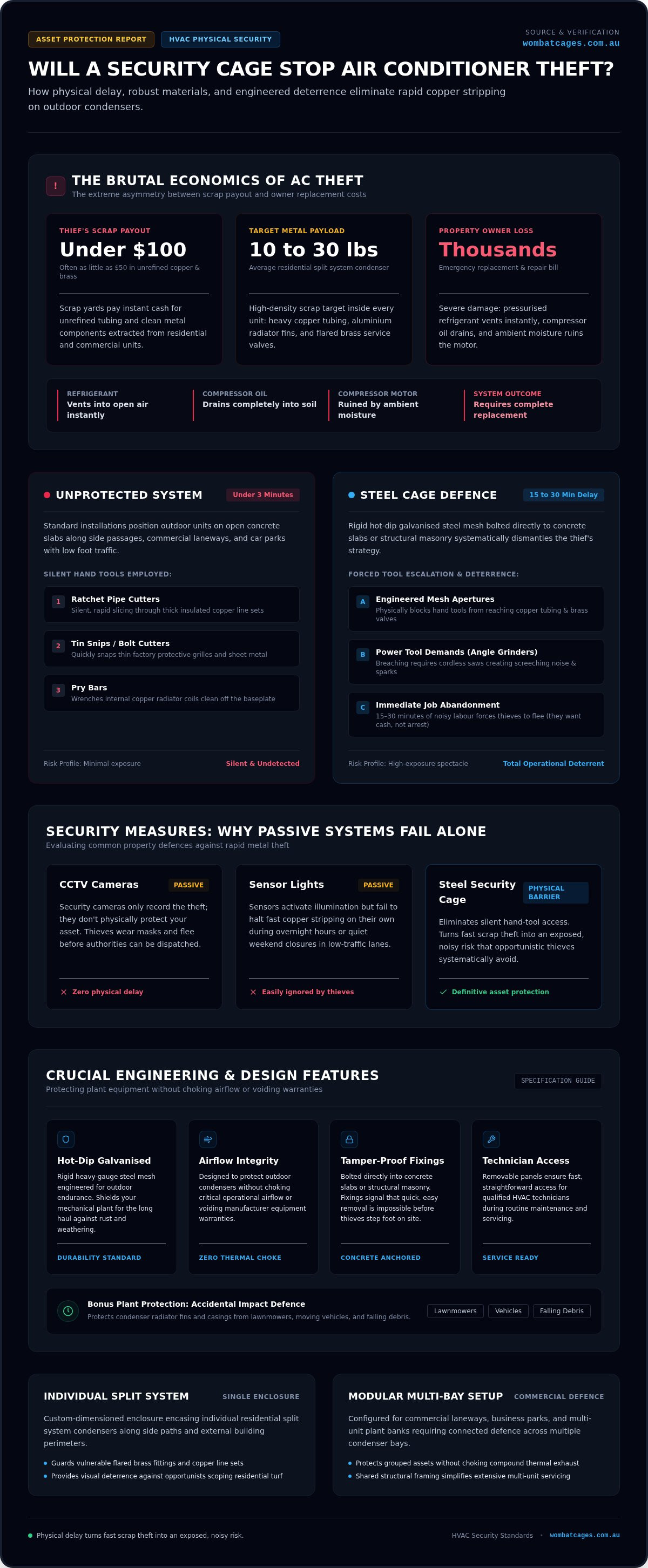
An opportunistic thief with wire snips can strip an unprotected outdoor condenser in under three minutes. They walk away with under $100 in scrap copper, leaving you with an emergency replacement bill running into thousands of dollars. If you own or manage property, your immediate question is practical: will a cage stop air conditioner theft, or is it just an unnecessary hassle?
It's fair to worry that enclosing your condenser could restrict airflow, void manufacturer warranties, or lock out technicians during routine servicing. Security cameras only record the theft; they don't physically protect your asset. The real value of a solid barrier is simple. Physical delay turns fast scrap theft into an exposed, noisy risk that opportunistic thieves simply avoid.
In this guide, you'll discover how hot-dip galvanised steel cages safeguard HVAC investments, maintain critical condenser airflow, and provide straightforward servicing access for single and multi-bay installations.
Key Takeaways
- Find out why the practical answer to whether a cage will stop air conditioner theft comes down to physical delay, robust materials, and visual deterrence.
- Understand why passive security measures like CCTV cameras and sensor lights fail to halt fast copper stripping on their own.
- Learn the engineering standards, including hot-dip galvanised steel mesh, required to protect outdoor condensers without choking airflow or voiding warranties.
- Discover how tamper-resistant concrete fixings and removable panels keep equipment secure while preserving straightforward technician access for servicing.
- Determine whether your site requires an individual split system enclosure or a modular multi-bay configuration for comprehensive asset defence.
The Mechanics of Air Conditioner Theft: Why Condensers Are Targets
Outdoor air conditioning condensers sit outside properties out of thermal necessity. Unfortunately, that exterior placement makes them prime targets. Inside every condenser lies a concentrated package of high-demand scrap: heavy copper tubing, aluminium radiator fins, and brass service valves. To an opportunistic scrap scavenger, an unprotected outdoor unit looks like an untracked cash point waiting to be stripped. Property owners often ask, will a cage stop air conditioner theft when scrap metal demand surges? To see why physical barriers work, you have to look at how these thieves operate.
The High Scrap Value of HVAC Copper Coils
Scrap yards pay instant cash for unrefined copper and clean metal components. An average residential split system condenser contains between 10 and 30 pounds of copper line and radiator coil. Thieves tear into factory sheet metal, hacking out internal piping to rip the core free. The economic equation is brutal. A thief might walk away with fifty dollars in raw scrap, but they leave behind catastrophic system damage. Once the copper line set is severed, pressurised refrigerant vents, compressor oil drains into the soil, and ambient moisture ruins the compressor motor. Fixing that damage usually requires a complete condenser replacement.
How Opportunistic Thieves Operate on Unprotected Units
Standard installations leave condensing units resting on open concrete slabs along side passages, commercial laneways, or car parks. These locations offer low foot traffic and minimal visibility after hours.
Thieves do not carry complex equipment. They move fast and rely on simple hand tools:
- Ratchet pipe cutters to slice through thick copper line sets silently
- Standard tin snips or bolt cutters to snap factory protective grilles
- Pry bars to wrench the internal copper radiator coils off the baseplate
An unprotected system can be gutted in under three minutes during overnight hours or quiet weekend closures. Considering how quickly these criminals strike, will a cage stop air conditioner theft under real-world conditions? It does, specifically because it removes the silent, rapid hand-tool access that metal thieves rely on to escape undetected.
Will a Security Cage Stop AC Theft? How Physical Enclosures Work
So, will a cage stop air conditioner theft in practice? The short answer is yes. A security enclosure does not need to be an impenetrable bank vault to work. Instead, it systematically dismantles the thief's operational strategy. By encasing the outdoor condenser in rigid, hot-dip galvanised steel mesh bolted directly to concrete slabs or structural masonry, a cage removes the speed and silence scrap collectors depend on.
Denying Rapid Access to Copper Pipework and Valves
Scrap thieves target the easiest points of entry. Heavy-gauge steel mesh wraps around vulnerable service valves, flared brass fittings, and insulated line sets. Engineered mesh apertures prevent hand tools, such as ratchet pipe cutters and snips, from reaching the copper tubing. The barrier keeps tools away from high-pressure lines, stopping thieves from quickly slicing the pipework and venting refrigerant into the open air.
The Psychology of Time Delay and Noise Generation
Time is a criminal's greatest risk. Stripping an unprotected unit takes three minutes with silent hand tools. Breaching thick steel mesh demands aggressive intervention. A thief must use cordless angle grinders or reciprocating saws. These tools create high-decibel screeching and spray bright sparks across the yard. That racket turns a quiet opportunistic raid into an exposed, noisy spectacle. Adding 15 to 30 minutes of hard labour forces thieves to abandon the job. They want easy cash, not an arrest.
Visual Deterrence Across Residential and Commercial Sites
Steel framing sends an unmistakable message from the street. It shows the property is defended by someone who values their plant equipment. Visible tamper-resistant fixings tell opportunistic scouts that quick theft is impossible before they even step onto the turf. Beyond stopping targeted copper raids, property owners should review how to protect your AC unit from accidental damage caused by lawnmowers, vehicles, or falling debris. Choosing professional steel security cages eliminates the perception of easy scrap metal and shields your mechanical plant for the long haul.
Steel Cages vs Alternative Security Measures: What Actually Works?
Property managers often try electronic gadgets or landscaping tricks before considering structural metalwork. They set up motion floodlights, mount Wi-Fi cameras, or build decorative timber screens around their plant equipment. Then the copper gets stripped anyway. When evaluating whether a cage will stop air conditioner theft better than electronic alternatives, you have to separate passive observation from physical deterrence. Digital tools record loss; structural steel prevents it.
CCTV Cameras and Alarms vs Physical Steel Barriers
Security cameras provide high-definition footage of your equipment being destroyed. Thieves know police response times rarely match a three-minute raid. They wear hoodies, face masks, and unbranded caps, rendering facial recognition useless. Refrigerant pressure sensors and perimeter alarms sound off only after line sets are cut and gas has dumped. By then, the damage bill is locked in. A rigid steel barrier works around the clock without software glitches, flat batteries, or connectivity drops. It stops the cut before it starts.
Decorative Screens vs Structural Security Cages
Architectural screens look tidy, but they offer zero defensive value. Many owners conceal their plant using lightweight enclosures, inadvertently creating ideal working conditions for thieves:
- Timber lattice and plastic privacy panels break away with a swift kick
- Aluminium slat covers pry off cleanly using a standard carpenter's screwdriver
- Solid privacy walls block the street view, giving thieves a hidden workspace to cut coils in complete privacy
Thin cosmetic screens hide equipment from honest eyes while providing concealment for criminals. So, will a cage stop air conditioner theft where decorative screens fail? It will, because heavy-gauge open steel mesh delivers total impact resistance while keeping clear sightlines from the street. A thief crouched beside an open steel cage remains exposed to every passing vehicle and neighbour. Heavy steel mesh bolted to structural concrete creates an unyielding physical perimeter that cosmetic covers cannot replicate.
Crucial Features That Make an AC Security Cage Truly Effective
Not every metal box delivers genuine security. Throwing together light chicken wire or ungalvanised angle iron fails within months. When property owners evaluate will a cage stop air conditioner theft over the long term, the answer rests squarely on structural execution. A protective barrier must deliver three non-negotiable qualities: heavy-gauge steel defence, permanent substrate anchoring, and zero disruption to condenser thermodynamics.
Hot-Dip Galvanised Heavy-Gauge Steel Construction
External equipment faces punishing weather year-round. Untreated steel rusts rapidly, leaving weak points for scrap hunters to exploit. A hot-dip galvanised condenser cage solves this by completely immersing heavy structural steel in molten zinc. This creates an impermeable metallurgical bond that prevents rust, flaking, and corrosion. Heavy-gauge steel mesh stands up against standard manual bolt cutters, crowbars, and blunt impact, keeping the frame square and rigid for decades.
Tamper-Resistant Substrate Bolting to Concrete and Masonry
An enclosure is only as reliable as its anchor points. Bolting a cage into garden soil or a lightweight composite slab invites thieves to lever the entire structure off with a pry bar.
Effective installations demand rigorous fixing standards:
- Heavy-duty steel baseplates anchored directly into poured concrete footings using tamper-proof masonry anchors
- Perimeter wall flanges bolted solidly into structural brickwork or concrete tilt-panels
- Sheared nut assemblies or blind bolt heads that prevent intruders from unfastening the cage with standard spanners
Preserving Manufacturer Airflow and Routine Technician Servicing
A cage that suffocates your compressor creates an expensive mechanical breakdown. Condensers must exhaust immense amounts of heat. Inadequate airflow causes high head pressures, increased power draw, and premature compressor motor burnouts, instantly voiding manufacturer warranties. Commercial-grade cages feature an engineered open mesh aperture that allows unrestricted ambient airflow across the coil face. Crucially, demountable panels ensure refrigeration mechanics can easily access service valves, electrical isolators, and fan motors during regular maintenance. If you want engineered protection that meets HVAC operating standards, explore our heavy-duty condenser cages built to protect your site assets.
Selecting the Right AC Security Cage Setup for Your Property
Every building presents a unique footprint. A suburban rental property has vastly different security demands than a commercial facility with half a dozen condensing units lined along an external boundary wall. Choosing the right physical barrier depends on plant layout, unit spacing, and substrate conditions. Ultimately, asking will a cage stop air conditioner theft on your specific site comes down to selecting an enclosure tailored to your equipment setup and installing it correctly.
Securing external units also strengthens your broader risk management approach. It is worth reviewing how air conditioner theft insurance claims are assessed by insurers, as many underwriters look favourably on documented physical mitigation measures before approving claims for unforced equipment loss.
Single Condenser vs Multi-Bay Commercial Enclosures
Residential homes generally feature a standalone outdoor unit along an external pathway. These installations call for a dedicated split system security cage that provides tight perimeter defence without encroaching on boundary paths. Commercial sites, schools, and offices often group multiple condensers into long operational rows. Instead of installing separate boxes with awkward gaps between them, multi-bay security cages offer linked, shared-panel configurations. These modular banks deliver continuous perimeter defence, reduce overall hardware footprints, and allow facility managers to add extra bays as cooling capacity expands.
Professional Installation vs DIY Cage Assembly Risks
A high-tensile steel barrier is only as formidable as its connection to the ground. Amateur DIY installs frequently fail at the baseplate. Fasteners screwed into crumbling mortar or shallow slab plugs can be pried loose with a heavy crowbar in seconds. Professional cage installation services eliminate these vulnerabilities by securing precision-drilled masonry anchors and shear-off nuts directly into structural concrete.
For any property owner wondering will a cage stop air conditioner theft permanently, the answer lies in eliminating anchor weaknesses from the start. Professional installers align the frame securely, anchor into solid masonry, and maintain manufacturer clearance standards around every coil face.
Secure Your Air Conditioning Assets Before Thieves Strike
Leaving an outdoor condenser exposed invites an expensive, avoidable catastrophe. When property owners ask will a cage stop air conditioner theft, the real-world answer is clear. Physical barriers eliminate the quick, silent strike that opportunistic scrap thieves rely on. While security cameras only film property destruction after it occurs, structural steel keeps your plant operational.
Effective asset defence comes down to proper engineering. Wombat Cages builds enclosures manufactured with industrial-grade hot-dip galvanised steel, engineered to maintain strict HVAC airflow requirements and full technician servicing access. Supported by nationwide delivery and a professional installation network, protecting your site plant is straightforward and permanent.
Don't wait for a stripped condenser to shut down your building. Protect your HVAC assets with heavy-duty Wombat Cages and secure your mechanical investment today.
Frequently Asked Questions
Will a cage stop air conditioner theft completely?
Property owners asking will a cage stop air conditioner theft should understand that while no barrier is totally impenetrable against hours of undisturbed cutting, heavy steel cages stop over 90% of opportunistic attacks. Thieves rely on silent, three-minute strikes using hand tools. Forcing an intruder to bring noisy, spark-producing power tools to cut heavy steel mesh creates too much exposure, sending them searching for easier targets.
Does putting a cage around an air conditioner void the manufacturer warranty?
No, provided the enclosure maintains manufacturer clearances and airflow specifications. Leading HVAC brands require unobstructed space around the condenser to avoid compressor overheating and head-pressure spikes. Engineered security cages use specific open-aperture steel mesh designed to maintain free airflow. As long as the cage respects standard perimeter boundary clearances and lets exhaust air escape freely, your factory warranty remains intact.
How do HVAC technicians service an air conditioner inside a security cage?
Qualified technicians access the condenser through demountable steel panels or secured service gates. Properly engineered cages feature removable sections fastened with tamper-resistant fixings or commercial padlocks. During routine servicing, coil cleaning, or pressure testing, the refrigeration mechanic simply unlocks the relevant service panel. Once maintenance is finished, the panel secures back into place without needing to dismantle the structural cage frame.
Can thieves cut through hot-dip galvanised steel cages?
Thieves cannot slice through heavy-gauge galvanised steel mesh using common hand tools like tin snips or bolt cutters. Breaching structural steel requires battery-powered angle grinders or reciprocating saws fitted with metal blades. These tools generate deafening screeching and bright showers of sparks. Because opportunistic copper thieves depend on stealth, confronting thick steel mesh immediately neutralises their standard operating methods.
Will installing an air conditioner security cage reduce my property insurance premiums?
While discount policies vary between insurers, asking will a cage stop air conditioner theft claims from driving up your policy excess is a valid consideration. Underwriters look favourably on documented physical loss-prevention measures. Installing robust steel protection can prevent unforced theft exclusions, lower your site risk profile, and ensure smooth claim approvals if malicious damage occurs around your plant equipment.
What is the difference between an aluminium cover and a steel security cage?
Aluminium covers are purely cosmetic screens designed to conceal condensers from view, offering zero structural impact resistance. An intruder can bend aluminium slats open with a pry bar in seconds. Heavy-gauge hot-dip galvanised steel security cages are defensive structures built to withstand brute leverage, hammers, and cutting tools. While aluminium hides the unit, industrial steel mesh physically defends the metal inside.
How is a security cage anchored to prevent being pulled off the wall?
Cages are bolted directly into structural concrete pads or solid masonry walls using heavy-duty tamper-proof masonry anchors. Installers drill into the solid substrate and fasten baseplates using shear nuts or blind fixings. Shear nuts feature a hexagonal driving head that snaps off once fully tightened, leaving a smooth, rounded dome that spanners cannot grip. This solid mechanical fixing prevents intruders from levering the frame free.


