
When comparing an anti-theft air conditioner cage property owners can use, look beyond the frame. Secure fixing, suitable clearance and practical access all matter if the cage is to protect an outdoor unit without obstructing airflow or servicing.
An exposed condenser can be vulnerable to theft, vandalism and accidental damage. A purpose-built cage creates a physical barrier around the unit. Open mesh helps air move through the enclosure and lets a technician reach the equipment, while a suitable fit and installation help make the cage practical for the site.
This guide explains how an anti-theft cage works and what to consider when planning one. You’ll learn how construction and fixing points affect security, how to account for airflow and maintenance access, and how to choose a configuration for one split system or multiple condensers. Wombat Cages manufactures hot-dip galvanised steel cages and provides professional installation, bolting frames to walls and ground surfaces.
Key Takeaways
- A rigid cage creates a physical barrier around an outdoor condenser, making exposed equipment harder to reach.
- Compare fit, configuration and fixing points to make sure the enclosure suits the unit and its site.
- Consider airflow and technician access when planning a cage for an outdoor air conditioner.
- Choose a single split-system or multi-bay configuration to suit the number and arrangement of outdoor units.
- Wombat Cages’ hot-dip galvanised steel cages combine open-mesh construction with professional installation.
What an Anti-Theft Air Conditioner Cage Protects, and What It Does Not
An anti-theft cage is a rigid enclosure fitted around an outdoor air conditioner condenser or compressor to make exposed equipment harder to reach. It forms a physical barrier, not an impenetrable shield. A well-planned cage should fit the unit, restrict straightforward access and still allow practical servicing.
Outdoor units can attract attention because they contain accessible metal components. Metal theft is driven in part by the value of their constituent metals. A cage adds an obstacle between a person and the equipment, which can deter interference and make removal more difficult. It cannot guarantee theft prevention.
Which parts of an outdoor air conditioner does a cage cover?
The outdoor condenser is the external part of a split system that releases heat. Its compressor helps move refrigerant through the system. A security cage surrounds this outdoor equipment, with dimensions and configuration suited to the unit and the available site layout. It does not enclose indoor equipment, replace routine maintenance or remove the need for a technician to access the unit.
How can an air conditioner cage deter theft and damage?
A rigid steel-mesh barrier makes direct access to the outdoor unit more difficult. This can discourage opportunistic tampering and help shield equipment from accidental knocks, such as impacts in a service or storage area. It is a physical layer of protection, not a guarantee against determined theft or damage. Open mesh keeps the unit visible and allows maintenance access when the cage is designed and installed with those needs in mind.
A cage has clear limits. It does not repair a faulty air conditioner, monitor for intruders or provide insurance cover. It also does not replace a suitable maintenance plan. Wombat Cages manufactures hot-dip galvanised steel cages for outdoor condensers and compressors, and installs them by bolting frames to wall and ground surfaces.
For questions about cover after a theft, read the guide to air conditioner theft insurance claims. A cage and an insurance policy serve different purposes: one forms a physical barrier, while the other relates to cover under the policy’s terms.
How an Anti-Theft Air Conditioner Cage Works in Practice
A cage works as a system. The mesh forms the barrier, the configuration needs to suit the equipment and site, and the fixing holds the frame in position. If any of these elements is poorly planned, the enclosure may be awkward to access or less effective as a physical deterrent.
Wombat Cages makes its outdoor condenser and compressor cages from hot-dip galvanised steel. The open-mesh construction leaves the unit visible while creating a rigid boundary around it. The right configuration depends on whether the enclosure is for a single split system or several units, and on how the equipment is arranged.
Why cage construction and fixing points matter
A rigid steel frame supports the mesh and gives the enclosure its structure. Together, they make direct access to the outdoor equipment more difficult, though a cage cannot be made impossible to cut, remove or breach. Police reporting on a major copper theft operation illustrates the broader issue behind this type of protection: police reports on copper theft document organised activity targeting metal.
Fixing the frame to walls or ground surfaces helps hold the cage in place instead of leaving it as a loose cover. Wombat Cages installs cages by bolting frames to wall and ground surfaces. This connection is an important part of the enclosure’s practical security because the barrier needs to be secured around the equipment.
Can a security cage allow airflow and servicing?
Yes. The design needs to account for the unit’s operation as well as security. Open mesh allows air to pass through the enclosure and gives a technician access to the equipment for servicing. The cage still needs a practical layout that does not obstruct airflow or make it difficult to reach the unit. Protection should not turn routine servicing into an awkward job.
When comparing an anti-theft air conditioner cage Perth property owners might choose, look beyond the barrier itself. Consider how the cage fits the unit, how its frame will be fixed and whether technicians can reach the equipment. Read the open-mesh AC cage airflow guide for further detail on materials and design.
Wombat Cages combines cage manufacture with installation for outdoor air conditioning equipment. Explore the security cage options for configurations covering single split systems and multiple units.
What to Compare When Choosing an Anti-Theft Air Conditioner Cage
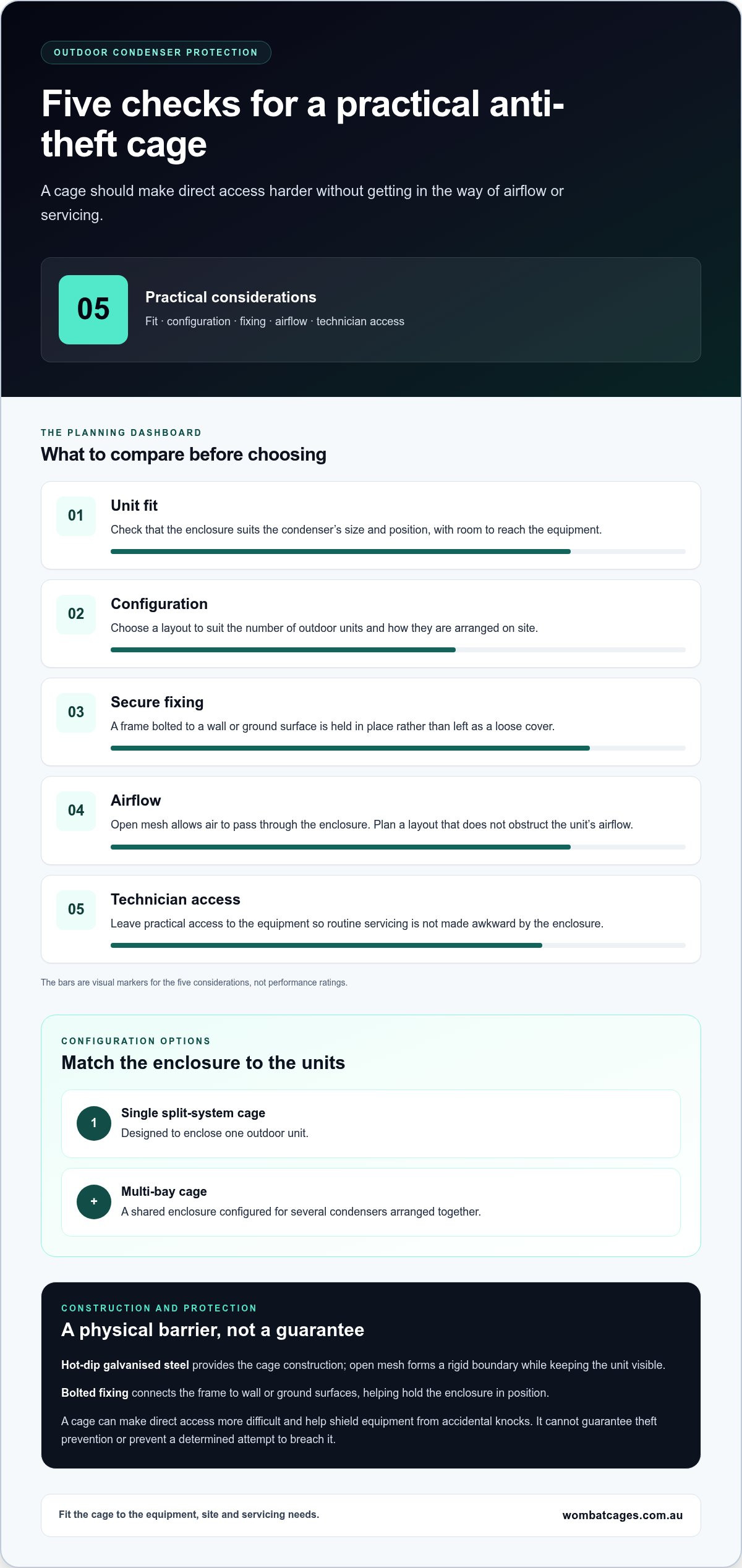
A cage should suit the equipment and its surroundings, not just create a barrier around the unit. Compare the configuration and fixing, whether air can pass through, and how a technician will reach the condenser for servicing. These details help you assess an anti-theft air conditioner cage Perth property owners can use for a particular site, rather than choosing by appearance alone.
Single-unit cage or multi-bay enclosure: which suits the site?
A single split-system cage is designed to enclose one outdoor unit. If several condensers are arranged together, a multi-bay cage can provide a shared enclosure configured for multiple units. The choice depends on the number of condensers and how they are positioned. Wombat Cages manufactures both configurations, with fit and access planned around the site and equipment.
| What to compare | What to consider |
|---|---|
| Unit fit | Does the enclosure suit the condenser’s size and position, with room to access the equipment? |
| Configuration | Is the cage for one split system, or does the site need a multi-bay arrangement for several units? |
| Fixing | How will the frame be secured to the available wall and ground surfaces? |
| Airflow | Does the mesh allow air to move through the enclosure around operating equipment? |
| Technician access | Can a technician reach the unit to carry out servicing? |
How to weigh security, airflow and service access
More coverage can make direct access to equipment harder, but the enclosure still needs open mesh and a practical way to reach the unit. Consider the condenser’s location, surrounding walls and the space needed for servicing. The right balance depends on the site and equipment. A layout that suits one installation may not suit another.
Outdoor materials matter too. Exposure to the elements makes corrosion resistance a practical consideration for a steel cage. Wombat Cages uses hot-dip galvanised steel. This describes the material and finish, not a promised service life. For further detail on cage materials and design, read the hot-dip galvanised condenser cage guide.
How to Plan the Right Cage for Your Outdoor Unit
A suitable cage starts with a clear picture of the equipment and where it sits. The number of units, their arrangement, available space and servicing access all help shape the enclosure. This planning also helps determine whether a single-unit cage or a multi-bay configuration is the better fit.
- Identify the units. Record how many outdoor condensers need protection and note their dimensions.
- Map the site layout. Note where each unit sits, how the units are arranged and how much surrounding space is available.
- Plan access. Allow for the way a technician needs to reach the equipment for servicing. Consider how the cage can be positioned without obstructing practical access.
- Select a configuration. Choose a single split-system cage for one unit or a multi-bay arrangement for multiple condensers grouped together.
Cage planning checklist: note the number and dimensions of the units, their arrangement, the available space, service access and the wall or ground surfaces for fixing.
What site and equipment details help plan a cage?
Clear dimensions and a simple layout are useful starting points. Note whether units sit side by side or in separate positions, and identify the space around them. Include technician access needs, along with nearby wall and ground surfaces that may be used for installation. These details help shape a cage around the actual site instead of treating every condenser setup as identical.
Why professional installation is part of the security solution
A cage needs to be fixed in place to work as a practical physical barrier. Wombat Cages provides professional installation, bolting frames to wall and ground surfaces. The available mounting surfaces and equipment layout are considered during planning, so the enclosure can be positioned to suit the site without overlooking access needs.
For an anti-theft air conditioner cage Perth property owners are planning, Wombat Cages offers configurations for a single split system or multiple units, with installation to match. Read about professional AC cage installation or view air conditioner cage options.
Wombat Cages: Anti-Theft Protection Built Around Your AC Units
Outdoor air conditioning equipment needs a cage that suits the unit and the space around it. Wombat Cages manufactures and installs hot-dip galvanised steel security cages for condensers and compressors. The rigid enclosure creates a physical barrier, while open mesh supports airflow and gives technicians access for servicing.
Configuration matters. One outdoor unit has different enclosure needs from several condensers grouped together. Planning around the equipment helps avoid a cage that is awkward to position or difficult to work around. Wombat Cages offers options for individual split systems and multiple units.
A purpose-built cage for one unit or multiple condensers
A single split-system security cage is designed for one outdoor unit. For multiple condensers arranged side by side, a multi-bay cage provides a shared enclosure suited to that layout. The choice depends on the number of units and how they are positioned. Both configurations are built for outdoor equipment, with fit and access considered alongside the barrier.
What happens when you arrange cage supply and installation?
Wombat Cages arranges quotes and installation directly. The cage configuration is planned in relation to the units and site layout. Professional installation then secures the frame by bolting it to wall and ground surfaces. That fixing helps hold the enclosure in place as a practical barrier, while open mesh keeps airflow and technician access in view.
A cage is a physical layer of protection, not a promise that theft or damage cannot happen. Its usefulness depends on a suitable fit, sensible positioning and secure fixing. Matching the enclosure to the equipment also helps keep servicing practical, whether the job involves one condenser or several.
If you’re ready to plan a cage for your outdoor unit, request a Wombat Cages quote. Include how many units need protection and how they’re arranged, so the discussion can start with the details that shape a suitable configuration.
Protect Your Outdoor Unit with a Cage That Fits
A security cage adds a physical barrier around an exposed condenser, but its value depends on practical details. Match the configuration to the equipment, consider how the frame will be fixed, and keep airflow and technician access in mind. A cage can deter and restrict access, though it cannot guarantee theft prevention or replace maintenance and insurance.
Wombat Cages manufactures hot-dip galvanised steel enclosures for outdoor condensers and compressors. Open mesh supports airflow and servicing, while single split-system and multi-bay options suit different unit arrangements. Professional installation secures the frame to wall and ground surfaces.
If you’re planning an anti-theft air conditioner cage Perth property owners can use, start with the number of units, their layout and the access needed around them. Then request a quote for an anti-theft AC cage.
A well-planned enclosure can make your outdoor equipment less exposed while keeping its everyday needs in view. Start with a practical fit and protect your unit with confidence.
Frequently Asked Questions
What is an anti-theft air conditioner cage?
An anti-theft air conditioner cage is a rigid enclosure fitted around an outdoor condenser or compressor to make the equipment harder to reach. Wombat Cages makes hot-dip galvanised steel cages with an open-mesh design for outdoor units. The enclosure acts as a physical barrier against theft, vandalism and accidental damage. It protects outdoor equipment only and does not replace maintenance, insurance or other security measures.
Does an air conditioner security cage stop copper theft?
No cage can guarantee that copper theft will be stopped. A securely fixed enclosure creates a physical barrier that can deter opportunistic interference and make access to exposed equipment more difficult. Its effectiveness depends on practical factors such as suitable fit and secure installation. A cage is one protective measure, not a guarantee against determined attempts to remove or damage an outdoor unit.
Can an anti-theft cage restrict air conditioner airflow?
A cage can affect airflow if it is poorly suited to the unit or positioned in a way that obstructs air movement. Wombat Cages uses open mesh designed to support airflow around outdoor equipment. Fit and placement still matter because each site and unit arrangement is different. Plan the enclosure around the condenser and keep the unit’s airflow needs in view when choosing a configuration.
Can a technician service an air conditioner inside a security cage?
Yes. Wombat Cages’ open-mesh cage design allows technician access for servicing. Consider access when planning the enclosure so the cage can protect the unit without making routine work unnecessarily difficult. A technician needs to reach the outdoor equipment, so the cage configuration and position should suit the unit’s layout and available working space.
Should an air conditioner cage be bolted to a wall or the ground?
The frame should be secured to suitable wall and ground surfaces as part of the installation. Bolting the cage in place helps keep it positioned around the equipment instead of leaving it as a loose cover. The site layout and available mounting surfaces inform the installation plan. Wombat Cages provides professional cage installation, securing frames to walls and ground surfaces.
Is a single-unit cage or a multi-bay cage better?
The right option depends on how many outdoor units need protection and how they are arranged. A single split-system cage is designed for one outdoor unit. A multi-bay cage suits multiple condensers arranged together, such as units positioned side by side. Match the configuration to the equipment layout and allow for technician access.


