
What if the barrier protecting your data centre’s outdoor cooling equipment became an obstacle to cooling itself? A data centre HVAC security cage needs to deter theft, vandalism and accidental damage without restricting airflow or making routine servicing harder.
These are practical concerns. Cooling equipment supports critical operations, but a poorly planned enclosure can affect airflow, technician access and movement around the site. Protection also needs to suit the number and layout of units without disrupting the way the facility operates.
This article explains how to plan a durable physical barrier around external HVAC equipment while keeping airflow and maintenance access in view. You’ll learn what to consider when protecting one unit or several side by side, and which site and equipment details help shape a suitable enclosure. We’ll also look at how open-mesh, hot-dip galvanised steel cages can form part of a broader physical security approach, with configuration and installation planned around the data centre’s needs.
Key Takeaways
- A data centre HVAC security cage can help shield outdoor equipment from theft, vandalism and accidental impact.
- Use equipment requirements and manufacturer clearances to guide cage placement, airflow and technician access.
- Compare single-unit and multi-bay layouts against your equipment count, available footprint and servicing needs.
- Plan the project by recording unit locations, quantities, mounting surfaces and routine maintenance requirements.
- Consider how hot-dip galvanised steel and open-mesh cage designs suit your outdoor HVAC setup.
Why Data Centre HVAC Equipment Needs Purpose-Built Security
Outdoor cooling equipment can sit beyond a data centre’s main building envelope, where it may be more exposed to people, vehicles and site activity. A data centre HVAC security cage is a physical barrier fitted around vulnerable external equipment, such as condensers or compressors. It helps restrict direct access and reduce exposure to damage while keeping the equipment’s operating and service needs in view.
The risks vary. Theft involves equipment or components being taken. Vandalism means deliberate damage, while accidental impact can happen during nearby work or vehicle movements. A cage adds a protective layer against these threats, but it can’t guarantee that damage or disruption won’t occur. Its position and construction need to suit both the equipment and the site.
Which external HVAC assets may need protection?
Outdoor air conditioning condensers and compressors are common applications for cage protection. Consider how exposed each unit is, how easily people can reach it, and how close it sits to paths, vehicle routes or work areas. A unit in an open, accessible location may need a different layout from equipment behind an existing site boundary.
Define the scope carefully. A cage surrounds external equipment, not indoor plant or other assets elsewhere on site. It must also leave airflow paths and manufacturer-required clearances unobstructed. Allow technicians enough room to reach service points and carry out planned maintenance. These details help determine the cage’s position and access arrangement.
Why data centre sites need an operational view
Cooling plant supports facility operations, so protecting external units is one practical part of managing physical risk. A barrier can help limit unauthorised access or accidental contact, but it doesn’t ensure uninterrupted cooling or uptime. The wider approach still matters. This overview of physical security at data centres places equipment protection within the broader context of facility design and restricted access.
Plan around the whole working area. Consider how the cage fits within the site’s security boundaries, where staff and service technicians move, and how the equipment remains accessible for inspection and maintenance. A barrier that blocks a route or complicates routine servicing may create operational friction, even if it surrounds the equipment effectively.
A purpose-built enclosure needs to balance physical protection with airflow, clearances and practical access. Treat the cage as one measure in the site’s physical security plan, coordinated with facility operations and applicable site requirements. Start by assessing the equipment layout and choosing a design that protects the units without obstructing their use.
How to Protect HVAC Airflow and Technician Access Inside a Security Cage
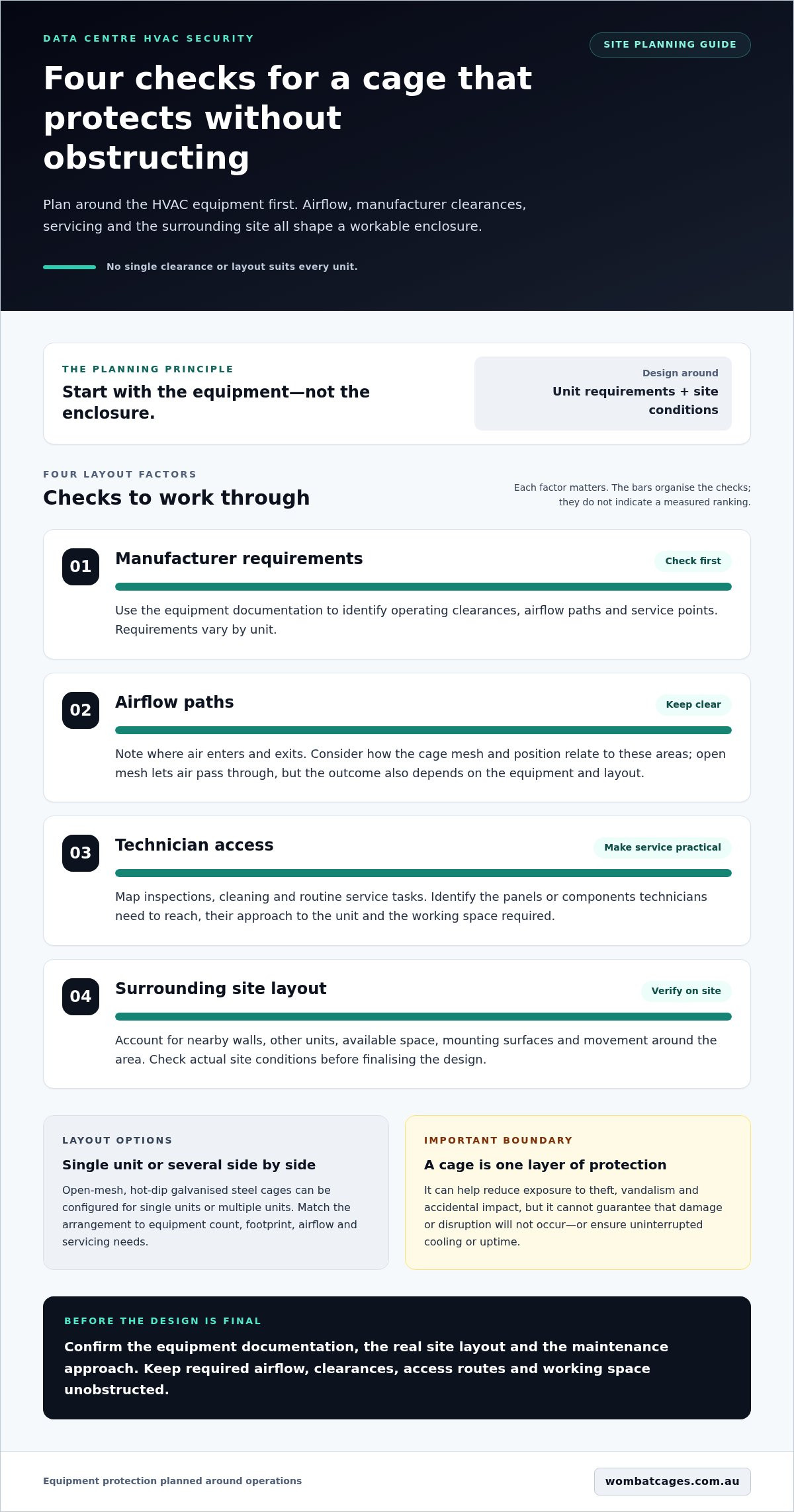
A cage must protect equipment without changing how it’s meant to operate. Before deciding on its position or layout, use the HVAC manufacturer’s documentation to identify airflow paths, operating clearances and service points. Requirements vary by unit, so there’s no single clearance or cage layout that suits every data centre.
What airflow requirements should the cage respect?
Start with the equipment, not the enclosure. Check where air enters and exits, and note any clearance requirements around the unit. Then consider how the cage mesh and position relate to those areas. Open mesh creates a physical barrier while allowing air to pass through, but the result still depends on the equipment and site layout.
Nearby walls, other units and available space can all affect how air moves around a condenser or compressor. Plan a data centre HVAC security cage around these conditions rather than assuming the enclosure will have no effect on airflow. If equipment documentation or site conditions raise questions, resolve the relevant technical requirements before finalising the design.
How can technicians service caged HVAC equipment?
Map routine work before deciding where access should be. Consider inspections, cleaning and the service tasks technicians carry out at each unit. Identify which panels or components need to be reached, how technicians approach the equipment, and what space they need to work effectively.
Include those details in the design brief. Keep required working space and access routes clear, and make sure the cage doesn’t obstruct nearby equipment or staff movement. Entry points and the overall layout should support planned maintenance while still forming a practical barrier. Check clearances against the equipment documentation and actual site conditions rather than relying on a generic measurement.
For broader selection considerations, read this guide to commercial AC security cages. It provides additional context for matching cage design to HVAC assets and their operating environment.
Open-mesh, hot-dip galvanised steel cages can be configured for single units or multiple units side by side. The right arrangement depends on airflow paths, clearances, servicing needs and available space. Explore HVAC security cage options as you plan protection around your site.
Compare HVAC Security Cage Designs for Data Centre Sites
The right cage layout depends on the number and position of units, as well as how technicians reach them. Compare the options against the site plan, equipment clearances and mounting surfaces. No single arrangement suits every data centre.
| Design choice | May suit | Assess before deciding |
|---|---|---|
| Single-unit cage | An isolated condenser or compressor with a clear approach for servicing. | Space around the unit, access needs and the available fixing surfaces. |
| Multi-bay cage | Several units positioned side by side, where a shared arrangement fits the site. | Total footprint, airflow paths, individual service access and how the units are laid out. |
| Open mesh | Sites where visibility and ventilation are important considerations. | Mesh arrangement and cage position in relation to the equipment’s airflow requirements. |
| Solid barrier | Situations where a more closed barrier is being considered for the site. | Potential effects on airflow, visibility and access for inspection and maintenance. |
Single-unit cages or multi-bay protection?
A separate cage can suit an isolated unit, particularly where technicians need a straightforward route to reach it. Units grouped side by side may suit a multi-bay layout, provided the larger footprint works with site access and equipment clearances. Count the units and map their positions before settling on a configuration. For more detail on planning protection for grouped units, read this multi-unit AC security cage guide.
Mesh enclosure or solid barrier?
Open mesh forms a physical boundary while allowing airflow and leaving equipment visible for routine observation. A solid barrier may reduce visibility and obstruct ventilation if positioned across an air intake or outlet. Don’t select either option on appearance alone. Consider the equipment’s documented airflow needs, the technician’s approach and the security purpose of the enclosure together. A cage can support protection, but it doesn’t guarantee a particular security outcome.
Fixings also need to suit the site. Assess the wall and ground surfaces, the proposed cage position and how technicians and staff move around the area. These details influence the practical mounting approach, so don’t assume one fixing method or layout will work everywhere. A well-planned data centre HVAC security cage balances equipment count, footprint, ventilation, visibility and service access, with site-specific requirements considered before installation.
Plan a Data Centre HVAC Security Cage Project Step by Step
A clear project brief helps plan cage configuration, access and installation around the site’s operating needs. Work through these steps before settling on a layout.
- Inventory the equipment. Record each outdoor condenser or compressor that needs protection, its location and the number of units in that area. Note whether units are isolated or positioned side by side. This helps frame the choice between individual cages and a multi-bay arrangement.
- Map the site layout. Mark nearby walls, ground surfaces, access routes and existing security boundaries. Record how staff and technicians move through the area, and identify nearby equipment or activity that could affect cage positioning.
- Document servicing needs. List routine inspection and maintenance tasks for each unit. Note the access points technicians need to reach and the working space required. Use equipment documentation to record airflow paths and manufacturer clearances rather than relying on a generic measurement.
- Identify project-specific constraints. Flag site safety, security, electrical or other technical requirements that need to be addressed in the facility’s project planning. Treat these as site-specific considerations, not assumptions that apply uniformly to every data centre.
- Plan installation around operations. Consider how the installation team will access the work area and how the work can fit facility procedures and operational needs. Professional cage installation involves fixing the frame to suitable wall and ground surfaces, so include mounting locations and site conditions in the plan. For further background, see this guide to professional condenser cage installation.
Bring the inventory, layout notes, service requirements and identified constraints together in one brief. This gives the cage configuration a practical basis and helps protect equipment without obstructing access or site activity. Wombat Cages supplies and installs hot-dip galvanised steel cages, with open-mesh configurations for single units or multiple units side by side.
Plan your HVAC cage installation around your equipment layout and site requirements.
Choose a Data Centre HVAC Security Cage Built Around the Site
The right data centre HVAC security cage protects exposed outdoor equipment while keeping airflow and planned maintenance access in the design brief. There’s no universal layout. Equipment positions, site access, fixing surfaces and service needs all shape the practical choice.
What a tailored cage plan should address
Start with the site, not a standard footprint. Record which outdoor condensers or compressors need protection, whether they’re installed individually or side by side, and how accessible each location is. Note the available wall and ground surfaces for fixing, along with nearby routes and existing site boundaries.
Keep the HVAC manufacturer’s airflow paths and clearance requirements visible in the project requirements. Include the access technicians need for routine servicing. These details help determine whether a single-unit or multi-bay configuration is a better fit. They also help ensure protection is planned around how the equipment operates, rather than forcing the site to adapt to a one-size-fits-all enclosure.
Move from site requirements to installation
Wombat Cages supplies and professionally installs outdoor condenser security cages made from hot-dip galvanised steel. Open mesh supports airflow and technician access. Cages can be configured to protect a single unit or multiple units positioned side by side.
Before discussing the project, bring together unit quantities, equipment positions and the site layout. Include relevant mounting surfaces, service access needs, and airflow or clearance requirements from equipment documentation. This gives configuration and installation planning a practical starting point. Site-specific technical or operational requirements can be included in the project plan.
Protection should fit the equipment and the way the site runs. Share your unit quantities and layout with Wombat Cages to discuss a suitable cage configuration and arrange supply and installation. Discuss your HVAC cage project.
Protect Your HVAC Equipment with a Site-Fit Cage
Protecting outdoor cooling equipment takes more than choosing a barrier. A suitable data centre HVAC security cage should account for equipment position, manufacturer clearances, airflow and the access technicians need for planned servicing.
Start with the site layout. Unit quantities, mounting surfaces and access routes help determine whether a single-unit or multi-bay configuration is the better fit. Open mesh supports airflow and technician access, while hot-dip galvanised steel provides a physical barrier designed for outdoor conditions around condensers and compressors.
Wombat Cages supplies and professionally installs cages configured around single units or multiple units side by side. Share your equipment quantities and layout to discuss a practical approach for your site.
Discuss a security cage for your HVAC equipment and take the next step towards planned, site-fit protection. With the right details in hand, you can protect exposed equipment while keeping airflow and maintenance access part of the plan.
Frequently Asked Questions
Will a data centre HVAC security cage restrict airflow?
It can affect airflow if it’s poorly positioned, so the cage layout needs to suit the specific HVAC unit and site. Open mesh allows air to pass through while forming a physical barrier, but it doesn’t automatically make every design suitable. Check the manufacturer’s documentation for airflow paths and required clearances, then consider nearby walls, other equipment and cage position before finalising the layout.
Can a security cage prevent all theft or damage to HVAC equipment?
No. A security cage adds a physical layer that can deter unauthorised access and help shield equipment from theft attempts, vandalism or accidental impact, but it can’t eliminate every risk. Consider it alongside the site’s access controls, visibility and operating procedures. A cage also can’t guarantee that equipment won’t be damaged or that facility operations will continue without interruption.
How do technicians access HVAC equipment inside a security cage?
Plan the cage around the inspection and servicing tasks technicians need to perform. Identify the parts of the unit they must reach, the space needed to work and the route they’ll use to access it. The cage layout and entry arrangement should preserve that access rather than obstruct routine work. Check clearances against equipment requirements and actual site conditions.
What is the difference between a single-unit cage and a multi-bay HVAC cage?
A single-unit cage surrounds an individual outdoor condenser or compressor. A multi-bay cage can be configured for several units positioned side by side. The practical choice depends on how many units need protection, their spacing, the available footprint, mounting surfaces and technician access. A site plan showing equipment positions and service routes helps determine whether separate enclosures or a shared arrangement fits better.
Can a security cage be installed around existing data centre HVAC units?
Yes, existing outdoor units can be included in cage planning. The layout needs to account for where each unit sits, its airflow paths, available mounting surfaces and the access technicians need for servicing. Record the equipment arrangement before installation planning begins. Check manufacturer clearances and include any facility-specific technical or operational requirements in the site plan rather than assuming a standard layout will suit.
What information is needed to plan a data centre HVAC security cage?
Start with the number and location of outdoor units, noting whether they’re separate or positioned side by side. Record mounting surfaces, access routes and routine servicing tasks. Include airflow paths and clearances from the equipment documentation, along with relevant site procedures. These details help shape a practical cage configuration and installation plan. Include site-specific technical or safety requirements in project planning.
Does Wombat Cages supply and install data centre HVAC security cages?
Yes. Wombat Cages supplies and professionally installs hot-dip galvanised steel security cages for outdoor air conditioning condensers and compressors. Open mesh supports airflow and technician access, and configurations can protect a single unit or multiple units side by side. To discuss a practical cage plan, share the equipment quantities, layout, mounting surfaces and relevant site requirements.


