
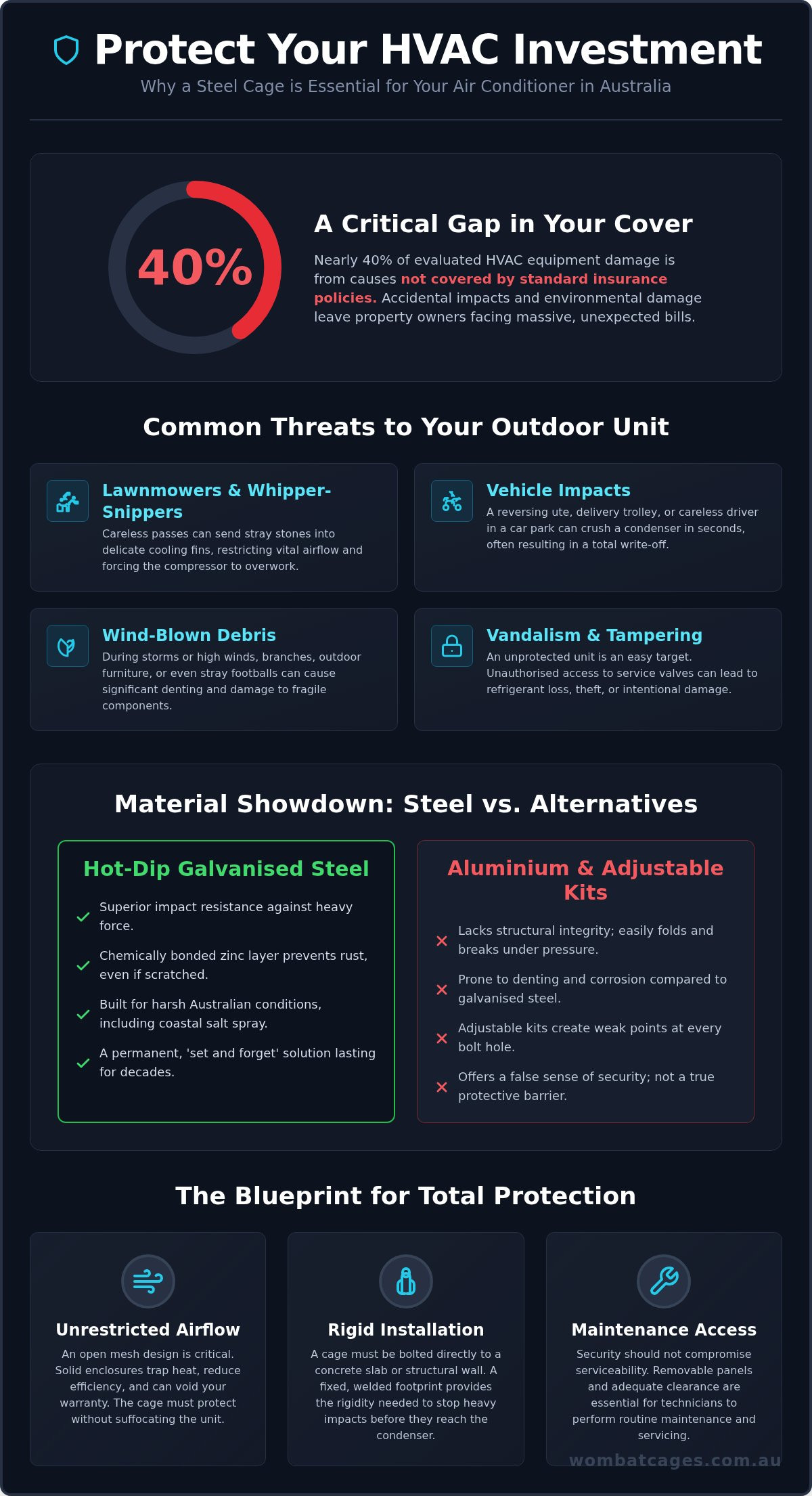
Nearly 40% of evaluated HVAC equipment damage is caused by issues that standard insurance policies simply won't cover. It is a staggering figure that leaves many property owners footing massive repair bills for accidents they assumed were protected. When your outdoor condenser sits exposed, it's a sitting duck for stray lawnmowers, falling debris, or accidental bumps from reversing vehicles. You've invested thousands in your property's cooling system. It's only logical to defend that asset with something more substantial than a prayer.
We know the sinking feeling of seeing exposed copper piping or a dented coil. You need a solution that offers total security without compromising performance. This guide focuses on protecting AC unit from accidental damage through the installation of professional-grade steel cages. You'll learn how to secure your condenser against impacts and tampering while maintaining the unrestricted airflow your system requires. We will walk through the process of creating a permanent, physical barrier. It's time to gain the peace of mind that comes from a truly secure, set and forget installation.
Key Takeaways
- Identify common environmental threats, such as lawnmowers and flying debris, to understand the necessity of protecting AC unit from accidental damage.
- Compare materials to see why hot-dip galvanised steel provides the structural integrity required for long-term asset protection in harsh conditions.
- Learn the essential steps for a rigid installation; bolt cages directly to concrete slabs or walls to ensure maximum stability.
- Ensure your security solution remains practical by incorporating removable panels and providing adequate clearance for routine maintenance and servicing.
The Hidden Risks: Why Protecting Your AC Unit from Accidental Damage Matters
Accidental damage is the leading cause of premature condenser failure. While most property owners worry about electrical surges or internal mechanical faults, the real danger often comes from the immediate environment. It is a physical reality. An exposed unit is a vulnerable unit. Protecting AC unit from accidental damage starts with identifying these risks before they result in a total system shutdown.
Lawnmowers and whipper-snippers are the primary enemies of outdoor units. One stray stone or a careless pass with a line trimmer can flatten delicate cooling fins. This damage isn't just cosmetic. It restricts vital airflow. It forces the compressor to run hotter and longer. In driveways and commercial loading zones, the stakes are higher. A reversing ute or a heavy delivery trolley can crush a condenser in seconds. Vandalism is another factor. Unauthorised access to service valves can lead to refrigerant loss or intentional tampering. A secure barrier is the only way to mitigate these threats.
The Financial Impact of HVAC Downtime
The cost of a split system goes far beyond the initial purchase. Emergency repair call-out fees are expensive. If a condenser coil is crushed, the unit is often written off. You are looking at a full replacement. There is also the issue of refrigerant leaks. Damage to copper lines causes gas to escape. This leads to poor performance and potential environmental fines. Research shows that nearly 40% of evaluated HVAC equipment has a cause of loss not covered by standard insurance policies. Prevention is always more affordable than a mid-summer breakdown. Protecting AC unit from accidental damage ensures your cooling remains operational when you need it most.
Physical Vulnerabilities of Modern Split Systems
Modern air conditioners are engineered for thermal efficiency; they aren't built for physical toughness. Exposed copper lines are a magnet for accidental kinks. These lines are soft. They deform under the slightest pressure. Once restricted, the entire refrigeration cycle fails. The aluminium fins are equally fragile. They are designed to be thin for maximum heat exchange. This makes them easy to flatten with a stray football or wind-blown debris. Condenser protection is a structural necessity that transforms a vulnerable mechanical asset into a resilient, fortified component of your property.
Choosing the Right Guard: Galvanised Steel vs Alternatives
Choosing the right material is the difference between a permanent fix and a temporary patch. Hot-dip galvanised steel is the Australian industry standard for a reason. It handles the harsh sun and salt spray without flinching. Protecting AC unit from accidental damage requires more than a flimsy screen. It needs structural mass. If a guard can't withstand a direct hit from a rogue lawnmower or a reversing ute, it isn't doing its job. You need a material that prioritises utility over aesthetic flair.
Aluminium is often marketed as a lightweight alternative. It is easy to move. It is also easy to break. Aluminium lacks the impact resistance needed for high-traffic areas or commercial loading zones. It folds under pressure. Rigid frames are also vastly superior to adjustable kits. Adjustable kits have weak points at every bolt hole. A fixed, welded footprint provides the rigidity needed to stop a heavy impact before it reaches your condenser. Security requires a permanent, unyielding presence.
The Science of Hot-Dip Galvanisation
Hot-dip galvanisation is a chemical bond. The steel is submerged in molten zinc to create a thick, protective layer. This coating won't chip or peel like standard powder-coated finishes. It is purpose-built for coastal environments where salt air eats through inferior metals. This durability means your cage lasts for decades without any maintenance. It is a set and forget solution for asset protection. The zinc coating acts as a sacrificial layer; even if it's scratched, the surrounding zinc protects the steel from rust.
Design for Airflow and Efficiency
HVAC units need to breathe. Solid enclosures are a significant mistake. They trap heat and force the condenser to work harder. This leads to overheating and can void your manufacturer's warranty. An open mesh design ensures the "free area" for airflow is maintained. It balances physical safety with mechanical efficiency. You get total protection without the performance hit. You can learn more about these technical specifications in our guide to the split system security cage. For a solution that stands up to the elements, look for a heavy-duty steel enclosure designed for Australian conditions.
Condenser Protection Cage Installation: A Step-by-Step Guide
Installation is where security becomes reality. A cage that isn't anchored correctly is just a loose pile of steel. Effective protection requires a rigid, permanent connection to the building or a concrete slab. Before you start, clear the area of any weeds, loose gravel, or debris. You must ensure adequate clearance between the condenser and the cage. Aim for at least 100mm on all sides. This allows for proper airflow and prevents heat buildup. It also gives a technician enough room to work later on.
Position the frame against the wall or over the slab. Use a pencil to mark the anchor points through the pre-drilled holes in the cage base. Accuracy at this stage prevents headaches later. Move the frame aside and drill the marked points. Use a hammer drill with a masonry bit sized correctly for your bolts. Once the holes are clear, reposition the frame and drive in your heavy-duty masonry bolts. Tighten them until the frame is immovable. Protecting AC unit from accidental damage depends entirely on this structural rigidity. Finally, attach the mesh panels and secure the lid using the provided fixings.
Tools Required for a Professional Finish
- Hammer drill and masonry bits: Essential for penetrating concrete slabs or brickwork without cracking the substrate.
- Socket sets: Used for tightening security bolts to the correct torque. A standard spanner often won't reach into tight corners.
- Spirit level: Ensures the cage sits perfectly square. A crooked cage looks unprofessional and can lead to uneven stress on the fixings.
Securing the Unit to the Building Structure
Bolting the cage directly to a brick or concrete wall is vastly superior to freestanding designs. A wall-mounted cage uses the mass of the building for extra stability. It makes the unit nearly impossible to dislodge. For the highest level of security, use anti-tamper fixings. These bolts are designed so they cannot be removed with standard tools. This prevents thieves or vandals from simply unbolting your protection. Always check that the cage is level and plumb. If the frame is skewed, it can rattle against the condenser or the wall. A silent, rigid installation is the hallmark of a professional job. This methodical approach is the best way of protecting AC unit from accidental damage while maintaining the integrity of your property.
Maintaining Access for Maintenance and Servicing
A security cage shouldn't be a roadblock for your service technician. Protecting AC unit from accidental damage is the goal; making the unit impossible to service is an expensive mistake. High-quality enclosures are designed with the tradie in mind. This means including removable panels and a "Quick-Access" lid. If a fridgey can't reach the gauges or valves without dismantling the entire structure, your maintenance costs will skyrocket. Time spent fighting a poorly designed cage is money wasted on labour fees.
Commercial properties with several condensers require even more planning. You need a system that offers uniform security across the board. For larger sites, a multi unit AC security cage provides the necessary protection while ensuring every unit remains accessible. The right design allows a technician to get in, do the job, and get out without compromising the hardware. Utility and accessibility must go hand in hand.
The Technician’s Perspective
Major HVAC brands have strict clearance requirements for a reason. They need space for heat exchange and tool access. A well-designed cage respects these boundaries. It provides enough room for a technician to connect gauges and adjust settings comfortably. Interestingly, a robust cage also protects the technician. It creates a defined work zone. It keeps stray debris or traffic away from them while they focus on the delicate internals. We avoid the "locked-in" trap by using removable front panels. This feature allows full access to the control board and pipework without compromising the overall structural integrity of the cage. It is about working smarter, not harder.
Visual Inspection Protocols
Maintenance isn't always about turning a spanner. Sometimes it is just a quick look. The open mesh design is vital for visual inspections. It allows you to see the condition of the coils and fins from the outside. You can spot a refrigerant leak or a build-up of dust instantly. This transparency is a key part of protecting AC unit from accidental damage. It ensures that small issues don't turn into major failures because they were hidden behind solid panels.
You should also keep the base of the cage clear. Leaves and grass clippings tend to collect against the mesh. If left alone, this debris traps moisture. It can lead to corrosion on the condenser base. A quick sweep once a month is all it takes. While you are there, give the masonry bolts a quick check. Ensuring the structure remains rigid is essential for long-term security. For a professional-grade solution that balances access with durability, you can order your custom AC security cage today.
Secure Your Investment with Wombat Cages
Wombat Cages provides the definitive answer for asset protection. Our products are purpose-built for the harshest Australian conditions. Protecting AC unit from accidental damage requires more than a standard fence; it requires structural integrity. We understand that your HVAC system is a significant investment. It deserves a high-quality defense. Whether you are managing a single residential property or a large commercial site, we provide a permanent, unyielding solution. Our focus remains on durability and functional value. We build things that last.
Every site has different requirements. We offer custom configurations to suit any layout. This includes the Single Split System Security Cage for standard residential units and Multi-Bay Security Cages for larger banks of condensers. Our cages are designed to be bolted directly to walls and ground. This creates maximum rigidity. You can rely on our Cage Installation Services to ensure the job is done right the first time. We provide a "set and forget" barrier that works silently to defend your equipment. It is the peace of mind that only professional-grade steel can provide.
Built to Last, Designed to Defend
Our heavy-duty steel mesh is the core of our defense. It is designed to withstand significant physical impact without deforming. The hot-dip galvanised finish ensures the structure remains rust-free for decades. It is a no-nonsense aesthetic. This look signals high security to vandals and prevents tampering before it starts. The Wombat Cages promise is simple: total protection without compromise. We refuse to use inferior materials like aluminium. We stick to the industrial strength of steel because we know what is at stake. Your unit stays safe. Your airflow stays unrestricted. It is a masterclass in functional engineering.
Next Steps for Property Protection
Securing your unit is a straightforward process. Start by measuring your condenser. We need the height, width, and depth to ensure a perfect fit. Remember to account for the 100mm clearance required for airflow and maintenance access. For commercial managers, our team is available to consult on complex Multi-Bay Security Cages requirements. We help you navigate the transition from vulnerability to total protection. We offer a national focus on asset security. You can contact Wombat Cages for a quote today to begin the process. Protecting AC unit from accidental damage is a common-sense step for any property owner. Don't wait for the first impact to happen. Secure your investment now with a barrier that won't back down.
Secure Your HVAC Assets for the Long Term
Accidental damage is a predictable risk that can be managed with the right physical barrier. You've seen how exposed condensers are vulnerable to everything from lawnmowers to vehicle impacts. By choosing hot-dip galvanised steel and a rigid, bolted installation, you transform a fragile mechanical asset into a fortified part of your property. It is about more than just toughness. A technician-friendly design ensures that your unit remains easy to service while staying completely protected from external threats.
Protecting AC unit from accidental damage is a common-sense investment that pays for itself by avoiding expensive emergency repairs and unnecessary downtime. We provide national Australian delivery on all our heavy-duty enclosures, ensuring your property is secure regardless of location. You don't need to wait for a costly accident to happen before you take action. A permanent solution is available now.
Secure your HVAC assets with Wombat Cages today and enjoy the peace of mind that comes with professional-grade strength. Your equipment is worth defending, and we are here to help you get the job done right.
Frequently Asked Questions
Will a security cage restrict the airflow of my AC unit?
A professionally designed security cage won't restrict the airflow of your AC unit. The open mesh design ensures zero restriction, allowing the condenser to breathe as the manufacturer intended. This is critical for maintaining efficiency and avoiding overheating. Solid covers or tight slats can trap heat, but a heavy-duty steel mesh provides protection without the performance hit. It's a common-sense approach to protecting AC unit from accidental damage while keeping your energy bills stable.
Can I install a condenser protection cage on a wall-mounted unit?
You can definitely install a condenser protection cage on a wall-mounted unit. In fact, bolting the frame directly to the building structure provides maximum rigidity. It uses the mass of the wall to create a permanent, unyielding barrier. This setup is ideal for units positioned higher up where they might still be vulnerable to falling debris or ladder impacts. We ensure the cage is level and plumb to prevent any vibration against the wall.
Is galvanised steel better than aluminium for outdoor cages?
Hot-dip galvanised steel is far superior to aluminium for outdoor cages. Aluminium is lightweight, but it lacks the structural mass and impact resistance needed to stop a heavy blow. It folds under pressure. Steel provides the hardness and weight required to defend against lawnmowers or reversing vehicles. The galvanisation process also ensures the metal remains resistant to the elements for decades. It's the industrial standard for a reason.
How do technicians access the unit for regular servicing?
Technicians access the unit through removable panels and quick-access lids. We design our cages so that a tradie can reach gauges, valves, and electrical components without dismantling the entire structure. This reduces labour time during regular servicing. A well-placed panel ensures there's enough room for tools and hands to work comfortably. It's about balancing high-level security with practical, everyday utility for the people maintaining your system.
Does a cage prevent copper theft as well as accidental damage?
A secure cage is an effective deterrent against copper theft. It creates a physical barrier that makes quick access to valuable piping nearly impossible. Most thieves look for easy targets; a bolted steel cage signals that your property is well-defended. While it's built for protecting AC unit from accidental damage, the same structural strength prevents unauthorised tampering with service valves and refrigerant lines. It's a multi-purpose security asset.
What tools do I need for a DIY cage installation?
For a DIY installation, you'll need a few specific tools to ensure a professional finish. A hammer drill and masonry bits are essential for drilling into concrete slabs or brickwork. You'll also need a socket set to tighten the heavy-duty masonry bolts and security fixings. A spirit level is vital to keep the frame perfectly square. Using the right gear ensures the installation is rigid and won't rattle over time.
Are the cages rust-proof for coastal properties?
Our cages are specifically designed to be rust-proof for coastal properties. The hot-dip galvanisation process creates a thick zinc coating that bonds chemically with the steel. This layer provides a sacrificial barrier against salt air and moisture. Unlike powder-coated finishes that can chip and rust underneath, galvanised steel remains resilient in the harshest marine environments. It's a set and forget solution that won't degrade when exposed to sea spray.
Can a cage be custom-sized for large commercial condensers?
We can custom-size cages for large commercial condensers and multi-bay banks. Every site has unique requirements, so we offer configurations that protect multiple units under a single, cohesive frame. This is ideal for shopping centres, office blocks, or apartment complexes where several condensers are grouped together. We work with you to ensure the clearance and access points match your specific hardware. No job is too large for industrial-grade protection.


