
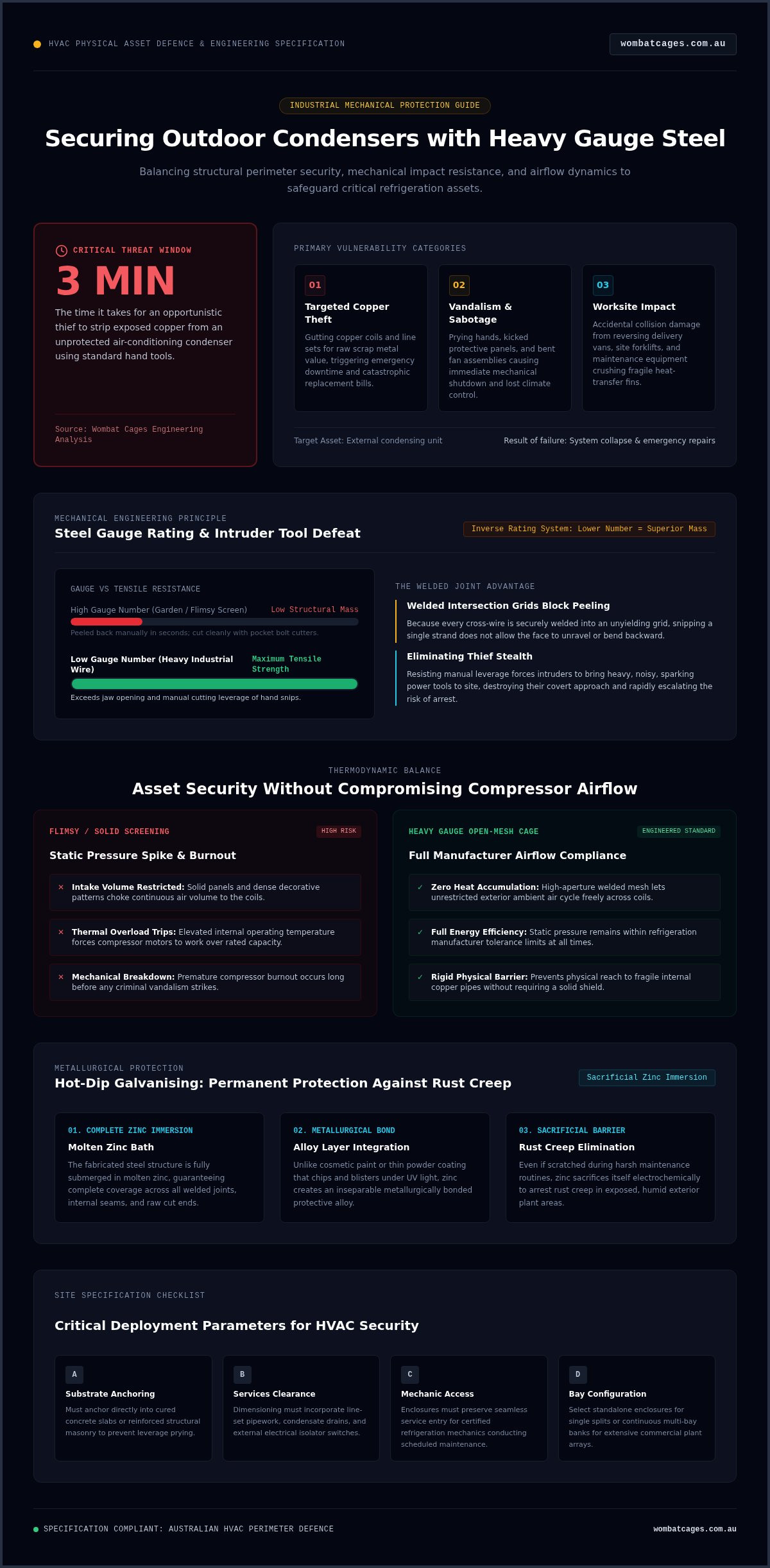
It takes as little as three minutes for a thief to strip the copper from an unprotected air-conditioning unit. A simple set of hand tools slices straight through thin cosmetic screens, leaving behind crippled cooling systems and thousands in emergency equipment downtime. Installing a heavy gauge steel condenser cage turns a vulnerable target into a hardened asset that opportunists simply walk away from.
You already know that flimsy garden-grade fencing and light-duty barriers don't cut it on a real perimeter. They collapse under pressure and often choke intake airflow, overheating expensive compressors before a vandal even strikes. True physical security shouldn't force you to choose between asset protection and mechanical reliability.
Discover how heavy gauge steel condenser cages defeat copper thieves, resist vandalism, and safeguard your outdoor HVAC investment against harsh elements. We'll walk through heavy-duty hot-dip galvanised steel construction, manufacturer airflow compliance, full perimeter anchoring, and how to maintain seamless service access for certified refrigeration mechanics.
Key Takeaways
- Understand why a heavy gauge steel condenser cage provides an impenetrable physical barrier that lightweight materials simply cannot match.
- Discover how welded mesh design stops opportunist hand tools while maintaining the unrestricted airflow your compressor requires.
- Learn the critical site measurement steps to account for pipework, isolators, and solid substrate anchoring before bolting down.
- Identify whether your site demands a standalone single split enclosure or a continuous multi-bay configuration for complete perimeter defence.
What Is a Heavy Gauge Steel Condenser Cage?
A heavy gauge steel condenser cage is a purpose-built structural enclosure engineered to defend external mechanical plant from deliberate attack and accidental impact. Unlike cosmetic garden screening or lightweight weather hoods, this security asset provides hardened physical protection. The structure encases the condensing unit in thick, rigid steel wire mesh, anchoring directly to cured concrete slabs or structural masonry walls. In modern Heating, ventilation, and air conditioning (HVAC) systems, external condensers carry the most fragile and expensive mechanical components. A heavy gauge steel condenser cage forms an unyielding perimeter around vulnerable copper pipework, electrical isolators, and compressor units without choking the massive volume of airflow required for system efficiency.
Understanding Heavy Gauge Steel in HVAC Security
Steel gauge operates on an inverse rating system. Lower gauge numbers mean thicker steel, higher mass, and superior tensile strength. While standard consumer enclosures bend under basic manual pressure, industrial-grade cages utilise heavy wire diameters welded securely at every intersecting joint.
This robust cross-section creates an impenetrable barrier against standard workshop tools. Opportunist thieves rely on speed, packing basic bolt cutters, snips, and pry bars. They look for flexible wire they can peel back in seconds. Heavy gauge steel resists manual leverage, blunts hand cutting tools, and absorbs direct impacts without caving in or tearing away from its fixings.
Primary Threats to Unprotected Outdoor Condensers
Leaving outdoor refrigeration plant exposed creates an immediate operational liability across three distinct risk categories:
- Targeted Copper Theft: Organised thieves strip exposed copper coils and line sets for scrap metal value. A clean condenser unit can be gutted in minutes, leaving building owners with catastrophic replacement bills.
- Vandalism and Deliberate Sabotage: Prying hands, kicked panels, and forced fan blades quickly cause complete mechanical breakdown, halting operations and stranding occupants without climate control.
- Accidental Worksited Impact: Reversing delivery vans, site forklifts, and commercial maintenance machinery frequently strike ground-mounted condensers, crushing delicate heat-transfer fins beyond repair.
The Engineering Behind Heavy Gauge Steel Protection
A heavy gauge steel condenser cage relies on structural mass to neutralize break-in attempts. Rather than deflecting force cosmetically, thick steel cross-sections absorb direct impact energy without buckling or tearing loose from substrate anchors. The perimeter cage keeps external cutting tools safely isolated from delicate internal condenser coils, refrigeration lines, and fan assemblies.
Tensile Strength and Mechanical Tool Resistance
Opportunist metal theft relies entirely on speed, stealth, and handheld leverage. Standard thieves carry pocket-sized bolt cutters, tin snips, and pliers. Against thin, light-duty wire, these tools slice clean through in seconds.
Heavy gauge carbon steel completely changes this dynamic. The thick wire diameter exceeds the jaw gap and cutting force of typical hand-operated bolt cutters. Because each wire intersection is welded into a rigid grid, an intruder cannot simply snip one strand and peel the face back. Resisting manual leverage forces vandals to bring loud, sparking power tools onto the property, instantly eliminating their stealth and dramatically increasing the odds of detection.
Hot-Dip Galvanising for Permanent Corrosion Defence
Outdoor security hardware faces constant weather exposure. Raw steel corrodes quickly, while thin powder coatings inevitably chip, blister, and permit hidden rust to undermine structural integrity.
Hot-dip galvanising solves this by immersing the fabricated steel into a bath of molten zinc. This process creates a metallurgically bonded alloy coating over every weld, cut end, and corner joint. The zinc forms a sacrificial barrier that halts rust creep, even when installed in humid outdoor service areas. Learn more about long-term metallurgical durability in our comprehensive breakdown of hot-dip galvanised condenser cages.
Maintaining Optimal HVAC Airflow Dynamics
Physical protection must never choke cooling performance. Solid panels and dense decorative screens restrict intake volume, elevating static pressure and forcing compressor motors to work harder. This heat buildup leads directly to thermal overload trips and premature compressor burnout.
A properly engineered heavy gauge steel condenser cage features precise open-mesh geometry. This structural spacing aligns with commercial ASHRAE ventilation standards, allowing unobstructed ambient air draw across heat exchangers while exhausting hot discharge air freely. You get uncompromised physical security without choking machinery efficiency. For site operators needing verified airflow compliance alongside hardened perimeter defence, purpose-built protection from Wombat Cages secures your plant without compromising cooling performance.
Heavy Gauge Steel vs Light Aluminium Cages
Material selection determines whether an outdoor enclosure functions as a genuine security barrier or merely a visual screen. Many commercial property managers install light-duty aluminium enclosures assuming they provide adequate deterrence. In practice, aluminium prioritises architectural aesthetics over raw impact capacity. A heavy gauge steel condenser cage is built for severe physical resistance where critical mechanical plant sits exposed to public footpaths, service alleys, and vehicle bays.
Physical Security and Shear Resistance Comparison
Aluminium possesses low ultimate tensile strength compared to structural carbon steel. A persistent intruder equipped with basic tin snips, an inexpensive hacksaw, or manual bolt cutters can slice through lightweight aluminium slats within seconds. Prying tools like crowbars easily bend thin aluminium profiles away from their fixings, creating open access to copper line sets.
Rigid steel behaves entirely differently under violent load. Heavy gauge steel wire mesh absorbs direct hits from sledgehammers without splitting at welded seams. The frame remains square and anchored, preventing opportunists from creating lever points. For smaller residential and commercial units facing boundary lines, our dedicated guide on split system security cages details how heavy-duty steel framing stops forced-entry attempts cold.
Long-Term Cost Analysis and Asset Resilience
Upfront purchase decisions must account for the actual lifecycle cost of site security. Lightweight materials create recurring financial risks:
- Single-Impact Vulnerability: A glancing blow from a delivery trolley or a single failed break-in permanently distorts an aluminium cage. Once buckled, the entire enclosure must be removed and replaced.
- Defeated Scrap Theft Deterrence: Thieves quickly recognise light aluminium covers as simple cosmetic boxes. They rip them off to harvest copper pipework, causing thousands of dollars in emergency equipment replacement and unscheduled building downtime.
- Permanent Asset Hardening: A heavy gauge steel condenser cage finished with hot-dip galvanising withstands heavy knocks, severe weather, and relentless leverage attacks for decades without structural fatigue or repainting.
Stopping a single copper theft pays for heavy-duty physical protection many times over. Choosing structural steel ensures your perimeter defence never folds under real-world abuse.
Specifying and Installing Heavy Duty Condenser Cages
Specifying a heavy gauge steel condenser cage requires accurate site measurements and solid structural anchors. A protective enclosure must fit the specific footprint of the mechanical machinery without choking airflow or restricting maintenance access. Proper installation follows a systematic four-step sequence:
- Step 1: Capture complete physical dimensions. Measure external height, width, and depth. Account for protruding copper pipe take-offs, external isolator switches, and electrical conduit runs.
- Step 2: Inspect structural substrates. Check the condition of the concrete slab or masonry wall. Cracked footings or crumbly mortar beds cannot hold under high leverage.
- Step 3: Choose tamper-resistant fixings. Match your anchoring hardware to the base material. Use heavy masonry sleeve anchors or concrete screw anchors with anti-tamper heads.
- Step 4: Align and anchor. Level the frame, maintaining manufacturer clearances for intake and exhaust air, then torque down all fasteners.
Anchoring to Slabs and Masonry Walls
High steel mass requires unshakeable anchoring. Heavy gauge frames need heavy-duty masonry sleeve anchors or tamper-resistant concrete bolts drilled deep into cured slabs. Securing the cage to both the ground footing and a structural brick wall provides multi-point anchoring. This dual-plane fixation stops vandals using vehicle tow straps or long pry bars to wrench the assembly loose. For detailed site mounting standards, review our guide on protecting AC units from accidental damage.
Ensuring Unhindered Technician Servicing Access
Security enclosures must never lock out certified refrigeration mechanics. Technicians need regular access to connect manifold pressure gauges, clean coils, and service electrical switchboards without unbolting structural frames.
Engineered cages include dedicated service panels secured with shielded industrial padlocks or captive security fasteners. This layout allows swift mechanical testing and filter clearing while keeping the surrounding heavy gauge steel condenser cage securely fixed in place. For commercial facilities requiring certified installation and reliable access, explore professional cage installation services from Wombat Cages to secure your machinery correctly from day one.
Selecting the Right Enclosure for Your HVAC Setup
Site layout and mechanical footprint dictate the exact cage configuration required. A solitary domestic unit has vastly different security demands than an expansive bank of commercial condensers operating in an open service yard. Every installation presents distinct physical variables, including wall setbacks, surface pipework, and foundation substrates. Selecting an appropriately sized heavy gauge steel condenser cage ensures an unshakeable fit that shields vulnerable components without restricting critical ventilation.
Single Split System Security Enclosures
Solitary condensers positioned along ground-floor footpaths or boundary alleys remain prime targets for opportunists. A Single Split System Security Cage wraps cleanly around the condenser chassis, enclosing soft copper line sets and electrical isolators within a rigid steel envelope.
The assembly anchors firmly against masonry walls and ground slabs. This close-coupled geometry maintains neat exterior sightlines while completely eliminating the wide pry gaps that thieves look for when using manual crowbars.
Multi-Bay Security Cages for Commercial Facilities
Commercial office developments, medical clinics, and retail complexes typically group multiple condensing units together behind buildings or in loading bays. Clustering valuable machinery without physical protection creates a massive target for scrap metal thieves. Multi-Bay Security Cages resolve this threat through interconnected, heavy-duty modular frameworks.
Review commercial layout options in our guide to multi-unit AC security cages. Shared internal mesh dividers separate individual compressors, maintaining independent technician access bays while significantly reducing total enclosure footprints across concrete pads.
Securing Your Facility with Wombat Cages
Wombat Cages manufactures and delivers industrial-grade Single Split System Security Cages and Multi-Bay Security Cages across Australia. Fabricated with thick, hot-dip galvanised steel wire mesh, each enclosure resists deliberate cutting attacks while satisfying manufacturer ventilation tolerances.
Our experienced team provides professional Cage Installation Services, ensuring every heavy gauge steel condenser cage is anchored directly to structural masonry or cured slabs for permanent physical defence. Contact Wombat Cages today to secure your cooling infrastructure against costly downtime, vandalism, and copper theft.
Hardening Your HVAC Assets for Long-Term Security
Leaving valuable refrigeration machinery exposed invites opportunist theft, deliberate vandalism, and costly business interruption. Thin decorative screening quickly buckles under hand tools, offering zero resistance when an intruder targets your plant. Installing a heavy gauge steel condenser cage provides an impenetrable physical barrier that defends your cooling investment year after year.
Manufactured from industrial hot-dip galvanised steel, these heavy-duty enclosures absorb direct mechanical impact and shrug off harsh outdoor elements without rusting. The engineered open mesh design maintains strict manufacturer airflow standards, preventing compressor thermal stress while preserving straightforward maintenance access for refrigeration mechanics.
Don't wait for a stripped copper line or damaged condenser coil to shut down your climate control. Secure your outdoor HVAC assets with Wombat Cages and take advantage of professional cage installation services available nationwide. Guard your site with purpose-built steel defence today.
Frequently Asked Questions
Can a heavy gauge steel condenser cage restrict my air conditioner's airflow?
No, an engineered heavy gauge steel condenser cage won't restrict critical HVAC airflow. Unlike solid louvres or dense decorative screening, open wire mesh geometry allows maximum static pressure relief. It allows the condenser fan to draw ambient air freely across internal heat exchangers and exhaust hot air without thermal throttling, keeping compressor operating temperatures well within manufacturer tolerances.
Will fitting a security cage interfere with regular HVAC maintenance or servicing?
No, professional security cages are engineered specifically with routine mechanical access in mind. Removable service panels or padlock-shielded inspection gates let refrigeration mechanics connect diagnostic manifold gauges, check isolators, and wash down coils easily. Certified tradespeople carry out standard maintenance procedures quickly without unbolting or dismantling the primary structural frame from its perimeter anchors.
How does hot-dip galvanised steel prevent rust in harsh coastal or outdoor environments?
Hot-dip galvanising submerges raw steel into a bath of molten zinc, forming an unshakeable metallurgical bond. This zinc coating completely seals internal weld joints, cut ends, and fastener holes against moisture and salt-laden air. Even if the outer surface suffers deep abrasions from tools or debris, the zinc sacrifices itself to stop rust from penetrating the underlying carbon steel core.
Can bolt cutters cut through heavy gauge steel wire mesh?
Standard manual bolt cutters cannot bite through industrial heavy gauge steel wire. Handheld cutting jaws lack the physical clearance and jaw leverage to sever thick, high-tensile steel strands. Opportunist thieves can't use quiet manual snips or pliers to peel away welded mesh panels. Defeating the barrier requires loud, sparking abrasive power tools, which thieves actively avoid due to immediate detection risks.
Can a condenser cage be installed on both concrete pads and external walls?
Yes, cages can be anchored securely across both ground footings and structural masonry walls. Dual-plane mounting provides maximum pull-out resistance against long pry bars and vehicle winches. Installers use heavy masonry sleeve anchors or high-tensile concrete screw bolts to pin the steel framework tightly against brickwork, rendered block, or cured concrete pads without compromising structural integrity.
What is the difference between an aluminium security cover and a heavy steel cage?
The fundamental difference lies in physical yield strength and actual tool resistance. Aluminium covers serve primarily as cosmetic screens. Handheld tin snips, handsaws, and small crowbars easily bend or shear thin aluminium slats open. A heavy gauge steel condenser cage provides genuine physical defence, resisting severe blunt force impacts, prying leverage, and manual shearing tools where valuable plant equipment sits exposed.
How do heavy gauge steel cages stop copper theft from commercial HVAC systems?
They eliminate fast access to high-value refrigeration pipework and condenser coils. Thieves look for unprotected units they can strip with basic pipe cutters in three to five minutes. Enclosing the condenser in welded, fully anchored steel wire mesh creates a hardened perimeter. Scrap opportunists recognise that breaking in takes excessive time and power equipment, convincing them to abandon the site without damaging the unit.


