
A single stray tree branch or a burst of golf-ball-sized hail can write off an outdoor condenser in seconds. When severe weather hits, delicate aluminium coil fins crush instantly, leading to costly replacements and leaving your property without cooling when you need it most. Finding reliable air conditioner protection from storm damage isn't just about covering the unit; it is about keeping critical infrastructure running under extreme pressure.
You already know that cheap canvas covers aren't the answer. Throwing a tarp or soft vinyl jacket over your system traps condensation, invites internal rust, and causes rapid compressor overheating if someone switches the system on by mistake. True asset protection demands structural strength, and you can defend your investment without sacrificing operational airflow. You'll discover how to shield your outdoor air conditioning unit from severe storm impacts, hail, and flying debris using rigid physical barriers that let the system breathe freely.
This guide breaks down key impact-rating criteria, delivers a practical storm-prep checklist for your condenser, and details heavy-duty engineering solutions built to handle gale-force winds year-round.
Key Takeaways
- Understand why airborne debris and hail cause instant, irreversible damage to external aluminium condenser coils.
- Discover why fabric covers risk total compressor failure and why rigid steel provides superior air conditioner protection from storm damage.
- Follow an essential storm-season checklist to secure concrete pads, anchor mounting bolts, and eliminate surrounding projectile hazards.
- Learn the engineering benchmarks for mesh aperture sizing and manufacturer clearance tolerances that maintain full system ventilation.
- Explore how heavy-duty, hot-dip galvanised steel cages deliver permanent defence against severe weather and opportunistic vandalism year-round.
Identifying Severe Storm Hazards to Outdoor Air Conditioners
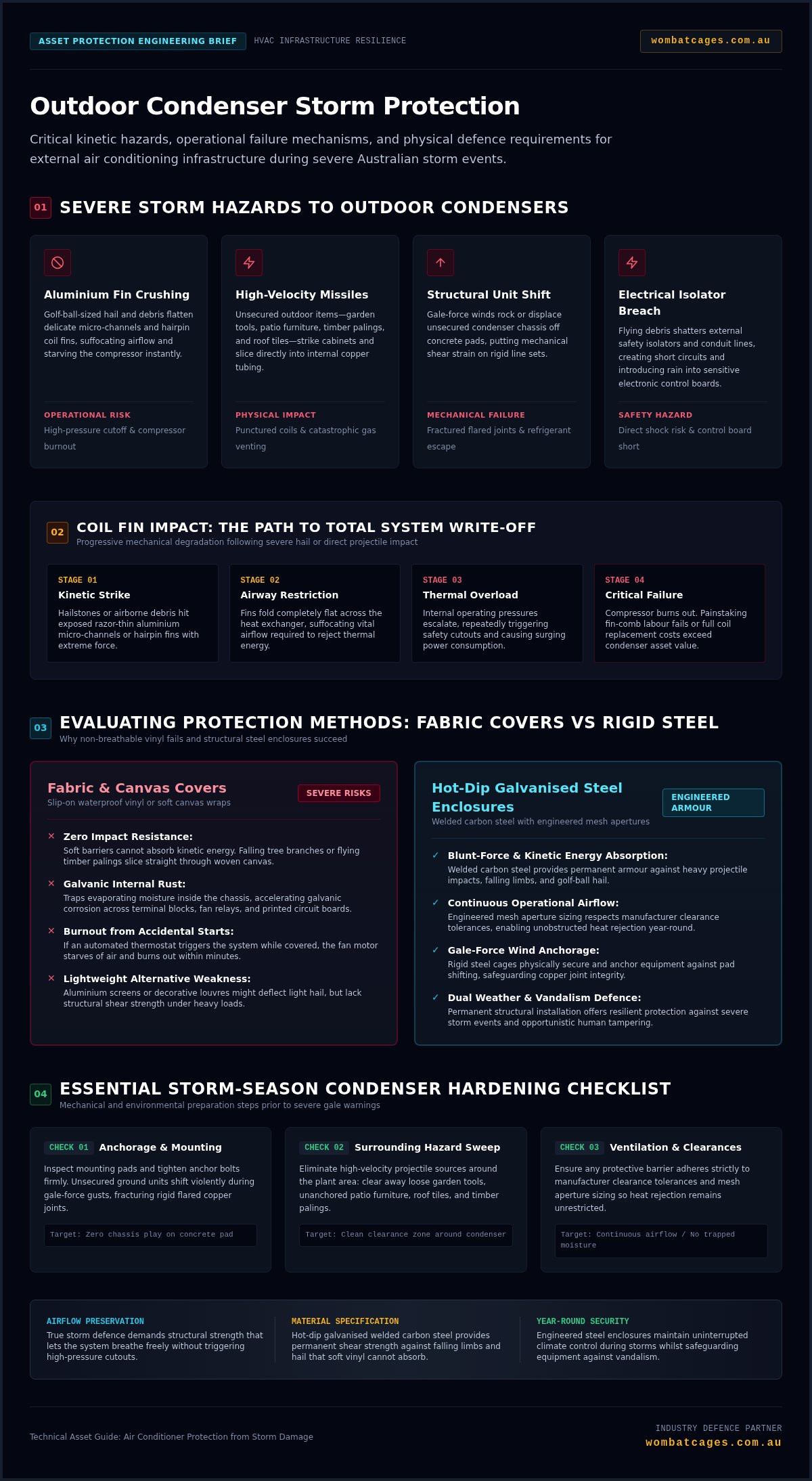
Severe Australian weather inflicts brutal kinetic punishment on mechanical plant equipment. High winds generate flying debris that smashes directly into external condensers, crushing delicate components on impact. Hail strikes flatten aluminium heat exchangers, instantly suffocating operational airflow and starving the compressor. When severe wind gusts intensify, unsecured ground units shift violently, snapping rigid copper pipework and releasing high-pressure refrigerant. Falling tree branches deliver blunt-force impacts that can crush sheet metal cabinets completely. Effective air conditioner protection from storm damage starts with recognising these physical threats before severe weather hits.
The Vulnerability of Outdoor Condenser Fins
External heat exchange surfaces are fragile. Most residential and light commercial systems rely on aluminium micro-channels or hairpin coils with razor-thin aluminium fins. Hailstones strike these exposed assemblies with enough kinetic force to bend and fold the metal flat. This physical deformation chokes the core. Modern heating, ventilation, and air conditioning (HVAC) systems require unrestricted airflow across these coils to reject thermal energy; flattened fins trigger high-pressure safety cutouts, sky-high power bills, and sudden compressor burnout. Straightening bent coils demands painstaking manual labour with specialised fin combs, and severe impacts often necessitate complete coil replacement, which can easily write off the entire condenser.
Wind-Borne Projectiles and Structural Shift
Extreme winds turn ordinary outdoor items into destructive missiles. Unchecked garden tools, patio furniture, timber palings, and roof tiles carry immense velocity during storm fronts. When these items hit an unprotected outdoor condenser, the damage extends beyond cosmetic dings:
- Coil ruptures: Hard impacts slice directly into copper tubing, causing rapid refrigerant venting that leaves the system completely dead.
- Refrigerant line strain: Gale-force winds cause unsecured condenser units to rock or slide off mounting pads. This structural shifting fractures rigid flared copper joints, discharging expensive gas into the atmosphere.
- Electrical isolator failure: Flying debris frequently smashes external isolator switches and exposed conduit, cracking safety enclosures, creating immediate shock hazards, and leaving sensitive control boards open to water ingress.
A comprehensive strategy for air conditioner protection from storm damage must account for both high-impact foreign objects and severe structural stress. Overlooking these physical hazards leaves your mechanical cooling completely exposed to the worst elements of an Australian storm season.
Evaluating Storm Protection Methods: Fabric Covers vs Rigid Steel Enclosures
Property owners often default to cheap fabric covers when severe weather warnings sound. Slip-on waterproof vinyl or canvas wraps stop dust and dry foliage, but they fail completely as serious air conditioner protection from storm damage. Soft barriers cannot absorb kinetic energy, and they create operational hazards the moment the weather shifts. Shielding an outdoor unit requires an external defence that can take a direct hit while allowing the condensing fan to shift heat without restriction.
The Hidden Risks of Waterproof Canvas Covers
Waterproof covers create severe operational hazards during humid storm fronts. Sealing an outdoor condenser in non-breathable vinyl traps evaporating moisture against the chassis, accelerating galvanic corrosion across terminal blocks, fan relays, and printed circuit boards. More dangerously, if an automated thermostat triggers the compressor while the cover remains tied down, the fan motor starves of air and burns out within minutes. Beyond operational risk, fabric provides zero impact resistance. A falling gum branch slices straight through woven canvas and crushes the internal components underneath.
Why Rigid Steel Mesh Outperforms Alternative Enclosures
Rigid enclosures solve the dual challenge of physical impact resistance and continuous ventilation. Lightweight aluminium screens or decorative louvres might deflect light hail, but they lack structural shear strength under heavy loads. Welded carbon steel tells a different story. Hot-dip galvanised steel cages act as permanent armour, stopping high-velocity projectiles before they contact the delicate coil face.
- Kinetic absorption: Heavy-gauge steel wire absorbs blunt impacts from large debris, distributing shock loads into anchor fixings rather than the condenser body.
- Ventilation integrity: Open mesh geometry maintains high free-air ratios, matching industry seismic and wind restraint standards for continuous heat dissipation.
- Corrosion defence: A complete hot-dip galvanising process bonds molten zinc to every steel surface, delivering permanent rust immunity against severe rain and coastal salt spray.
Combining rugged materials with fixed bolting keeps your cooling plant secure against severe weather and accidental site damage. For complete site planning guidelines, check our advice on protecting AC unit from accidental damage. If you want permanent, reliable air conditioner protection from storm damage that never chokes your unit, consider installing a heavy-duty steel security cage engineered for harsh Australian conditions.
How to Prepare and Secure Your Air Conditioner Ahead of Severe Storms
Waiting for a severe weather warning before checking your mechanical plant invites trouble. High-wind events test every bolt, mount, and surrounding structure on your property. Securing your condenser requires a planned, physical routine long before storm season peaks. A proactive approach to air conditioner protection from storm damage focuses on mechanical anchoring, site clearing, and structural barriers.
Step 1: Inspect Foundations and Mechanical Fasteners
Inspect the concrete base slab before severe winds arrive. Ground movement, soil erosion, and concrete cracking create instability under load. Check that all masonry anchor bolts securing the condenser feet remain tight, rust-free, and torqued down. Examine rubber anti-vibration isolation blocks; perished or split rubber allows excessive movement, letting intense gusts rock the chassis and stress rigid connections. Ensure refrigerant pipework saddles and electrical conduits remain firmly secured to external brickwork without play.
Step 2: Eliminate Surrounding Impact Hazards
Clear potential projectiles within striking distance of the unit. Wind speeds during severe storms easily lift loose backyard equipment and hurled timber. Take practical preventative action:
- Cut back overhanging gum boughs and dead branches within four metres of the outdoor plant.
- Pack away wheelbarrows, garden tools, potted plants, and outdoor furniture into a secure shed or garage.
- Inspect perimeter fencing nearby; replace loose palings that could detach and strike the condenser face.
- Check surface drainage channels around the slab, ensuring stormwater flows away from the base rather than pooling around electrical conduits.
Step 3: Anchor a Heavy-Duty Steel Security Cage
Physical armour provides definitive perimeter defence. Installing a dedicated split system security cage isolates the condensing unit from airborne tree limbs, hail, and flying debris. Rigid base plates bolt directly into structural concrete pads or solid masonry walls using heavy-gauge mechanical fasteners. This rigid mounting absorbs kinetic energy, preventing external forces from reaching the system chassis. Quality steel enclosures use vibration-resistant fixings to stay solid through sustained gales, giving you dependable air conditioner protection from storm damage through every seasonal front.
Once structural defences are locked down, manage the electrical side during violent lightning activity. If a severe electrical storm passes directly overhead, shut off power at the dedicated external isolator switch to defend internal inverter boards against extreme line spikes.
Engineering Requirements: Impact Resistance, Airflow, and Wind Loading
Slapping together an unrated timber box or lightweight decorative cover creates more problems than it solves. Effective air conditioner protection from storm damage requires calculated mechanical engineering. The enclosure must absorb significant kinetic impacts without deflecting into the coil face. At the same time, it has to maintain strict intake and discharge volumetric airflow. Poorly designed barriers choke condenser fans, creating artificial head pressure that drives up power consumption and trips safety limit switches.
Balancing Debris Deflection with Airflow Efficiency
Every mechanical enclosure introduces static pressure resistance against the condenser fan. If the mesh pitch is too dense, warm discharge air recirculates straight back into the intake louvres. This short-circuiting destroys thermal efficiency and triggers premature compressor failure. Precision-spaced steel mesh eliminates this danger entirely. Apertures must be small enough to shatter or deflect wind-driven hail, yet open enough to preserve original heat transfer rates. This open-cell geometry also allows routine hose washing to clear coastal salt, dust, and spider webs without unbolting the frame.
Corrosion Resistance and Structural Anchoring
Severe storms push driving moisture into every structural connection. Welded joints on standard painted steel rust rapidly once exposed to high-wind rain. Complete immersion in molten zinc solves this problem. A heavy-duty hot dip galvanised condenser cage forms a metallurgically bonded zinc-iron alloy over the entire surface. This barrier seals inner weld seams, preventing internal oxidation and delivering decades of corrosion resistance across Australian coastal zones.
Commercial and light industrial facilities face compounded wind loadings across continuous banks of outdoor units. Large surface areas act as sails during severe gale events, creating intense shear forces on base fixings:
- Modular strength: Linking enclosures into a rigid multi unit AC security cage configuration distributes crosswind stress across multiple anchor points.
- Foundation bolting: Heavy anchor bolts driven directly into structural concrete pads stop lateral shifting and eliminate mounting fatigue.
- Vibration control: Rigid frame bracing dampens mechanical harmonic vibration, protecting refrigeration joints from sustained wind buffeting.
Properly engineered infrastructure ensures your cooling plant remains intact when severe weather strikes. Secure your outdoor HVAC equipment today with purpose-built steel enclosures designed for ultimate storm defence.
Securing Permanent Storm and Vandalism Protection with Wombat Cages
Replacing an air conditioning plant after severe weather disrupts your entire property. Waiting weeks for replacement compressors or specialist coil rebuilds during peak seasonal heat is frustrating and avoidable. Wombat Cages manufactures rigid, hot-dip galvanised steel cages that solve this problem permanently. Built from heavy-gauge carbon steel, each unit anchors securely to structural concrete slabs or solid brickwork. This rigid fixing stops high winds from dislodging the condenser and forms an unyielding physical barrier that deflects falling tree branches and flying rubbish.
Dual-Action Asset Security for Australian Properties
Severe weather is only half the battle for exposed mechanical plant equipment. High scrap metal values make external copper pipework and brass service valves prime targets for opportunistic theft. A heavy-duty steel cage functions as dual-purpose security infrastructure:
- Debris deflection: High-tensile steel wire stops airborne missiles and large hail before they can impact the delicate coil face.
- Theft prevention: Enclosed steel frames lock out unauthorised access to external copper pipe runs and expensive brass valves.
- Vandalism resistance: Welded mesh panels prevent intentional tampering or accidental impacts in high-traffic commercial zones.
- Rapid maintenance: Integrated removable panels allow HVAC technicians straightforward access for chemical coil washes, pressure testing, and routine maintenance without dismantling the primary cage structure.
Tailored Configurations and Nationwide Supply
Different property layouts require targeted structural configurations. For residential homes and small offices, a Single Split System Security Cage surrounds standalone condensing units with full perimeter clearance. Commercial sites, schools, and multi-residential developments demand modular multi-bay security cages to shield extensive banks of condensers under a continuous, heavy-duty frame.
Sizing your barrier correctly is straightforward. Measure the height, width, and depth of your outdoor condenser, then add the manufacturer-required clearance allowances around the intake louvres and electrical access doors. This guarantees complete, unrestricted airflow so your unit runs at full thermal efficiency during the hottest afternoons.
Wombat Cages delivers heavy-duty protection across Australia. For property managers and homeowners wanting guaranteed compliance, professional cage installation services ensure anchor fixings meet strict structural standards to resist high vibrational loads and severe wind events. Investing in heavy-gauge hot-dip galvanised steel delivers reliable, long-term air conditioner protection from storm damage that outlasts dozens of severe weather seasons.
Fortify Your Cooling Plant Before the Next Severe Front
Severe weather will test your property's defences sooner or later. Leaving delicate outdoor coils exposed to gale-force winds, flying branches, and hail is a gamble you don't need to take. Temporary tarpaulins and flimsy vinyl wraps cause more harm than good by suffocating critical airflow and accelerating rust. Real resilience requires permanent, physical strength that stops projectiles cold without degrading heat exchange performance.
Locking in dependable air conditioner protection from storm damage comes down to heavy-duty engineering. Manufactured from heavy-gauge, hot-dip galvanised steel, Wombat Cages deliver unmatched impact and weather resistance. The engineered open-mesh design ensures maximum impact deflection with zero airflow restriction, keeping your compressors running safely through extreme summer conditions. With full nationwide supply across Australia, you can choose custom-configured Single Split System Security Cages or modular Multi-Bay Security Cages tailored to your specific site footprint.
Take control of your asset protection before storm season hits. Protect your outdoor condenser with a heavy-duty Wombat Cage and ensure your air conditioning remains operational, secure, and fully defended all year round.
Frequently Asked Questions
Can I run my air conditioner with a protective cover or cage installed?
You can run your system normally with a rigid steel security cage, but never with a solid fabric cover attached. Fabric tarps and vinyl jackets choke the fan, trapping heat and triggering rapid compressor burnout within minutes. In contrast, heavy-duty steel cages use an open mesh layout. This design delivers dependable air conditioner protection from storm damage while allowing unrestricted intake and discharge airflow during normal operation.
Will a steel security cage void my air conditioner manufacturer warranty?
A properly sized steel security cage will not void your manufacturer warranty. HVAC warranties require adequate clearance around intake louvres and discharge grilles to prevent operational heat recirculation. As long as the cage maintains the manufacturer-specified offset distances from the cabinet faces, ventilation remains fully compliant. Cages mount directly to external walls or the concrete slab, ensuring zero mechanical alterations to the air conditioner chassis itself.
How does hail damage an outdoor air conditioning condenser coil?
Hail inflicts blunt kinetic damage on external aluminium heat exchangers, instantly bending the razor-thin fins flat on impact. Crushed fins block the tiny gaps between copper tubes, choking airflow across the coil face. This restriction stops heat transfer, causing internal operating pressures to spike dramatically. The compressor then draws excessive current, tripping safety switches and leading to expensive component failure if the damaged fins aren't combed or replaced.
Does standard Australian building insurance cover storm damage to air conditioners?
Most Australian building policies cover direct storm impacts, like falling gum branches or major hail, but policies routinely reject claims caused by poor maintenance, corrosion, or pre-existing wear. Even when approved, high excess fees, depreciation deductions, and peak-season contractor waiting lists make claims costly. Investing in physical air conditioner protection from storm damage eliminates these claim headaches by preventing kinetic coil destruction entirely.
Can a security cage prevent an outdoor unit from blowing over in gales?
A properly installed steel cage physically prevents an outdoor condenser from toppling during extreme wind events. Unsecured units often shift or flip when hit by violent wind gusts, snapping rigid copper line sets and discharging refrigerant. Because the cage bolts deeply into a solid concrete foundation or masonry wall using heavy-duty anchors, it forms a protective external perimeter that holds firm and blocks wind-borne missiles from displacing the equipment.
How much airflow clearance does an outdoor air conditioner need inside an enclosure?
Outdoor units typically require at least 150 to 300 millimetres of rear and side clearance, alongside 1,000 millimetres of unobstructed discharge space, depending on the manufacturer. An engineered security cage accounts for these exact tolerances. The wide aperture open-wire mesh allows high-velocity exhaust air to disperse without creating static backpressure, ensuring the condensing unit operates at maximum seasonal efficiency even on scorching days.
How do technicians service the condenser once a steel cage is installed?
Technicians service the system through built-in removable access panels integrated into the steel frame. Licensed tradespeople can easily access the electrical isolator switch, test refrigerant valves, and perform routine coil washes without unbolting the primary base structure from the concrete pad. This layout keeps ongoing maintenance quick and straightforward while maintaining robust physical defence against flying storm debris year-round.


