
Imagine waking up to a sweltering 40-degree afternoon only to find your air conditioner won't turn on because a thief stripped the unit for a few dollars' worth of copper. It's a frustrating, expensive reality for many property owners across the country. You've invested thousands in your home's comfort, yet that outdoor unit sits exposed and vulnerable to anyone with a pair of bolt cutters. Installing a heavy-duty air conditioner compressor cage is the most effective way to protect your investment from theft and senseless vandalism.
You likely worry that a cage might restrict airflow or lead to a premature breakdown; this is a valid concern for any high-performance HVAC system. This guide shows you how to secure your unit using professional-grade steel that keeps thieves out while letting your compressor breathe. We'll explore the advantages of hot-dip galvanised cages, the necessity of rigid ground-bolted installations, and how to maintain easy access for technician servicing. Get the peace of mind that comes from knowing your asset is defended by a solution built for the harsh Australian climate.
Key Takeaways
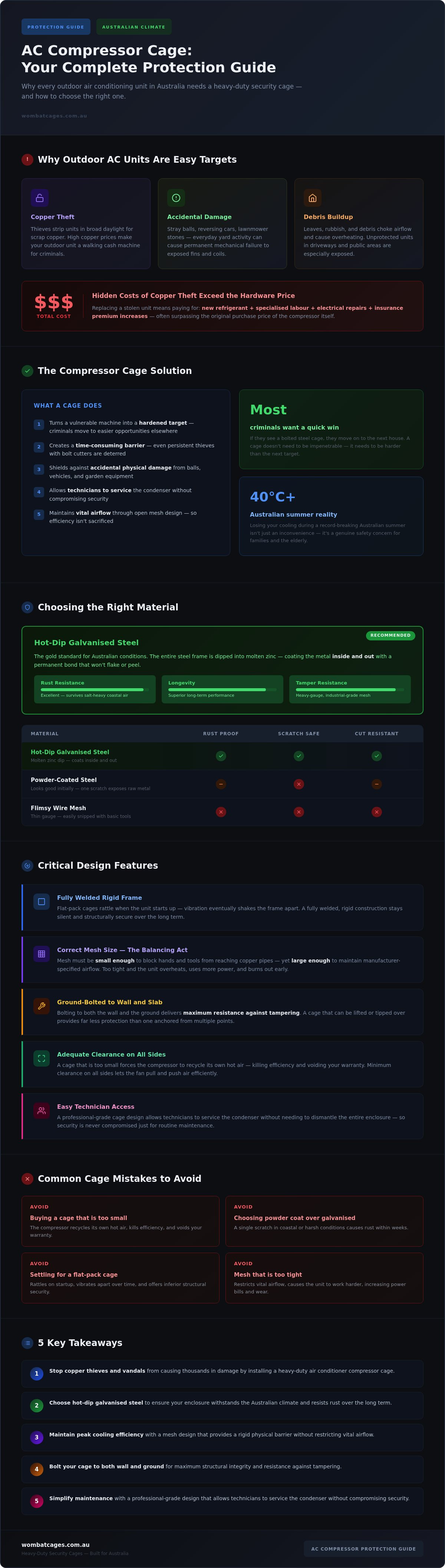
- Stop copper thieves and vandals from causing thousands in damage by installing a heavy-duty air conditioner compressor cage.
- Choose hot-dip galvanised steel to ensure your enclosure withstands the Australian climate and resists rust over the long term.
- Maintain peak cooling efficiency with a mesh design that provides a rigid physical barrier without restricting vital airflow to the unit.
- Increase structural integrity by bolting your security cage to both the wall and ground for maximum resistance against tampering.
- Simplify maintenance with a professional-grade design that allows technicians to service the condenser without compromising the security of the asset.
Understanding the Risks: Why Your Outdoor AC Unit Needs a Compressor Cage
An air conditioner compressor cage is a heavy-duty steel enclosure. It is a rigid, physical shield for your outdoor condenser unit. This isn't about aesthetics; it's about asset protection. It turns a vulnerable piece of machinery into a hardened target. Without protection, your HVAC system is just an expensive box sitting on the ground. It's an easy mark for anyone looking to cause trouble or make a quick dollar.
Copper theft is a growing problem in Australian neighbourhoods. Thieves target these units because copper prices remain high on the scrap market. They don't care about your comfort. They cut the lines and strip the unit in broad daylight. You're left with a broken system and a massive repair bill. Replacing a stolen unit involves more than just the hardware price. You have to factor in new refrigerant, specialised labour, and potential electrical repairs. These hidden costs often exceed the original purchase price of the compressor itself.
The Reality of Copper Theft in Australia
Outdoor units are often soft targets. Exposed copper pipes are easily accessible to anyone with basic tools. A cage creates a time-consuming barrier that forces thieves to look for easier opportunities elsewhere. Most criminals want a quick win. If they see a bolted steel cage, they move on to the next house. Beyond the immediate cost of replacement, theft leads to rising insurance premiums. There's also the unbearable hassle of downtime. Losing your cooling during a record-breaking Australian summer is more than an inconvenience; it's a genuine safety concern for families and the elderly.
Protection Beyond Security: Accidental Damage
Security isn't the only concern. Units in driveways or public areas face daily physical threats. A stray ball from the kids or a bump from a reversing car can cause permanent mechanical failure. Lawnmowers often kick up stones that dent fins or puncture coils. You also need to prevent debris buildup like leaves and rubbish, which can choke the system. For more details on these risks, read our guide on protecting AC units from accidental damage. A well-placed air conditioner compressor cage defends against these everyday accidents. It ensures your system remains operational regardless of what's happening in the yard. It's a simple fix for a potentially expensive problem.
Selecting the Right Air Conditioner Compressor Cage: Materials and Design
Choosing an air conditioner compressor cage involves more than picking the first metal box you see. You need a solution that survives the elements while stopping a thief with a pair of bolt cutters. It's about finding the balance between a solid physical barrier and the critical airflow requirements of your condenser. A cheap, poorly designed enclosure will eventually cost you more in repairs than it saves in security.
Galvanised Steel vs Other Materials
Hot-dip galvanisation is the gold standard for Australian conditions. This process involves dipping the entire steel frame into molten zinc. It coats the metal inside and out. This creates a permanent bond that won't flake off. Many competitors offer powder-coated steel. This looks good in the showroom. However, a single scratch from a tool or a stone chip exposes the raw metal to the air. In our salt-heavy coastal environments, that scratch turns into a rust spot within weeks. Heavy-gauge wire is also essential. Flimsy mesh is easy to snip. You need thick, industrial-grade steel that resists manual cutting tools and persistent tampering.
Design Features for Maximum Durability
A cage must be rigid. Flimsy flat-packs often rattle when the unit starts up. This noise is annoying and can lead to the frame shaking itself apart over time. A fully welded, rigid frame stays silent and secure. Mesh size is another critical factor. You want gaps small enough to prevent hands or tools from reaching the copper pipes. At the same time, the gaps must be large enough to maintain manufacturer-specified airflow. If the mesh is too tight, the unit works harder, uses more power, and eventually burns out. Proper design ensures the fan can push air without resistance.
Clearance is non-negotiable. Your unit needs space to breathe to avoid overheating. We recommend a minimum clearance on all sides to ensure the fan pulls and pushes air efficiently. A cage that is too small forces the compressor to recycle its own hot air. This kills the unit's efficiency and voids your warranty. For a deeper look at why this material is superior, check our pillar article on hot-dip galvanised cages. Selecting the right heavy-duty security cage ensures your AC unit remains a protected asset for decades.
How to Install a Security Cage for Maximum Protection
A security enclosure is only as effective as its mounting points. If you don't fix it properly, a thief will simply take the cage and the compressor together. Installing a professional-grade air conditioner compressor cage requires precision. You need to account for pipe entries, electrical conduits, and maintenance space. It isn't just about placing a box over the unit; it's about creating a permanent, immovable barrier. Dual-surface mounting, where you bolt the frame to both the ground and the wall, is the standard for high-security sites.
Leveling and alignment are critical for long-term performance. If the cage touches the unit's casing, it will create a constant, annoying rattle every time the fan spins up. This vibration can eventually loosen fixings or damage the unit's finish. You also need to use tamper-proof security fixings. Standard hex bolts are too easy to remove with common tools. Using specialised masonry anchors ensures that once the cage is down, it stays down.
Step-by-Step Installation Guide
- Step 1: Mark the mounting points. Place the panels around the unit to check for clearance. Ensure there is enough room for the fan to exhaust air. Mark the bolt holes on the concrete slab and the brickwork using a marker.
- Step 2: Drill for masonry anchors. Move the panels aside. Use a hammer drill with a masonry bit to create holes for your heavy-duty anchors. Clean the dust out of the holes to ensure a tight grip.
- Step 3: Position and secure the frame. Align the panels with the holes. Insert your security bolts through the frame and into the anchors. Tighten them until the frame is rigid and does not move when shaken.
- Step 4: Final check of clearances. Verify that no part of the cage is touching the refrigerant lines or the electrical conduits. Check that the unit has at least 100mm of breathing space on all sides to prevent overheating.
Why Professional Installation Beats DIY
DIY attempts often lead to expensive mistakes. Refrigerant lines are fragile. One wrong move with a drill or a heavy steel panel can cause a gas leak. These repairs require a licensed technician and can cost hundreds in labour and gas. If the cage isn't perfectly square, you might find it impossible to remove the access panels for regular servicing later. Wombat Cages offers a professional supply and install service for total peace of mind. This guarantees your air conditioner compressor cage is fixed according to best practices. You get a rigid, silent, and vandal-proof result without the risk of damaging your HVAC system.
Balancing Security with Performance: Airflow and Maintenance Access
Many owners hesitate to install an air conditioner compressor cage because they fear it will kill the unit's efficiency. They think a cage acts like a blanket that traps heat. This is a myth when you use a professional-grade steel mesh design. A condenser's primary job is heat rejection. It needs to pull cool air through the coils and blast hot air out the top or front. If you block this, the compressor works harder. It uses more power. Eventually, it burns out. Proper security shouldn't come at the cost of your electricity bill.
The Science of HVAC Airflow
Condensers don't need wide-open spaces; they need specific airflow volumes. A solid cover is dangerous because it creates a pocket of stagnant, hot air. A mesh air conditioner compressor cage works differently. High-quality cages provide a large percentage of open area. This ensures the fan can move the required cubic metres of air per minute without resistance. The mesh promotes cross-ventilation. It allows wind to pass through the unit even when the fan isn't running. This prevents heat soak on hot Australian afternoons and keeps the internal components within their safe operating temperature range.
Making Life Easy for Your HVAC Technician
Security shouldn't mean a locked door for your service provider. HVAC technicians need to reach electrical panels and refrigerant valves for annual maintenance. If a cage is welded shut or lacks access, the tradie will charge you extra for the time spent removing it. Or worse, they'll skip the service entirely. Removable panels are often better than hinged doors. Doors require a large swing radius that you might not have in a narrow side-passage. Panels can be lifted off in tight spaces, giving the technician full access to the guts of the machine.
A well-designed air conditioner compressor cage provides enough room for a technician to use their gauges and wrenches comfortably. Tradies prefer cages that consider their work environment. It's about practical protection that doesn't get in the way of professional care. You also need to keep the interior clear. Leaves, spider webs, and debris can collect inside the mesh over time. Regular clearing ensures the unit doesn't become a home for pests or a fire hazard. Noise reduction is another benefit. A rigid cage won't vibrate or create resonance, keeping your backyard quiet while the system is running. Check our range of high-airflow security cages to find a solution that protects your unit without compromising its performance.
Long-Term Asset Protection: Why Wombat Cages Win
Australian conditions are brutal on outdoor machinery. Salt spray, high humidity, and intense UV rays destroy cheap materials. Every air conditioner compressor cage we produce is built to withstand these local challenges. It is the "Dependable Guardian" approach to asset protection. We don't focus on flashy design. We focus on physical strength and long-term resilience. Our cages are made from heavy-duty steel that is purpose-built to stay rigid for decades. This is about practical utility that works in the real world.
Custom Solutions for Every Property
Residential properties often require a Single Split System Security Cage to protect a single backyard unit. These are compact but uncompromising in their strength. Commercial sites have different needs. They usually feature banks of condensers that require Multi-Bay Security Cages. We configure these enclosures to fit your specific site layout and pipe configurations. If you are managing a business asset, our multi-unit commercial guides offer a deep dive into large-scale security. We provide the right fit for every application, from small suburban homes to massive industrial complexes.
Investing in Peace of Mind
Consider the true cost of a security breach. Replacing a stolen compressor involves new hardware, expensive refrigerant gas, and specialised trade labour. These costs add up quickly. Investing in a professional air conditioner compressor cage is a one-time insurance policy. It is a simple cost-benefit calculation. You spend a small amount now to avoid a massive bill later. This is common-sense prevention for any property owner. Secure it once and protect it forever. You gain the confidence that your cooling system will be there when you need it most.
Getting started is straightforward. Contact Wombat Cages for a heavy-duty security solution tailored to your property. We can provide a quote based on your unit dimensions and mounting surface. Our team also offers professional Cage Installation Services to ensure your new barrier is bolted down correctly. Don't leave your comfort to chance. Take a proactive step toward total peace of mind today.
Defend Your HVAC Assets with Permanent Protection
Your outdoor unit is a significant financial investment. Leaving it exposed to copper thieves or accidental damage is a risk you don't need to take. By choosing a professional-grade air conditioner compressor cage, you create a rigid barrier that stops vandals in their tracks. Remember that material quality is non-negotiable. Hot-dip galvanised steel provides the rust resistance required for our harsh coastal environments, while an open mesh design ensures your unit maintains peak cooling efficiency without the risk of overheating.
We've seen that security doesn't have to mean restricted access. A well-engineered enclosure allows technicians to perform regular servicing without any hassle. It's about common-sense prevention that lasts for decades. If you're ready to secure your property, professional installation services are available Australia-wide to ensure your frame is bolted down correctly. Don't wait for a costly repair bill or a stolen unit to take action. Secure your air conditioner with Wombat Cages today and enjoy the peace of mind that comes from knowing your home's comfort is protected.
Frequently Asked Questions
Will an air conditioner compressor cage void my warranty?
No, provided the enclosure is installed with sufficient clearance for airflow. Manufacturers require specific spacing to prevent the unit from overheating. A professional air conditioner compressor cage is designed to meet these requirements. It protects the unit without interfering with the internal mechanics. Always check your specific brand's installation manual for clearance specs. This ensures your warranty remains intact while your asset stays secure from theft.
Do I need a cage for a split system unit if it is on a balcony?
Security remains a concern for balcony units in high-density areas. While they are harder to reach, they aren't immune to vandalism or accidental damage. A cage protects the unit from falling objects or physical impact during balcony use. It also prevents tampering if the balcony is accessible from common areas or adjacent properties. It's a common-sense addition for long-term peace of mind in apartment living.
Can I install an AC cage myself or do I need a professional?
You can install it yourself if you have the right tools, but professional installation is recommended. Securing the frame requires drilling into concrete and masonry. You must avoid hitting underground services or damaging the unit's refrigerant lines. Professionals ensure the cage is perfectly level and square. This prevents rattling and makes future maintenance easier. Wombat Cages offers installation services to guarantee a rigid, high-security finish.
How much clearance does a compressor cage need for airflow?
Most units require at least 100mm to 150mm of clearance on all sides. The front exhaust area often needs even more space to prevent air recirculation. A cage that's too tight will choke the system. This leads to higher power bills and mechanical failure. Our designs prioritise these airflow paths. We ensure the mesh is open enough to allow the fan to pull and push air without restriction.
Are these cages rust-proof in coastal Australian areas?
Yes, if they are hot-dip galvanised. This process coats the steel inside and out with zinc. It is the only way to survive the salt spray and humidity of Australian coastal regions. Powder coating alone will eventually chip and rust. Hot-dip galvanisation creates a permanent bond that resists corrosion for decades. It's the standard for any industrial-grade outdoor security enclosure built to last in the sun.
Can a technician still service my air conditioner once the cage is installed?
Yes, provided the cage features removable panels. Technicians need to reach the electrical board and service valves for annual checks. A well-designed air conditioner compressor cage allows panels to be lifted off quickly. This gives the tradie full access to the unit without needing to uninstall the entire frame. It keeps your servicing costs down and ensures the unit remains protected between visits from your HVAC professional.
Do security cages reduce the noise of the outdoor compressor?
A high-quality cage won't reduce the compressor's noise, but it shouldn't add to it. Cheap, flimsy cages often rattle or vibrate when the fan starts. This creates annoying resonance that can bother you or your neighbours. Our rigid steel frames are bolted to the ground and wall to stay silent. They don't touch the unit, which prevents any transfer of vibration or mechanical hum during operation.
What is the best material for an outdoor AC security enclosure?
Heavy-duty steel is the best choice for security and durability. While aluminium is lighter, it's easier to cut with basic hand tools. Steel provides the physical weight and hardness needed to stop persistent thieves. When combined with hot-dip galvanisation, it becomes a permanent asset. It survives the sun, rain, and tampering. Stick to industrial-grade steel if you want a cage that truly defends your property.


