
What if your security cage ends up costing you more in labour fees than the copper it's supposed to protect? It's a common worry for property managers who need a technician access AC cage that doesn't turn a simple service call into a three-hour ordeal. You want to stop thieves from stripping your condenser units. But you can't have a fridgey or sparky charging you double because they can't get to the valves. Security is only effective if it's sustainable for the life of the machine.
We agree that a cage shouldn't be a barrier to professional maintenance. This guide will teach you how to secure your HVAC assets while ensuring your contractors have zero friction when they arrive on site. We'll cover the essentials of manufacturer service clearances, the importance of open mesh for airflow, and how modular designs keep your assets safe without sacrificing serviceability. Let's look at how to protect your investment with a solution that's as practical as it is tough.
Key Takeaways
- Break the myth that security hinders serviceability. A well-designed cage protects your assets without making your fridgey's job harder or more expensive.
- Identify the specific features, such as removable panels and hinged hatches, that define a functional technician access AC cage.
- Prioritise open mesh construction to ensure manufacturer-required airflow, preventing expensive compressor failures and short cycling.
- Streamline access for national property portfolios by using master-keyed padlock systems for authorised maintenance teams.
- Avoid the "DIY trap" by ensuring professional installation that respects service port clearances and manufacturer warranties.
The Serviceability Myth: Does a Security Cage Hinder Maintenance?
Property owners often hesitate to install security cages. They fear the maintenance bill. There is a common misconception that once a unit is caged, it is sealed off forever. Some even think you have to cut the steel just to reach the compressor. This is a myth. Professional security is designed for the fridgey first. It balances high-security requirements with strict OHS and service standards. A set and forget approach to security is a risk to your mechanical assets. If your technician cannot get in, your unit will not last. The reality is that a technician access AC cage should be a tool for protection; it should never be a barrier to professional care.
Why Technicians Prefer Purpose-Built Cages
Standardised clearances are vital for HVAC health. Every unit needs breathing room to function correctly. A purpose-built technician access AC cage respects these manufacturer requirements by providing enough space for airflow and physical entry. Visibility is another major factor. Open mesh allows for instant visual inspections. A sparky can check for debris or leaks without even reaching for their keys. Safety is the final piece of the puzzle. Professional cages have no sharp edges or flimsy materials. This eliminates site hazards and keeps your contractors safe while they work. It follows the systems approach to safety; the cage, the unit, and the technician work together in a secure environment.
The Cost of Poor Access
Difficult access leads to lazy maintenance. It is a simple fact of the trade. If a fridgey has to spend an hour just to remove a poorly designed panel, they might skip the deep clean of the coils. This leads to short cycling and premature compressor failure. You also face significant labour surcharges. Many Australian contractors charge a premium for cages that require specialised tools or extra time to dismantle. Wombat Cages uses a modular approach to prevent these issues. We use bolted frames and specific configurations. This allows for panels to be removed easily while the rest of the unit stays secure. You get total protection without the hidden costs of a difficult service call. Choosing a modular design ensures that your security investment does not become a financial liability during the next heatwave.
Design Features That Guarantee Technician Access
Security isn't about complexity. It's about smart engineering. A professional technician access AC cage uses specific design choices to keep the unit reachable for those with the right tools. Removable panels are the core of this strategy. They allow a fridgey to strip back the protection in minutes without compromising the structural integrity of the frame. Hinged access points take it a step further. These are perfect for quick diagnostic checks or filter cleans. Unlike a loose shroud that you just drop over a unit, bolted frames provide a fixed-to-ground solution. They don't rattle. They don't shift. They stay exactly where the installer put them. This ensures that service ports remain perfectly aligned with the access panels for the life of the unit.
Removable Front and Side Panels
Full access is non-negotiable for a thorough service. A technician needs to reach the electrical panel and refrigerant lines without obstruction. Modular design is the definitive answer here. For commercial sites with multi-bay configurations, this modularity allows for individual units to be serviced while neighbouring units remain fully enclosed. We use hot-dip galvanised steel for every panel we manufacture. This isn't just for rust prevention in the Australian climate. It ensures the panels maintain their alignment over years of heavy use. If a panel warps or bends, it won't slide back into place easily. Our steel stays rigid and true. This keeps the cage functional and ensures the technician's workflow remains uninterrupted. It's a simple way to prevent labour costs from blowing out during routine maintenance.
Security Fixings and Tool Compatibility
Authorised entry should be simple for the right people. We use security bolts that are compatible with standard trade tools. There is no need for angle grinders or oxy-torches on a routine service call. The trick is protecting these fixings from vandals while keeping them accessible for pros. We place padlocks and security bolts in strategic positions. These are easy for a standing technician to reach but difficult for a thief to leverage or cut. This is a key part of any copper theft air conditioner prevention strategy. By making the cage easy to operate, you ensure it actually gets used correctly every time. If you are looking for a robust solution for your property, consider the benefits of a professionally installed Single Split System Security Cage. It provides the perfect balance of heavy-duty defence and ease of use.
Airflow and Diagnostics: The Role of Open Mesh
Open mesh is the industry standard for a reason. It is the only way to protect a unit while allowing it to breathe. A high-quality technician access AC cage uses expanded or woven steel to create a physical barrier that doesn't trap heat. Heat is the enemy of your compressor. Without proper airflow, the unit suffers from short cycling. This occurs when the machine turns on and off rapidly because it cannot shed heat effectively. Eventually, this leads to total compressor burnout. Using open mesh prevents this mechanical strain. It also keeps your assets clean. While solid panels trap leaves and rubbish against the coils, mesh allows wind to clear away light debris. This reduces the risk of rust and keeps the unit running at peak efficiency throughout the Australian summer.
Maintaining Manufacturer Warranty
Warranty claims depend on correct installation. Most HVAC manufacturers are strict about service clearances. If you use a solid cover or a DIY shroud, you likely void your protection. These units require specific millimetre clearances for air intake and exhaust to function within their design parameters. Open mesh ensures you meet these standards without compromising on security. It also allows for auditory diagnostics. A seasoned fridgey can hear a failing bearing or a loose fan blade from several metres away. If the unit is buried inside a solid box, those early warning signs are muffled. You want your technician to hear the machine. This allows them to catch small issues before they become five-figure repair bills.
Visual Inspections Without Unlocking
Efficiency on site saves you money. A technician shouldn't have to unlock a cage just to see if the fan is spinning correctly. Steel mesh provides a clear line of sight. A fridgey can spot oil leaks on the refrigerant lines or check for fan obstructions in seconds. It also makes it easy to check for bird nests or vermin. In many parts of Australia, mice and wasps love the warmth of an outdoor unit. You can spot these hazards through the mesh and deal with them safely. Modern diagnostics often involve thermal imaging cameras. These tools can read the heat signature of the coils directly through the mesh. This allows for a non-invasive health check of the system. The specific gauge of the mesh must be thick enough to resist a pry bar yet open enough to allow unrestricted cubic metres of air to pass through the condenser. This balance is what makes a purpose-built cage superior to a generic enclosure.
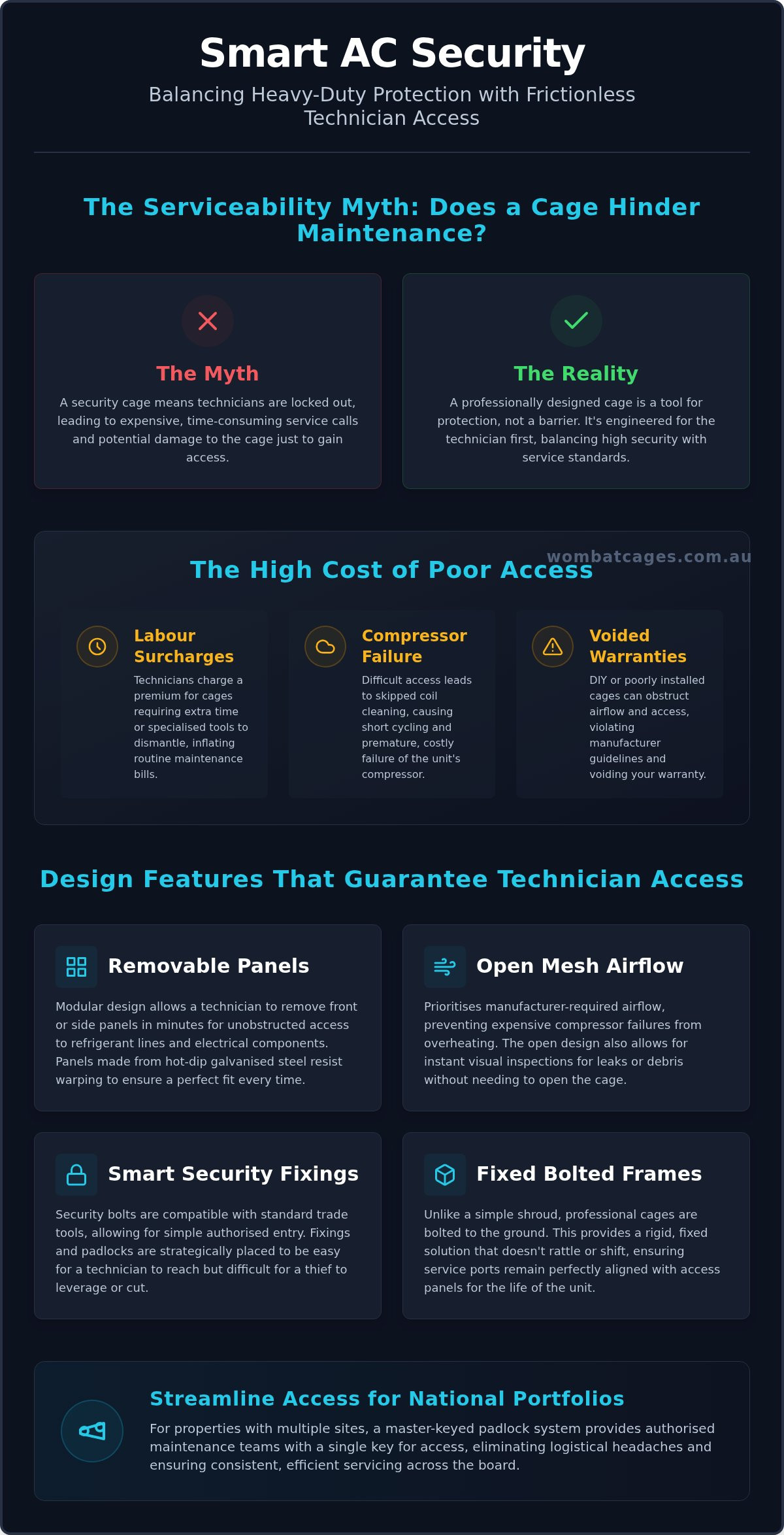
Managing Keys and Authorised Entry
Managing a single cage is easy. Managing fifty across a national portfolio is a logistical hurdle. The biggest point of failure in HVAC security isn't the steel; it's the key management. If your fridgey arrives on site and can't get in, you pay for the call-out anyway. This downtime adds up. Master-keyed padlocks are the professional solution for national facility management. They allow your authorised teams to carry one key that fits every technician access AC cage on your books. It eliminates the "who has the key" phone tree. Standardising this access across multiple sites ensures your contractors spend their time fixing units, not hunting for site managers. While digital locks and Bluetooth access are emerging as high-end options, a robust physical key system remains the most reliable choice for harsh Australian conditions.
Establishing an Access Protocol
Establishing a clear protocol is the first step toward seamless maintenance. Liaise with your HVAC contractor during the cage installation phase. This ensures they know exactly how the system works before an emergency repair is needed. Many commercial managers now use secure on-site lockboxes to store a backup set of keys. This provides instant access for after-hours calls without compromising the primary security of the unit. For larger installations, refer to our Multi-Unit AC Security Cage: The Definitive Commercial Buying Guide for more site-specific advice. It helps you map out access points for complex layouts. It's about building a system that protects the asset while respecting the technician's time.
Training Your Maintenance Team
A cage is only as good as the person who closes it. Training your maintenance team is vital for long-term protection. Technicians must understand the steps to reseal the cage correctly after every service. This includes ensuring all security bolts are torqued correctly to maintain vandal resistance. If a bolt is left loose, a thief with a pry bar has an easy entry point. Regular access checks should be a part of your annual maintenance schedule. Test the locks. Grease the hinges. Ensure the technician access AC cage remains easy to operate. If you need a custom solution for your commercial site, enquire about our Multi-Bay Security Cages today. We build systems that make site management simpler and more secure.
Why Professional Installation is Vital for Access
DIY installations often fall into the "bolt-over" trap. This occurs when a cage is fixed directly over the service ports or electrical covers without a plan. It turns a routine inspection into a major demolition job. A professional technician access AC cage requires precise positioning from the start. We ensure every bolt is clear of the unit's vital components. Custom sizing is also essential for unique wall-mount or ground-mount scenarios where generic boxes fail. Wombat Cages are built for Australian tradespeople. We know that if a cage isn't level, the panels will bind. This creates friction and unwanted noise. A level installation prevents vibration rattle and ensures panels slide out smoothly every time.
National Installation Standards
Consistency is vital for corporate and industrial clients with sites across the country. Our technician access AC cage installations follow a strict standard to ensure every unit is serviceable by any contractor. We use high-tensile fasteners that don't shear during maintenance removal. This prevents the nightmare of a snapped bolt blocking access during a heatwave. For complex layouts, we often provide shopping centre condenser protection to secure large banks of units. This approach keeps your HVAC assets safe while maintaining a uniform look across your property portfolio. It's about professional results that meet the demands of national facility management.
The Long-Term Value of Wombat Cages
A cage is a long-term investment in asset protection. We use a hot-dip galvanised finish to ensure durability. This means you won't deal with rust-seized bolts after five years in the Australian sun. Maintenance remains easy because the hardware stays functional. Our rigid steel mesh is designed to hold its shape. It doesn't sag or obstruct the fan over time. This prevents mechanical interference and keeps your unit running within its design specs. Peace of mind comes from knowing your unit is secure against copper theft. It also comes from knowing your sparky or fridgey can do their job without a struggle. It's a pragmatic solution built for the real world.
Secure Your Assets Without Compromising Maintenance
Protecting your HVAC units shouldn't make them impossible to service. A well-designed technician access AC cage provides a permanent barrier against copper theft while respecting the workflow of your trade professionals. We've seen how open mesh designs preserve manufacturer-required airflow and allow for auditory diagnostics. By choosing modular panels and standardised keying, you eliminate the friction that leads to lazy maintenance and expensive labour surcharges. It is a pragmatic balance between total security and operational efficiency.
Wombat Cages are built for the harshest Australian conditions. We use Australian-made hot-dip galvanised steel to ensure your hardware doesn't seize or rust. Our cages are specifically designed for trade serviceability, meaning your fridgey stays happy and your assets stay safe. With national delivery and professional installation available, securing your property portfolio has never been more straightforward. Don't wait for a theft to occur before you act. Request a no-nonsense quote for your security cages today and get the peace of mind that comes from heavy-duty craftsmanship. Your HVAC investment deserves a guardian that works as hard as you do.
Frequently Asked Questions
Will an AC security cage void my manufacturer's warranty?
An AC security cage won't void your manufacturer's warranty if it's installed with the correct clearances. Manufacturers like Daikin or Mitsubishi Electric require specific millimetre gaps for intake and exhaust to prevent overheating. Our open mesh designs ensure these standards are met every time. Always confirm your specific model's clearance needs during the initial installation phase. Using a professional installer prevents the restricted airflow issues that lead to expensive warranty disputes and premature failure.
How do I get a replacement key if my technician loses the original?
Replacement keys depend on the lock system you choose during the initial setup. If you use a high-quality commercial padlock, a local locksmith can often provide spares based on the specific key code. For large commercial sites, we recommend a master-keyed system. This allows you to keep a central register of keys for your facility. It's a pragmatic way to handle human error without compromising the security of the entire property portfolio.
Can a technician perform a full gas regas without removing the entire cage?
Yes, a technician can perform a full gas regas through a technician access AC cage with removable panels. These panels are positioned specifically to reveal the service valves and electrical points. Your fridgey won't need to dismantle the whole frame to connect their gauges or check pressures. This modular design saves time and keeps your labour costs down during complex repairs. It ensures the unit remains protected even while the technician works.
What is the best way to manage access for a shopping centre with 20+ cages?
Master-keying is the gold standard for large commercial sites like shopping centres. It allows your maintenance team to carry one key for every cage in the bank. We also suggest installing a secure on-site lockbox near the main HVAC cluster. This stores a backup set of keys for emergency after-hours contractors. It streamlines site management and ensures your assets are never inaccessible when a repair is urgent. It is a common-sense approach to site security.
Are there cages with hinged doors instead of removable panels?
Yes, we offer custom configurations that include hinged access hatches for frequent checks. While removable panels offer the most comprehensive entry for major repairs, a hinged door is perfect for quick diagnostic tasks or filter cleans. These doors are secured with the same heavy-duty padlocks as the rest of the frame. It provides a flexible solution for sites that require high-frequency maintenance without sacrificing the structural integrity of the cage. It keeps your authorised pros moving.
How much extra time does a cage add to a standard service call?
A well-designed technician access AC cage adds less than five minutes to a standard service call. It takes roughly sixty seconds to unlock the padlock and slide out the required panel. Compare this to the hours wasted cutting off a DIY shroud or a rusted generic box. Our purpose-built frames ensure your fridgey spends their time on the machine, not fighting with the security hardware. It is about maintaining serviceability without adding hidden labour costs.
What happens if the technician finds the cage is rusted shut?
You won't face this issue with hot-dip galvanised steel. Unlike painted or powder-coated alternatives, galvanised steel resists the oxidation that causes bolts and hinges to seize up. If you're replacing an old, rusted cage, we suggest a professional removal and installation of a galvanised unit. This ensures that even after years in the Australian sun, the panels will still slide out smoothly for your next maintenance visit. It is a long-term solution for durable protection.
Do I need to be on-site when the technician arrives to unlock the cage?
You don't need to be on-site if you have an established access protocol. Providing your contractor with a master key or using a secure on-site lockbox allows them to work independently. This is the most efficient way to manage maintenance for commercial properties or remote sites. It removes the need for site managers to meet contractors at the gate, saving you time and reducing logistical headaches. It ensures your assets stay protected while maintenance stays on schedule.


