
An unsecured air conditioner is a sitting duck for copper thieves. You've spent thousands on a system built for the Australian heat. It's an essential asset. Protecting it shouldn't mean risking a mechanical failure. You need security that doesn't compromise performance. Many owners worry that a steel mesh air conditioner cage will restrict airflow and void their warranty. It's a valid concern for anyone who values their compressor's lifespan.
We'll help you find the right balance. This guide evaluates the best steel mesh options to defend your outdoor units from vandalism and theft. We'll break down the technical differences between steel grades and explain how to maintain proper ventilation. You'll discover how a vandal-proof setup can lead to lower insurance premiums and total peace of mind. Whether you're securing a single split system or a large multi-bay configuration, we provide the facts you need to make an informed choice. It's about securing your property with a solution that's built to last.
Key Takeaways
- Steel is the benchmark for HVAC security. Learn why galvanised steel's rigidity resists prying tools better than lighter alternatives.
- Don't choke your compressor. Learn how a steel mesh air conditioner cage provides the ventilation needed to keep your warranty intact while deterring copper theft.
- Aperture size is a critical defence. Discover why 25mm mesh is the sweet spot for stopping tools and hands from reaching internal parts.
- Maintenance access is essential. We detail why anti-tamper bolts and removable panels are required for any high-quality installation.
- Durability is non-negotiable in the Australian sun. Understand how hot-dip galvanising creates a barrier that outlasts the equipment it guards.
Why Steel Mesh is the Standard for HVAC Security
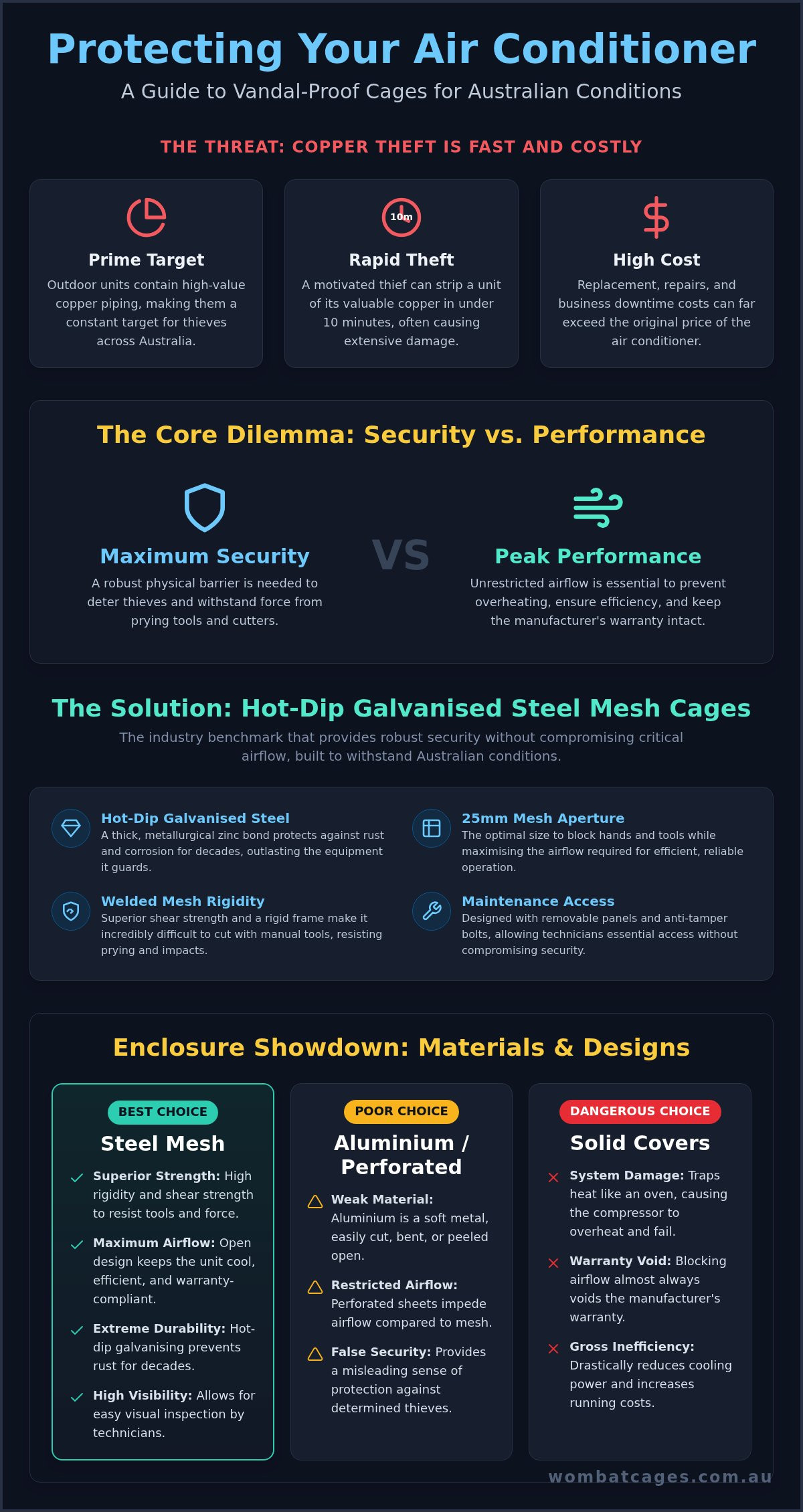
A steel mesh air conditioner cage is a rigid, hot-dip galvanised enclosure designed specifically for outdoor condenser units. It's a physical barrier built to withstand force. Unlike flimsy alternatives, these cages use welded wire mesh to create a structural shield. This setup is the industry benchmark for one simple reason: it works. It stops people from messing with your gear while letting the unit breathe.
Our climate is brutal on external metalwork. High UV levels and coastal salt spray will eat through cheap materials in months. A proper cage needs hot-dip galvanising to survive. This process involves dipping the entire frame into molten zinc. It creates a thick, corrosion-resistant coating that won't flake or peel. This ensures the cage remains structurally sound for decades while providing a clear visual deterrent to anyone looking for an easy target.
The Threat of Copper Theft in Australia
Condensers are prime targets for thieves across Australia. They contain high-value copper piping that's easy to access and quick to strip. A motivated thief can gut an unprotected unit in under ten minutes. They don't care about the damage they leave behind. The total cost of replacing a stolen unit and the associated business downtime often exceeds the original installation price by a significant margin.
Balancing Security with System Longevity
Security shouldn't come at the cost of your air conditioner's health. HVAC systems require massive volumes of air to dissipate heat. If you block that airflow with solid panels or tight covers, the compressor will overheat and burn out. This usually voids your manufacturer warranty immediately.
Using a split system security cage maintains the necessary "breathability" of the unit. The open mesh design allows for maximum thermodynamic efficiency. You get the protection of a physical barrier without the risk of mechanical failure. It's a common-sense approach to asset protection that keeps your warranty intact and your running costs low.
Steel Mesh vs. Alternative Enclosures: The Material Showdown
Selecting the right material for a steel mesh air conditioner cage isn't a matter of aesthetics. It's a matter of physics. While some manufacturers offer aluminium or plastic alternatives, these options fail when faced with a determined thief. Galvanised steel remains the industry benchmark for a reason. It offers the weight and rigidity required to stop prying tools in their tracks. It's the pragmatist's choice for long-term asset protection.
The secret to its longevity lies in the hot-dip process. We take raw steel and submerge it in molten zinc. This isn't just a coat of paint. It's a metallurgical bond that protects the core from rust and corrosion for decades. The zinc acts as a sacrificial layer. Even if the cage is scratched during an attempted break-in, the surrounding zinc prevents the steel from rusting. When you invest in a heavy-duty cage, you're paying for 20 years of durability. It's a one-time cost to protect your HVAC unit from theft and environmental decay.
Galvanised Steel: The Heavy-Duty Contender
Steel has superior shear strength. This means it's incredibly difficult to cut with manual bolt cutters or snips. Aluminium might look similar from a distance, but it's a soft metal. A thief with basic tools can peel back an aluminium enclosure like a tin can. We avoid aluminium because it provides a false sense of security. It simply doesn't have the impact resistance needed for a high-risk area.
Rigidity also matters for anchoring. A steel frame doesn't flex. When we bolt our cages to concrete or brick, they stay put. They won't rattle in high winds or bend under the weight of a pry bar. This solid foundation is what makes a vandal-proof setup possible. If you need a solution that stands its ground, professional steel cage installation is the only logical choice for your property.
Solid vs. Perforated vs. Mesh Designs
Property owners often choose solid covers for privacy or looks. This is a mistake. Solid panels kill airflow. They turn your condenser into an oven. Perforated sheets are slightly better but still restrict visibility. Technicians need to see the unit to spot leaks or debris without dismantling the entire frame. If a technician can't see the components, maintenance takes longer and costs more.
A steel mesh air conditioner cage is the "goldilocks" solution. It provides maximum airflow to keep the compressor cool and efficient. The open design allows for high visibility during quick inspections. It also serves as a formidable visual and physical deterrent. The mesh ensures your system runs efficiently while keeping the internal components out of reach. It's a pragmatic design for a high-stakes problem.
Evaluating Mesh Gauges and Aperture Sizes
Aperture refers to the size of the holes in the mesh. It's the most critical technical choice you'll make when ordering a steel mesh air conditioner cage. If the holes are too large, security is compromised. If they're too small, you risk choking the system. You need to match the aperture to your specific environment and the unit's cooling demands. It's a balance between physical defence and thermodynamic efficiency.
Wire gauge is the other half of the equation. This is the thickness of the steel wire itself. A heavy gauge wire ensures the mesh won't sag or bend under pressure. It's what gives the cage its structural integrity. Thin wire is easy to snip with basic pliers. Thick, industrial-grade wire requires heavy-duty equipment to penetrate. We focus on high-strength wire that resists cutting and keeps the frame rigid. In the Australian sun, metal expands and contracts. A robust wire gauge handles these thermal shifts without losing its tension or warping over time.
When to Choose 25mm Mesh
25mm mesh is the standard for high-vandalism areas. It's small enough to stop people from poking sticks or metal rods into the fan blades. This is a common form of vandalism that can lead to expensive motor repairs. In residential settings, this tighter aperture is also about safety. It prevents small hands or curious pets from reaching moving parts. From a distance, the 25mm grid looks almost solid. It creates a powerful visual deterrent that tells thieves to look elsewhere. It's a specialist choice for property owners who want no-compromise protection for their investment. Using a 25mm steel mesh air conditioner cage provides a sense of permanence that lighter designs lack.
The Case for 50mm Mesh
Large commercial condensers move massive volumes of air. For these units, 50mm mesh is often the better choice. It maximises intake and ensures the system operates at peak efficiency even on 40-degree days. It's also a cost-effective option for lower-risk sites where the primary goal is preventing the entire unit from being lifted or tampered with. Since the aperture is larger, the cage uses less raw material. This makes it a practical solution for multi-bay installations where you need a balance of security and budget. It provides the rigid barrier needed without over-engineering the solution for a low-threat environment. It's about using the right tool for the job.
Essential Features of a High-Quality Security Cage
A high-quality steel mesh air conditioner cage is defined by its technical details. It isn't enough to simply place a metal box over a condenser. You need a system that remains functional while providing maximum resistance. Anti-tamper bolts are the first line of defence. These specialised fasteners require specific tools for removal. This ensures that a thief with a standard wrench cannot simply unbolt the frame from the ground or wall. It adds a layer of frustration that most opportunists won't bother with.
Finish quality is another marker of a professional build. In the industrial world, we focus on smooth edges and precision welds. A poorly finished cage can vibrate against refrigerant lines. This leads to micro-punctures and expensive gas leaks. We ensure every panel is deburred and every joint is solid. This level of craftsmanship protects the delicate components of your HVAC system while the rigid steel protects the exterior. It's a purpose-built solution that respects the equipment it guards.
Technician Access and Servicing
Security should never be a barrier to maintenance. If a technician cannot reach the unit easily, your service costs will skyrocket. Accessibility is also a major factor when meeting insurance requirements for AC unit protection. Most policies require that the unit remains serviceable without compromising the security structure. If the cage is a permanent, non-removable barrier, it may even void your mechanical warranty.
Wombat Cages designs for "easy-in, easy-out" maintenance. We use removable panels and gate options that allow authorised personnel to perform routine checks. This means your HVAC expert can clean coils or check pressures without needing to cut through the security perimeter. It keeps your system running at peak efficiency and keeps your insurance company satisfied. We balance total protection with practical utility.
Mounting to Walls vs. Ground Plinths
The cage is only as strong as its anchor points. For ground-level units, bolting directly into a concrete slab or ground plinth is the standard. This creates a solid foundation that resists prying and lifting. If your unit sits on a wall bracket, a wall-mounted cage is necessary. These units wrap around the condenser and fix directly into the building's masonry. Both methods require heavy-duty fixings to ensure the cage cannot be moved by hand.
Vibration isolation is a key technical detail often overlooked by cheaper manufacturers. A cage that rattles against the unit is more than just an annoyance. It can cause mechanical wear and noise complaints. We design our cages with specific clearances to ensure the frame stays silent. Whether you are protecting a single split system or a multi-unit bank, the mounting must be rock solid. If you need a custom fit for your property, you can book a cage installation service to ensure the job is done right.
The Wombat Cages Difference: Hard-Wearing HVAC Defence
We don't do flashy. We do functional. Our steel mesh air conditioner cage is built for property owners who value physical strength over aesthetic flair. It is a pragmatic solution to a growing problem. By focusing on heavy-duty materials and precision engineering, we provide a barrier that simply outlasts the competition. This no-nonsense approach ensures that your security isn't just a temporary fix but a permanent fixture.
The core of our defence is hot-dip galvanising. This process ensures your investment won't succumb to rust or structural failure in the harsh Australian climate. It provides protection that typically outlasts the air conditioner itself. We offer national supply and professional cage installation services to ensure your unit is secured correctly from day one. Getting the fit right the first time prevents rattling and ensures maximum resistance against prying tools. It's about quiet confidence and total reliability.
Custom Configurations for Multi-Bay Units
Commercial properties often have banks of condensers lined up in alleys or on rooftops. These are high-value targets for copper thieves. We specialise in Multi-Bay Security Cages that protect these assets in a single, scalable bank. Whether you're managing a shopping centre or an office block, our configurations can be adapted to fit your specific site layout. For a detailed look at commercial requirements, see our multi unit AC security cage guide. We build for the real world, where security must be both rigid and adaptable.
Peace of Mind and Insurance Benefits
Installing a physical barrier isn't just about stopping a thief today. It's about long-term financial protection. Many providers recognise the value of a high-quality enclosure. You may even qualify for an air conditioner cage insurance discount by proving you've taken proactive steps to mitigate risk. We recommend reviewing our property owner's guide to protection to understand how these claims work.
Our "Dependable Guardian" philosophy is simple. We protect what you've worked for. We provide the quiet confidence that comes from physical strength and Australian craftsmanship. Don't leave your HVAC system exposed to the elements or opportunists. Get a quote for your steel mesh air conditioner cage today and secure your property with a solution that's built to last.
Secure Your Climate Control for the Long Haul
Choosing the right protection for your HVAC system is a matter of common sense. You've seen why galvanised steel is the industry benchmark. It provides the weight and rigidity that aluminium simply can't match. A proper steel mesh air conditioner cage ensures your unit breathes while staying out of reach of opportunists. We focus on hot-dip galvanising to provide 20 plus years of rust protection. This is the same industrial standard used by government and commercial sectors across Australia.
Don't wait for a theft to occur before you act. The cost of replacement and downtime far outweighs the investment in a rigid barrier. Our designs prioritise maximum airflow and easy technician access to keep your system running at peak efficiency. You can take control of your property's security today. Protect your HVAC investment with a Wombat Cage: Get a Quote. It is time to move from vulnerability to total protection. Your equipment is built to last. Your security should be as well.
Frequently Asked Questions
Does a steel mesh cage restrict the airflow of my air conditioner?
No, provided the aperture is correct. Wombat Cages uses an open mesh design specifically for high airflow. This maintains the thermodynamics required for heat dissipation. Solid covers or tight screens cause backpressure, but a purpose-built steel mesh air conditioner cage ensures the unit pulls enough air to function efficiently even on 40-degree days. It prevents compressor burnout by allowing the system to breathe as the manufacturer intended.
Will installing a security cage void my AC unit’s manufacturer warranty?
Not if the cage allows for proper ventilation and clearance. Most manufacturers require specific air intake volumes to maintain the warranty. A high-airflow steel mesh air conditioner cage meets these requirements by preventing heat build-up. It's important to ensure the cage doesn't physically touch the unit's fins or fan. By maintaining clear pathways for intake and exhaust, you protect the mechanical integrity of the system and your warranty remains valid.
Can a technician still service my unit if it is inside a cage?
Yes, if the cage is designed with serviceability in mind. We include removable panels or gate access points in our designs. This allows HVAC technicians to perform routine maintenance like cleaning coils or checking refrigerant pressures without removing the entire structure. Authorised access is essential for system longevity. A well-designed cage balances total security against the practical need for regular professional servicing to keep the system running at peak efficiency.
What is the difference between galvanised steel and powder-coated aluminium?
The main difference is physical strength and durability. Galvanised steel is significantly harder and more resistant to cutting tools than aluminium. While aluminium is lighter, it's a soft metal that can be peeled or cut with basic hand tools. Hot-dip galvanising involves a metallurgical bond with zinc that prevents rust for decades. Steel provides the rigidity needed for a high-security barrier, whereas aluminium is often chosen for aesthetics over actual defence.
How is the cage secured to the ground or wall to prevent theft?
We use heavy-duty anti-tamper bolts to fix the frame directly into concrete slabs or masonry walls. For ground-mounted units, the cage is bolted to a concrete plinth to prevent it from being lifted. Wall-mounted cages are anchored into the building's structural substrate. These fasteners require specialised tools for removal, making it incredibly difficult for opportunists to dismantle the enclosure. This solid anchoring is what creates a truly vandal-proof perimeter for your outdoor assets.
Do I need a single cage or a multi-bay system for my property?
This depends on the layout of your condensers. A single split system security cage is ideal for standalone residential units. If you have several condensers grouped together, such as in a commercial alleyway or office block, a multi-bay system is more efficient. Multi-bay configurations provide a continuous run of security, which is often more cost-effective than installing several individual cages. It secures the entire bank of assets in one rigid, unified structure.
Can a steel mesh cage help with my insurance claim or premiums?
Yes, many insurers look favourably on proactive security measures. Installing a physical barrier like a steel mesh cage demonstrates that you've taken steps to mitigate the risk of copper theft. This can lead to lower insurance premiums or ensure that a claim is processed without dispute if an attempt is made. Some policies actually mandate a specific level of protection for outdoor HVAC units in high-risk commercial areas before they provide full coverage.
How long does a hot-dip galvanised steel cage typically last outdoors?
A hot-dip galvanised cage is built for permanence. The thick zinc coating provides a sacrificial layer that resists rust and corrosion for 20 years or more, even in harsh coastal environments. Unlike paint or thin powder coatings, galvanising won't flake or peel under the intense Australian sun. It's a set and forget solution that often outlasts the air conditioner it's protecting. It remains structurally sound through decades of extreme weather exposure.


