
A tidy-looking screen around your shop’s outdoor air conditioner may not provide the physical barrier you need. Retail store air conditioner protection needs to help deter tampering and accidental damage without blocking airflow, making servicing difficult or getting in the way of daily operations.
A screen and a security cage serve different purposes. A screen can change the view of equipment, while a purpose-built cage creates a physical barrier. In either case, the layout needs to account for airflow and technician access.
This guide explains how to assess protection for outdoor equipment at a retail premises. Compare screening with a physical cage, note practical site requirements and gather useful details before requesting a tailored quote. You’ll also see how single split-system and multi-bay cages can suit different equipment layouts.
Key Takeaways
- Start by identifying risks around outdoor equipment, such as tampering, theft and accidental impact.
- A decorative screen and a security cage have different purposes. Decide whether your site needs visual screening, a physical barrier or both.
- Check airflow, equipment clearances and technician access when assessing protection options.
- Before requesting a quote, note the number of units, approximate dimensions and nearby obstructions.
- Wombat Cages supplies single split-system and multi-bay hot-dip galvanised steel security cages, and installs them for outdoor units.
Why retail store air conditioner protection needs more than a visual screen
Retail store air conditioner protection means reducing outdoor equipment’s exposure to tampering, theft and accidental impact. It’s a practical part of site planning, not a reason to assume every location has the same risks. A condenser beside a staff-only wall has a different level of exposure from one near a loading area or an easily reached side passage.
Outdoor condensers and compressors sit outside the building, where people, deliveries and daily site activity may bring them within reach. Indoor air conditioning components are inside the premises and face different access conditions. Outdoor equipment is part of a wider system: Heating, ventilation, and air conditioning (HVAC) systems move and manage air to support indoor comfort. A protection plan should account for the unit’s role and operating needs, not just how it looks from the shop floor.
What risks can affect an outdoor retail air conditioning unit?
Copper components can make outdoor equipment a target for theft or tampering. Accidental impact is another risk to consider. A trolley, delivery pallet or bin moved through a tight service area could strike a unit near a loading route or waste collection point.
Assess the unit’s visibility, who can reach it and what activity takes place nearby. These observations help you decide whether a barrier is worth considering and where it needs to fit. They don’t establish a product’s security performance, so assess the enclosure’s construction and installation separately.
Does a cover provide the same protection as a security cage?
Not necessarily. A decorative cover or screen is generally chosen to change the appearance of equipment or reduce its visibility. It may not be designed to resist physical access. A security enclosure creates a physical barrier around the unit, but its resistance depends on its construction and installation. Don’t assume a solid appearance means effective security.
In brief: a decorative screen changes the view; a security cage is a physical enclosure intended to restrict access. Either option needs to leave the equipment accessible for servicing and avoid obstructing it. For example, a screen beside a shopfront may hide a condenser from view, while a cage may be worth considering if the concern is direct access. Match the option to the site’s exposure, then review its construction and service access.
How retail air conditioner protection works without compromising the unit
A security enclosure places a physical barrier around an exposed outdoor condenser or compressor. It can make direct access more difficult, but the layout must account for the equipment’s operating and servicing needs. Good retail store air conditioner protection considers airflow, required clearances and how technicians reach the unit.
Why airflow and clearance matter around a condenser
An outdoor unit needs suitable airflow to operate as intended. A barrier placed too close or built in a way that restricts air movement could affect the space around the equipment. Don’t guess at the required clearances. Check the manufacturer’s guidance for the specific unit before choosing or installing an enclosure.
Open construction gives air a path through the enclosure, but the required clearances still need to be confirmed for the unit. Wombat Cages’ open mesh design allows airflow while forming a barrier around outdoor equipment. The design is a starting point, not a substitute for checking the unit’s requirements and the proposed layout.
How technicians work around protected outdoor equipment
Technicians may need to reach different sides of a unit for inspection, cleaning and repairs. A cage that blocks useful access can make routine work more difficult. Before choosing an enclosure, review the unit’s service requirements and how technicians approach it. Consider gates, removable sections or other access arrangements only if they’re part of the specific design being assessed.
Plan the enclosure and servicing together. Note nearby walls, pipes, walkways and other obstructions, then consider how they affect access and clearances. For practical ideas about avoiding physical damage, see this guide to protecting an AC unit from accidental damage.
A cage can act as a physical barrier, but no enclosure guarantees protection against theft or damage. The Air Conditioning Contractors of America also shares tips to help prevent theft that can inform a wider site-security discussion. Review the cage’s construction, access method and fixing details rather than judging its performance by appearance alone.
Wombat Cages manufactures hot-dip galvanised steel security cages for outdoor units and provides professional installation. The open mesh design allows airflow and technician access. Review the outdoor air conditioning cage options alongside the unit’s clearance and service requirements.
Compare retail air conditioner protection options against your site needs
The right choice depends on the equipment, its position and how the site operates. Use this comparison to clarify what each approach is intended to do, then account for airflow and servicing before deciding.
| Option | Intended purpose | Physical access | Airflow and service access |
|---|---|---|---|
| No barrier | Leaves equipment exposed, with no screening or added physical enclosure. | Direct access to the unit. | No additional structure around the unit, but normal clearances and technician access still matter. |
| Decorative screening | Changes the view of the equipment or screens it from sight. | Depends on the screen’s layout. Don’t assume it resists entry. | Check that the screen doesn’t obstruct airflow or the technician’s route. |
| Purpose-built security cage | Creates a physical barrier around outdoor equipment. | Designed to restrict direct access. Security performance depends on the specific construction and installation. | Confirm airflow, clearances and how technicians will reach the unit. |
When is screening enough, and when should security be considered?
A visual screen may suit a shopfront where appearance is the main concern. Don’t treat it as a security barrier unless its construction is intended for that purpose. Assess how exposed the unit is, which access routes lead to it and what downtime could mean for store operations. A cage adds a physical barrier, but no option guarantees protection from theft or vandalism.
For retail store air conditioner protection, base the decision on the site’s needs rather than appearance alone. Keep maintenance requirements in view. ASHRAE provides resources on HVAC inspection and maintenance requirements, a useful reminder to consider ongoing access as part of the decision.
What changes when a store has several outdoor units?
Grouped condensers need a layout that accounts for spacing between units and the routes technicians use to reach them. A multi-bay cage may suit a bank of outdoor units, while a single split-system cage is intended for one condenser. The right configuration depends on the equipment arrangement and available working space. Include unit spacing and access needs when planning the enclosure.
For broader commercial considerations, read the commercial AC security cage buyer’s guide. Compare options against unit placement, airflow requirements, servicing access and daily site activity. These details give you a practical basis for choosing a configuration.
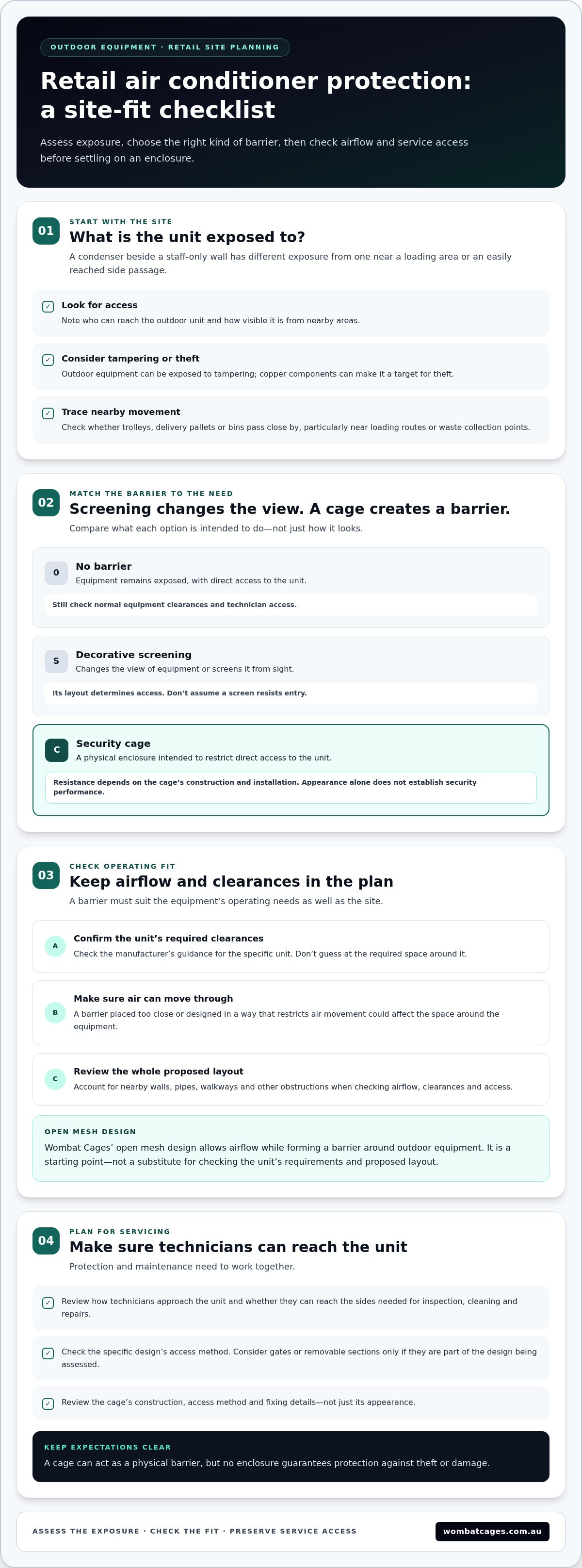
Plan retail store air conditioner protection with this site checklist
Useful site information makes it easier to plan a suitable cage layout and spot practical constraints before requesting a quote. Use this checklist to record what’s on site. Check technical details against the unit’s documentation before making assumptions about clearances or fixing points.
What site details should a retailer collect first?
- 1. Count and locate the units. Record how many outdoor condensers there are and whether they’re wall-mounted, at ground level or grouped together.
- 2. Note approximate dimensions. Measure each unit’s height, width and depth as accurately as possible. Treat these as preliminary measurements, not final cage specifications.
- 3. Photograph the surroundings. Capture nearby walls, pipes, fences, access paths and other visible obstructions. Include enough context to show how people and equipment move through the area.
- 4. Record operating and service needs. Check the manufacturer’s guidance for required clearances and airflow considerations. Note the access needed for inspection and servicing.
- 5. Identify potential fixing surfaces. Note where the proposed enclosure may attach, but don’t assume a surface is suitable. Wombat Cages assesses fixing surfaces and installation requirements as part of planning the installation.
Clear photos help show site conditions, but they don’t replace an assessment where one is needed. If you’re unsure about dimensions or access, note that rather than guessing.
How can protection be planned around store operations?
Consider how the area is used during a normal trading day. Note delivery routes, customer areas, bin movements and routine maintenance access near the equipment. A cage layout that narrows a walkway or blocks a service route may create avoidable difficulties, even if it fits around the unit.
Plan installation around store operations and any required technician access. Consider how the work area can be managed around deliveries, customers and service routes. Wombat Cages provides professional on-site installation, including bolting frames to walls and ground surfaces.
For background on the material, read this hot-dip galvanised condenser cage guide. Once you’ve gathered the unit count, approximate dimensions, photos and access notes, discuss cage options for your retail site.
Choose retail store air conditioner protection that suits the equipment
Choose a cage based on the site, not just its appearance. Identify the risks around each outdoor unit, then check that the proposed layout allows airflow, technician access and the clearances the equipment requires. The cage also needs to suit the number and arrangement of condensers. One split-system unit and a group of units may call for different configurations.
What a purpose-built cage can offer a retail site
Wombat Cages manufactures and installs hot-dip galvanised steel security cages for outdoor condensers and compressors. The open mesh design allows airflow and technician access while creating a physical barrier around the equipment. Single split-system and multi-bay configurations suit different equipment layouts.
Fixing arrangements need to suit the site. Wombat Cages assesses the proposed mounting surfaces and installation requirements. A cage is one part of broader site risk management, not a guarantee against theft, tampering or damage. Consider it alongside the equipment’s position and how the surrounding area is used.
What to include when requesting a tailored quote
Useful information gives Wombat Cages a clearer picture of the equipment and the space around it. Gather these details before requesting a quote:
- The number of outdoor units and whether they’re separate or grouped.
- Approximate measurements for each unit. Identify them as estimates if they haven’t been professionally checked.
- Clear photographs showing the equipment, nearby walls, potential mounting surfaces and the wider access area.
- Access constraints, such as delivery paths, bins, customer areas or narrow service routes.
- Relevant airflow and service-clearance requirements from the unit’s manufacturer guidance.
This information helps frame whether a single split-system cage or a multi-bay layout may suit the equipment. Final dimensions, fixing details and technician access are considered as part of the site-specific assessment. That keeps retail store air conditioner protection grounded in the unit’s requirements and the way your premises operates.
Gather the details and discuss retail air conditioner protection with Wombat Cages to request a quote for your site.
Make a practical plan for protecting your outdoor unit
Good retail store air conditioner protection starts with the site, not a one-size-fits-all cover. Identify the exposure, check the equipment’s airflow and clearance requirements, and make sure technicians can still reach the unit. A physical cage can add a barrier, but it doesn’t guarantee protection against theft or damage.
Wombat Cages manufactures hot-dip galvanised steel cages for outdoor air conditioning condensers and compressors, and provides professional installation. The open mesh design allows airflow and technician access. Single split-system and multi-bay configurations suit different layouts, with the right option depending on your equipment and site requirements.
Have your unit count, approximate measurements, site photographs and access notes ready. Then discuss your retail site and request a Wombat Cages quote. Share the details of your equipment and layout to take a considered step towards protecting outdoor units while keeping servicing in view.
Frequently Asked Questions
Can a retail store air conditioner cover prevent theft?
A cover may make an outdoor unit less visible, but it can’t guarantee theft prevention. A decorative cover or screen isn’t necessarily designed to resist physical access. A purpose-built security cage creates a barrier around the condenser, though its resistance depends on its construction and installation. Assess the unit’s exposure and review product details rather than relying on appearance or assuming any enclosure is theft-proof.
What is the difference between an air conditioner cover and a security cage?
An air conditioner cover or decorative screen is generally intended to conceal equipment or change its appearance. A security cage creates a physical barrier around an outdoor condenser or compressor. They aren’t interchangeable. Check the construction and intended purpose of the option, and don’t assume a cover resists entry. Either approach needs to allow suitable airflow and technician access.
Will a security cage restrict airflow around an outdoor AC unit?
A cage can use open mesh to allow air to pass through, but that alone doesn’t confirm the layout is suitable for every unit. Clearance and airflow requirements vary with the equipment. Check the manufacturer’s instructions for the space required around the condenser. Wombat Cages’ open mesh design allows airflow, while the unit’s requirements still need to guide the layout.
Can technicians service an air conditioner inside a security cage?
A cage can be arranged to allow technician access, but the access method needs to suit the unit and the work required. Technicians may need to reach different sides for inspection, cleaning or repairs. Consider how the equipment is serviced and what clearance is needed when choosing an enclosure. Wombat Cages’ open mesh design allows technician access.
How do I protect multiple outdoor air conditioning units at a retail store?
Start by recording the number of units, how they’re spaced and where technicians need to work. A multi-bay security cage may suit several condensers arranged together, while separate units may need a different layout. Check the manufacturer’s airflow and clearance requirements, and account for access routes before settling on a configuration. The right fit depends on the equipment, its position and how the site operates.
Does a retail air conditioner security cage need professional installation?
Installation requirements depend on the cage design, equipment location and surfaces available for fixing. Don’t assume a wall or ground surface is suitable without assessment. Professional installation accounts for the site layout, fixings, airflow and service access. Wombat Cages provides cage installation services, including bolting frames to walls and ground surfaces.
What information should I provide when requesting an air conditioner cage quote?
Provide the number of outdoor units, their approximate dimensions and clear photos of the equipment and surrounding area. Include nearby walls, potential fixing surfaces, pipes, access paths and other obstructions. Note whether the units are grouped together, along with the airflow clearances and servicing access requirements in the manufacturer’s guidance. These details help explain the site and inform discussion of the cage configuration and installation.


