
A single shared cage may look like the obvious choice, but it isn’t automatically the best fit for a row of outdoor condensers. A security cage for multiple condenser units needs to protect each unit without crowding airflow or blocking the path a technician needs.
If you’re weighing one multi-bay enclosure against separate cages, the uncertainty is understandable. Unit spacing, pipework, walls and available service clearance can all affect what works on site. A cage that fits the footprint on paper may still make routine access awkward.
This guide explains how to compare layouts, check fit and airflow, and plan for technician access before requesting a quote. It also covers the details worth gathering, including each condenser’s dimensions and position, nearby obstructions and the mounting surface. Wombat Cages supplies hot-dip galvanised steel multi-bay cages with open mesh to support airflow and technician access. The aim is to help you discuss a practical configuration that protects the equipment and keeps servicing in view.
Key Takeaways
- Choose a security cage for multiple condenser units by assessing spacing and site conditions, not just the number of units.
- Compare a shared multi-bay layout with separate cages to see which better suits your footprint, access needs and potential changes.
- Check that the cage design supports airflow and leaves technicians practical access for inspection and servicing.
- Gather unit measurements, the approximate arrangement, nearby obstacles and available access before requesting a quote.
- Consider how material, layout and site attachment work together when specifying multi-unit protection.
Why a security cage for multiple condenser units needs a site-specific layout
Several condensers in one area create a shared security concern, but they don’t automatically call for one large enclosure. A practical security cage for multiple condenser units must account for where each unit sits, where its pipework runs and how technicians reach it. The layout should protect the equipment without treating the whole area as an empty rectangle.
Outdoor condensers form part of Heating, ventilation, and air conditioning (HVAC) systems. A security cage is a physical barrier around equipment, not a weather cover or sealed housing. It can help deter unauthorised access and reduce exposure to accidental knocks, while leaving the condenser’s operating and service requirements in view.
Quote-ready definition: A multi-bay cage is one shared steel enclosure configured to protect several outdoor condenser units in the same area.
What changes when several condensers share one protected area?
Start with the position of every unit, not just the outside edges of the group. Condensers may sit side by side, face different directions or be separated by pipework and other site features. Walls, corners and narrow approaches can also affect the enclosure footprint and the most practical access points.
Unit count alone won’t determine the layout. A design based only on the group’s outside dimensions can overlook gaps between units, protruding connections or the clearance needed to reach each condenser. Record the arrangement as it exists, including visible obstacles, so the proposed enclosure can be assessed against the site rather than an assumed straight line of identical units.
What risks should a multi-unit cage help address?
A robust physical barrier can help address theft, vandalism and accidental damage to outdoor equipment. It makes access less direct, but no cage should be described as theft-proof. The enclosure needs to protect the units while still allowing technicians to inspect and service them without unnecessary obstruction.
Wombat Cages’ multi-bay enclosures use open mesh to support airflow and technician access. Consider these needs alongside the security boundary from the start, rather than after choosing a layout. For broader commercial guidance on protecting outdoor HVAC equipment, read the commercial AC security cage guide.
How cage design protects multiple condensers without blocking airflow or servicing
A security cage needs to form a physical barrier without interfering with the condensers’ operation or the access technicians need. For a security cage for multiple condenser units, that balance depends on the layout around every unit, not just the overall cage footprint.
How can a security cage maintain airflow around condenser units?
Open mesh lets air pass through the enclosure while creating a barrier around the outdoor equipment. However, mesh alone doesn’t make every layout suitable. If the cage is positioned too close to a unit, it could interfere with that unit’s operating clearances. Don’t assume the enclosure can sit tightly against the equipment.
Ask the relevant HVAC technician or installer to confirm the clearances needed for the specific condensers and their arrangement before finalising the cage. ASHRAE publishes standards for ventilation in buildings. These provide broader context, but shouldn’t be treated as a substitute for equipment-specific clearance advice.
How should technicians access units inside a shared cage?
Consider how a technician will reach each condenser for inspection and servicing. In a shared enclosure, one unit may be easy to approach while another sits behind pipework, close to a wall or further inside the protected area. Think through the service path to every unit, not only the nearest one.
Before settling on a configuration, ask how access will be provided and whether the proposed arrangement suits the site. Confirm the approach with the installer and the relevant HVAC technician. Wombat Cages uses open mesh in its multi-bay cages to support airflow and technician access, and offers professional on-site installation.
Hot-dip galvanised steel is the cage material used by Wombat Cages. For more on the material and construction context, see the galvanised condenser cage guide.
Have the unit layout and access requirements ready when discussing a suitable configuration. You can contact Wombat Cages about multi-bay cages and provide the relevant site details for a quote.
Shared multi-bay cage or separate cages: which suits your condenser layout?
There’s no single layout that suits every site. A shared enclosure may work well for condensers grouped together, while separate cages may make more sense when units are spread out or have different access needs. Compare the actual arrangement before deciding. A broader systems approach to HVAC retrofitting considers how components work together. The same practical thinking helps when planning protection around several units.
| Site consideration | Shared multi-bay cage | Separate cages |
|---|---|---|
| Unit spacing | May suit units positioned together, subject to the actual configuration. | Can suit units positioned apart or in distinct areas. |
| Technician access | Check that each unit remains reachable within the shared enclosure. | Access can be considered around each unit individually. |
| Available footprint | Uses one coordinated enclosure around the grouped equipment. | Requires space for each enclosure and its access needs. |
| Possible layout changes | Consider whether future changes to the group could affect the fit. | Separate protection may offer flexibility if unit locations differ or change. |
When might one shared multi-bay cage be a practical fit?
If several condensers sit together, a coordinated enclosure may suit the space. Wombat Cages’ multi-bay configurations can protect units positioned side by side. Check the access route to each condenser and how the cage will fit around the actual equipment. Confirm the configuration and its suitability for the installation rather than assuming a shared cage will fit because the units are nearby.
When should buyers consider protecting units separately?
Separate cages are worth considering if condensers are positioned apart, face different directions or need distinct service access. They may offer more flexibility where unit locations vary, but suitability depends on the available footprint and installation conditions. Assess each position before choosing. For broader product selection advice, see the multi-unit cage buying guide.
Quote-ready summary: The layout decision depends on unit positions, required clearances and technician access to every condenser. Provide those details when discussing a suitable security cage for multiple condenser units, and confirm the proposed arrangement for the actual site.
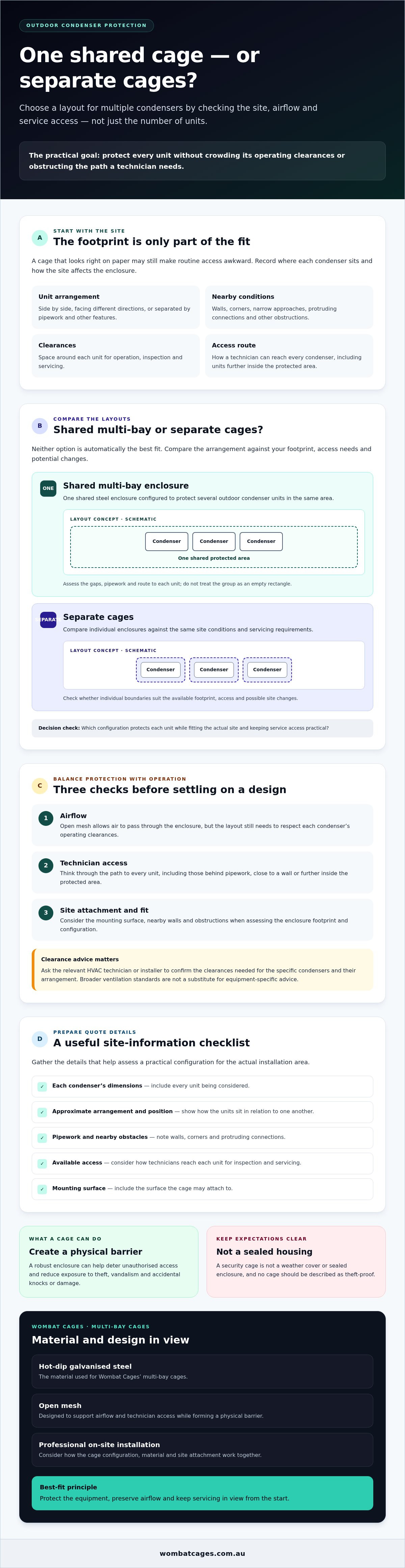
What to measure and confirm before requesting a multi-unit cage quote
A clear record of the equipment and site makes the first discussion more useful. For a security cage for multiple condenser units, don’t rely on a rough total footprint alone. Note how each unit sits and what could affect the enclosure, then have the installer confirm the fit and installation requirements on site.
Which site details help describe a multi-condenser installation?
Use this checklist to prepare an initial outline:
- Unit count: Record how many outdoor condensers need protection.
- Arrangement: Note whether they sit side by side, in separate positions or at different angles. Sketch the layout if that helps explain it.
- Approximate measurements: Measure each unit and the overall area occupied. Include the gaps between units, but treat these as planning information, not final cage dimensions.
- Obstacles: List nearby walls, fences, pipes, corners or other features that could affect the enclosure or the approach to each unit.
- Access: Describe the available access to the equipment and any tight approaches that may affect installation or future servicing.
- Site changes: Flag planned equipment moves, additions or other changes that could affect the layout.
Take clear photos from more than one angle, including views of the units, surrounding area and likely access route. Measurements and photos give useful context for an initial discussion, but they don’t replace an installation assessment. If you’re unsure what to measure, record what you can and ask the installer what else is needed.
What should buyers confirm about installation and maintenance?
Ask what surface the cage will be attached to and whether it’s suitable for the proposed installation. Don’t assume a surface is appropriate just because it’s nearby. The installer should assess the attachment points and confirm the requirements for the actual site.
Check how technicians will reach each condenser once the enclosure is in place. Consider whether access to one unit could be obstructed by another unit, pipework or the surrounding site. Confirm the proposed arrangement and access approach before finalising the configuration.
With your unit count, approximate layout, measurements, photos and site notes ready, you can have a more focused conversation about multi-bay protection and installation. Discuss your multi-unit cage requirements with Wombat Cages.
How Wombat Cages can supply and install a security cage for multiple condenser units
A well-specified cage starts with the site, not a standard assumption. Before choosing a security cage for multiple condenser units, make sure the proposed layout accounts for every condenser, airflow, technician access and the surface the cage will attach to. These details help frame a practical discussion about configuration and installation.
Wombat Cages supplies and professionally installs multi-bay security cages made from hot-dip galvanised steel. The open mesh design supports airflow and technician access, while multi-unit configurations can protect condensers positioned side by side. The right arrangement still depends on the actual equipment positions and site conditions.
What can buyers expect from a multi-bay cage enquiry?
Come prepared with the information you’ve gathered. Share the number of units, their approximate arrangement, measurements, clear site photos and any access constraints. Note nearby walls, fences, pipework or other features that could affect the enclosure or installation. This gives Wombat Cages useful context to discuss a suitable cage configuration and professional installation.
Ask what needs to be confirmed for your site, including how the cage can be attached and whether the proposed arrangement allows access to each condenser. Specific dimensions, configuration options and installation requirements should be confirmed for the actual job. Don’t assume a layout will fit just because the units appear to sit within one area.
How to make a confident final decision
Before approving a configuration, check it against the equipment and the people who need to work around it:
- Every condenser is included in the proposed protected area.
- The layout accounts for airflow and the relevant equipment clearances.
- Technicians can reach each unit for inspection and servicing.
- The material and attachment approach suit the intended installation.
Wombat Cages can discuss these points with you as a supplier and professional installer of multi-bay security cages. Bring your site details and questions to the conversation, and confirm the proposed configuration before proceeding.
Request a quote from Wombat Cages with your equipment and site details.
Choose protection that fits your site
The right multi-unit cage starts with the actual condenser layout. Compare a shared multi-bay enclosure with separate cages, then check that every unit has suitable airflow and technician access. Unit positions, nearby obstacles and the attachment surface all help determine what may suit your site.
A security cage for multiple condenser units should protect the equipment without making servicing unnecessarily difficult. Wombat Cages supplies hot-dip galvanised steel cages with open mesh, and offers multi-bay configurations and professional installation. Share your unit arrangement, measurements, photos and access constraints when discussing a quote.
Ready to take the next step? Request a quote for your multi-unit cage and discuss a configuration for your equipment and site. With the key details in hand, you can move towards practical protection that keeps access in the plan.
Frequently Asked Questions
Can one security cage protect multiple condenser units?
Yes. One shared multi-bay cage can protect several outdoor condenser units positioned together, if the configuration suits the site. Wombat Cages supplies multi-bay cages for multiple units, including side-by-side arrangements. The layout needs to account for each condenser’s position, pipework, airflow clearances and technician access. Share the unit arrangement and site details when discussing a quote so the proposed cage can be considered for the actual installation.
Is a shared multi-bay cage better than separate condenser cages?
Neither option is automatically better. The practical choice depends on unit positions and site conditions. A shared cage may suit condensers grouped together, while separate cages may be worth considering if units are apart or have different access needs. Compare the available footprint, clearances and servicing approach for every unit. Confirm the proposed layout with the installer before deciding, especially if equipment locations may change.
How do I measure for a security cage for multiple condenser units?
Record the number of units, their approximate dimensions and arrangement, including the gaps between condensers. Note nearby walls, fences, pipes and other obstacles, along with the available access to the equipment. Clear photos from several angles and a simple layout sketch can help explain the site. These details support an initial discussion, but they aren’t final cage dimensions or a substitute for confirming fit and installation requirements with the installer.
Will a security cage restrict airflow to my condenser units?
An open mesh design allows air to pass through the enclosure, but the cage still needs to be positioned with the equipment’s required clearances in mind. Don’t assume it can sit tightly against a condenser. Ask the relevant HVAC technician or installer to confirm the clearances for your specific units and proposed layout before finalising the cage configuration. Open mesh supports airflow, but site fit and equipment requirements matter too.
Can technicians service condenser units without removing the cage?
Technician access should be considered when planning the cage layout. Wombat Cages’ open mesh design supports technician access, but the arrangement also needs to leave a workable approach to each condenser. Ask how the proposed configuration will allow inspection and servicing, including access to units positioned behind others or near obstacles. Confirm the service approach with the installer and relevant HVAC technician before approving the layout.
What material should I choose for an outdoor condenser security cage?
Wombat Cages supplies hot-dip galvanised steel security cages for outdoor condensers. Its multi-bay cages use open mesh to support airflow and technician access. Choose a configuration that also suits the units’ positions and the site’s installation requirements. Ask the supplier to confirm the proposed material and how the cage will be attached to suitable surfaces for your installation. Material alone doesn’t determine whether a cage is right for the site.
Can a multi-unit condenser cage be professionally installed?
Yes. Wombat Cages supplies multi-bay security cages and offers professional on-site installation. Share the unit count, approximate layout, photos, measurements and any access constraints so the business can discuss a suitable configuration and installation requirements. The installer should confirm the attachment surfaces and access arrangements for the actual site. Ask any questions about the proposed setup before proceeding, as fit and installation details depend on the equipment and site conditions.


