
A flimsy padlock won't stop a thief with a battery-powered angle grinder and three minutes of privacy. For many Australian property owners, the sight of a mangled outdoor unit and stripped copper pipes is a multi-thousand dollar reality. You've worked hard to maintain your property. You shouldn't have to worry about vandals destroying your cooling system overnight. It's a frustrating, expensive problem that requires a permanent, industrial solution.
This guide provides a deep dive into professional condenser protection cage installation. We'll show you how to secure your outdoor unit with a professional-grade barrier that stops theft for good. You don't have to sacrifice performance for safety. You'll learn how to maintain critical airflow and protect your manufacturer warranty while creating a formidable deterrent. We're covering the essential hardware, the correct bolting techniques, and the common DIY mistakes that leave your assets vulnerable to determined criminals. It's time to stop hoping for the best and start building for it.
Key Takeaways
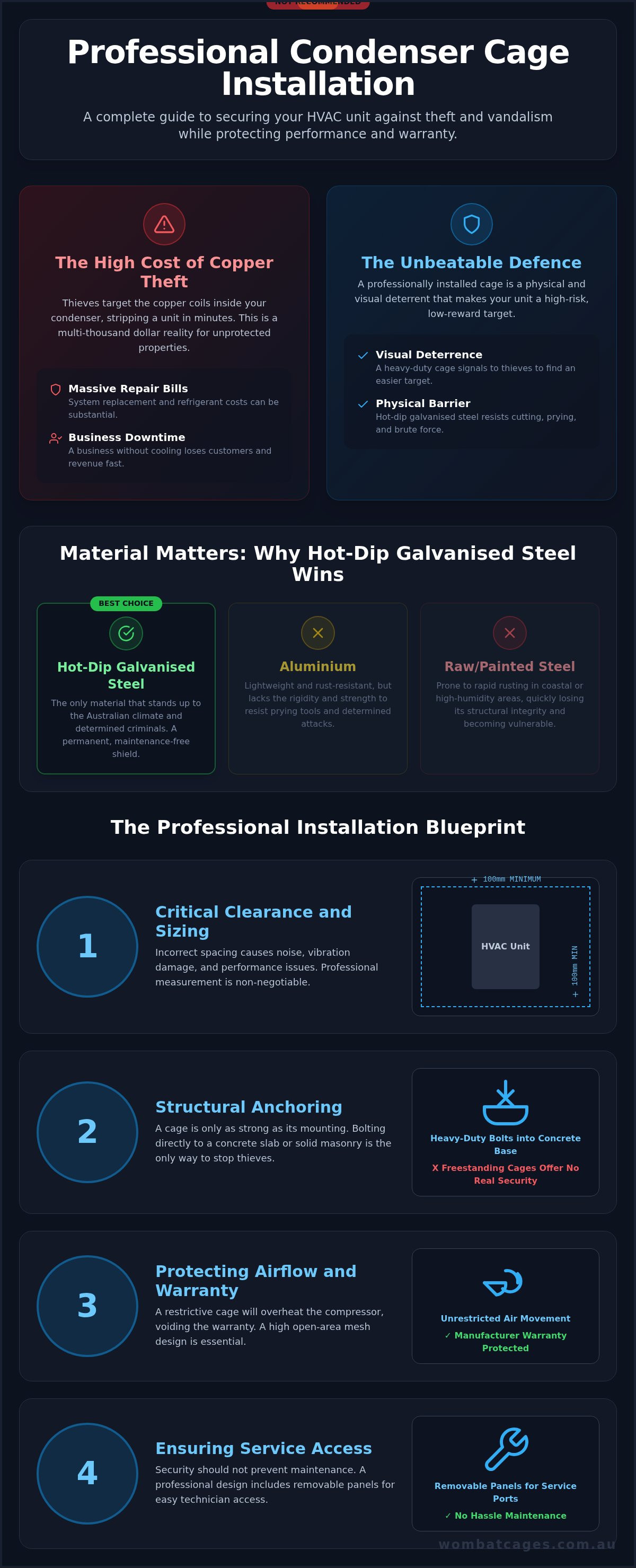
- Learn why hot-dip galvanised steel is the only material that stands up to the Australian climate and determined vandals.
- Discover the professional method for condenser protection cage installation by bolting the frame directly to concrete or masonry.
- Protect your HVAC warranty by maintaining the exact clearance and airflow requirements needed for optimal cooling performance.
- Ensure your unit stays serviceable with design features like removable panels for easy technician access to service ports.
- Understand why heavy-duty structural anchoring beats a freestanding cage every time when it comes to stopping copper theft.
The Critical Role of Proper Condenser Protection Cage Installation
An outdoor condenser is an expensive piece of machinery. Understanding how a condenser unit works helps you realise why thieves target them. They aren't looking for the fan or the casing. They want the copper coils hidden inside. A standard bracket or a simple plastic cover offers zero resistance to a crowbar. Real security requires a structural deterrent that integrates with your building. It's about making the unit physically impossible to remove without heavy industrial tools.
Understanding the Copper Theft Threat
Copper is easy money for criminals. They can strip a unit in minutes. This leaves you with a useless system and a massive repair bill. Professional condenser protection cage installation transforms an easy target into a high-risk obstacle. Without a cage, you're one quiet night away from a total system replacement. Theft doesn't just cost you the copper. It triggers insurance claims that can hike your premiums for years. Business continuity depends on these units. If the cooling goes down, the doors often close.
Visual vs Physical Deterrence
Security works on two levels. First, the visual impact matters. A heavy-duty steel cage tells a thief to move on to an easier target. It's about psychology. Most vandals are looking for a quick win. Second, the physical reality must back it up. If they do try their luck, they meet hot-dip galvanised steel. This material doesn't bend. It doesn't snap. A cage must be more than a simple lid; it must be a fortress. The psychological advantage of professional-grade security is that it stops the crime before it starts.
Think about the numbers. Replacing stolen piping and refrigerants often costs thousands of dollars. In commercial settings, the downtime is even worse. A business without cooling loses customers fast. A cage is a one-time investment in permanence. It protects against more than just theft. In high-traffic zones, it stops accidental damage from delivery trolleys or stray foot traffic. It's about structural integrity. You're bolting your security directly to the building or a concrete base. That's the difference between a temporary fix and a professional solution. It's a pragmatic choice for long-term asset protection.
Preparing for Installation: Sizing and Material Selection
Successful condenser protection cage installation starts with a tape measure. You can't just slap a box over an outdoor unit and hope for the best. You need to account for clearance. Vibration from the unit causes wear if the cage is too tight. Aim for at least 100mm of space on all sides. This gap allows for natural movement and keeps the steel from rubbing against the delicate fins of the condenser. It also ensures the unit doesn't vibrate against the frame, which creates unnecessary noise and structural stress.
Assess your mounting surface before you start drilling. A level concrete pad is the ideal foundation for floor-mounted cages. It allows for deep anchoring with heavy-duty bolts. If your unit is wall-mounted, you need to check the integrity of the brickwork or masonry. Flimsy walls won't hold under pressure. A thief will simply rip the entire assembly off the wall if the fixings are weak. Secure mounting is the backbone of the entire security system.
The Superiority of Galvanised Steel
Australia's climate is brutal on metal. Coastal salt and high humidity destroy raw steel in months. Hot-dip galvanising is the only logical choice for long-term protection. This process creates a chemical bond that prevents rust from the inside out. It's a permanent shield that requires zero maintenance. Unlike aluminium, steel provides the weight and rigidity needed to resist prying tools. It stays rigid under load. You can find more detail in this guide on hot-dip galvanised condenser cages. Steel is the industrial gold standard for asset protection.
Design for HVAC Efficiency
A cage should never kill your compressor. Airflow is non-negotiable. If you choke the unit, the motor overheats. This leads to expensive repairs and voids your manufacturer warranty. Use a rigid mesh design with a high percentage of open area. The aperture must be large enough for air to move freely but small enough to block a hand or a bolt cutter. Proper HVAC system accessibility standards dictate that your unit must remain functional and easy to maintain. A well-designed cage balances these needs perfectly.
Choosing the right materials ensures your security investment lasts as long as the building. If you're unsure about the specific dimensions for your model, look into professional cage installation services to get a guaranteed fit. It's a pragmatic way to ensure your unit stays cool and stays put.
Step-by-Step: The Professional Installation Process
Proper condenser protection cage installation is a methodical process. It requires more than a basic toolkit. You're building a structural barrier that must withstand both the elements and physical force. Precision during the initial layout prevents issues with vibration and noise later. It's about creating a fit that is tight enough to be secure but spacious enough to let the machine breathe.
Start by positioning the base frame to mark your anchor points. Accuracy here is vital. If the holes are off by even a few millimetres, the panels won't align correctly. This creates unnecessary stress on the joints and weakens the overall structure. Once you've marked the spots, move the frame aside and drill into the substrate. For concrete pads, use deep-set anchors that can't be easily pried loose. For brick walls, ensure you're drilling into the solid masonry rather than the mortar. Mortar is far too soft and will fail under leverage.
Mounting and Anchoring Techniques
Securing the frame directly to the building's mass provides the highest level of security. It turns the wall itself into an anchor. If you're ground mounting, secure the cage to existing concrete plinths or pour new ones if the ground is soft. The goal is total permanence. Always use tamper-proof fixings in high-risk areas. These specialised bolts require unique bits for removal. A thief with a standard spanner or socket set won't be able to dismantle your hard work. It's a simple addition that makes a massive difference in deterrence.
Ensuring Structural Rigidity
A solid install must be silent. Check for any 'rattle' once the panels are assembled. If the cage touches the unit or the ground is uneven, the fan's vibration will cause a constant, annoying drone. This is more than just a nuisance. It's a sign of a poor install that could damage the condenser fins over time. Use a spirit level to ensure the frame is perfectly upright and square. Levelling the cage ensures the weight is distributed evenly across all anchor points. This prevents the frame from warping or leaning. You can learn more about securing AC units from accidental damage to see how these structural methods protect against more than just thieves.
Finish with a final inspection. Tighten every bolt until the structure is rigid. Double-check the clearance between the mesh and the unit. There should be no contact points at all. A professional installation should look as solid as it feels. It's a rigid, uncomplicated addition to your property that provides immediate peace of mind.
Maintaining Serviceability: Access and Airflow Requirements
A cage that keeps thieves out but also keeps your mechanic away is a failure. Condenser protection cage installation must account for the person who has to fix the unit. Tradies need clear access to service ports, electrical isolators, and refrigerant lines. If they have to dismantle the entire structure just to check a gas level, you'll be paying for extra labour hours. A professional design incorporates removable panels or secure access doors. This ensures the unit stays protected while remaining fully accessible for routine maintenance. Professional condenser protection cage installation avoids these pitfalls by prioritising the technician's workflow from the start.
Technician Access Protocols
Serviceability is about the 'service gap'. This is the physical space required for a technician to work comfortably. Most Australian HVAC standards suggest a minimum clearance for coil cleaning and filter changes. A well-positioned cage allows these tasks to happen without full removal. Align the cage panels so that the electrical panel is never blocked. If a technician can't reach the isolator switch quickly, the installation is a safety hazard. It's a matter of common-sense engineering. You want a guardian for your unit, not a barrier to its health.
Thermal Regulation and Airflow
Modern inverter systems are sensitive to heat buildup. They rely on high-volume airflow to maintain efficiency. Solid or overly restrictive enclosures are a major risk. They create a 'hot box' effect. This causes the compressor to work harder, which spikes your energy bills and shortens the machine's lifespan. The science of open mesh is simple. It maximises heat dissipation while maintaining structural integrity. You need a design that allows the fan to pull and push air without resistance. Monitoring your unit's performance after the cage is fitted is a smart move. If the fan is running louder or longer than usual, the airflow is likely restricted. This can lead to the system tripping out on high-pressure faults during a 40-degree Australian summer day.
Cages can act as a trap for wind-blown debris. Leaves, plastic bags, and rubbish can pile up against the condenser coils inside the frame. This buildup chokes the system. Ensure the mesh aperture allows for easy hosing out of the base area. Meeting Australian standards for ventilation isn't just about performance; it's about safety. Proper airflow prevents the accumulation of heat that can lead to electrical failures. It's a pragmatic approach to long-term reliability.
Don't risk your warranty with a poorly designed enclosure. Look at professional cage installation services to ensure your system stays cool and accessible.
Why Professional Installation Beats a DIY Approach
A heavy steel box is only as strong as the bolts holding it down. Professional condenser protection cage installation requires a deep understanding of structural substrates. It's about more than just following a manual. It's about knowing how to fix steel to brick, concrete, or timber so it never moves. DIY attempts often fail because the installer lacks the right high-torque tools or industrial-grade fasteners. A thief with a crowbar will find the weak point in seconds. If the anchor pulls out, the cage becomes a handle for the thief to rip the unit off its mount.
The Hidden Risks of DIY
The biggest danger is the unit itself. One wrong move with a hammer drill can puncture a refrigerant line. That mistake turns a security upgrade into a multi-thousand dollar repair. There is also the issue of clearance. Inadequate space leads to vibration wear and noise complaints from neighbours. A DIY install might look solid, but it often provides a false sense of security. If the frame isn't perfectly level or the bolts aren't deep enough, the entire assembly can be levered off the wall. It's a high-risk gamble for a low-reward saving. Professionals ensure no damage occurs to the condenser fins or lines during the process.
The Wombat Cages Advantage
Expert installers bring more than just tools. They bring specialised knowledge of HVAC requirements. We ensure that every condenser protection cage installation respects the machine's need for airflow and service access. We don't just sell boxes. We provide custom-configured solutions for single units or complex multi-bay setups. If you're managing a commercial site, check our multi-unit AC security cage guide for more technical details. It's about getting the job done right the first time.
Efficiency and speed are part of the package. A professional team knows the exact fixings needed for masonry and concrete. No rattling panels. No blocked service ports. No voided warranties. You get a rigid, vandal-proof barrier that stands up to the Australian sun and determined thieves. It's about peace of mind through physical strength. Don't leave your assets to chance. Contact Wombat Cages for a professional installation quote today and secure your property for good.
Secure Your Assets with Structural Permanence
Protecting your outdoor unit is a matter of common-sense prevention. You've seen how heavy-duty hot-dip galvanised steel provides the ultimate defence against both the Australian elements and determined copper thieves. A professional condenser protection cage installation ensures that your security barrier is bolted directly to the building's structure. This method creates a level of physical resistance that flimsy DIY kits simply can't match. You now understand the importance of balancing rigid security with the airflow and technician access required to keep your system running efficiently.
Don't wait for a costly repair bill to take action. Investing in a rigid, purpose-built cage is the most effective way to harden your property against vandalism. Wombat Cages offers a national installation network and professional structural bolting to ensure your assets remain secure. It's about choosing industrial durability over a temporary fix. You can rest easy knowing your cooling system is protected by a master of the niche.
Secure your assets today-get a professional installation quote from Wombat Cages. Take the first step toward total protection and long-term peace of mind.
Frequently Asked Questions
Will installing a security cage void my air conditioner's warranty?
No, provided the installation maintains manufacturer-specified airflow and clearance. Professional cages are designed with open mesh to ensure heat dissipation. If the unit overheats due to a restrictive DIY cover, the warranty might be at risk. Using a professional service ensures the cage meets technical requirements while protecting the asset from external damage. It's a pragmatic way to keep your system safe without compromising the manufacturer's performance promises.
How much clearance is needed between the condenser and the cage?
A minimum clearance of 100mm on all sides is typically required for standard residential units. This gap prevents vibration noise and ensures that the steel frame doesn't rub against the delicate aluminium fins of the condenser. Larger commercial units may require more space to allow for high-volume airflow. Professional installers calculate these dimensions to balance security with optimal cooling performance. It ensures the machine breathes properly while staying fully encased.
Can a security cage be installed on a wall-mounted unit?
Security cages are frequently installed on wall-mounted condensers. The frame is bolted directly into the masonry or brickwork to create a rigid barrier. This method uses the building's own mass as an anchor, making it extremely difficult for thieves to pry the unit away. It's a pragmatic solution for units located in narrow alleyways or high-traffic commercial areas where ground space is limited. The result is a solid, permanent enclosure that defends your asset.
What is the best material for a long-lasting outdoor AC cage?
Hot-dip galvanised steel is the industry standard for the Australian climate. This material undergoes a chemical process that creates a permanent, rust-resistant bond. Unlike painted steel or aluminium, it won't chip or corrode in coastal humidity. It provides the necessary weight and structural rigidity to resist power tools and crowbars. It's a purpose-built material designed for decades of outdoor exposure without maintenance. This makes it the most reliable choice for protecting expensive HVAC equipment.
Do I need a professional to install my condenser protection cage?
While DIY kits exist, professional condenser protection cage installation is recommended for maximum security. Expert installers use heavy-duty masonry anchors and tamper-proof fixings that most homeowners don't have. They also ensure the cage is level and has the correct clearance to avoid voiding warranties. A professional install guarantees the frame is structurally integrated with your building, preventing thieves from simply removing the entire cage. It's a safer, more reliable way to protect your investment.
How do technicians access the unit for servicing once the cage is on?
Professional cages feature removable panels or secure access doors designed for trade use. These allow technicians to reach service ports, electrical isolators, and refrigerant lines without dismantling the entire structure. The layout ensures that routine maintenance, like coil cleaning or gas pressure checks, can be completed efficiently. It's a design that prioritises both security and long-term serviceability for the life of the HVAC system. Technicians can do their job without compromising the unit's protection.
Can a cage prevent copper theft if it's only bolted to the ground?
Bolting to a concrete pad is a strong deterrent, but a multi-point attachment is superior. Professional condenser protection cage installation often involves securing the frame to both the ground and the adjacent wall. This creates multiple planes of resistance. If a cage is only bolted to thin pavers or loose soil, a thief can use leverage to rip it up. A solid concrete base is essential for ground-only mounts to ensure the barrier stays put.
How long does a professional cage installation typically take?
Most standard residential installations are completed within two to four hours. This includes marking out the site, drilling into the substrate, and securing the rigid steel panels with tamper-resistant hardware. Complex multi-bay configurations for commercial properties may take a full day. The process is fast and efficient, ensuring your unit is fully protected with minimal disruption to your cooling service or business operations. It's a quick turnaround for a permanent security solution on your property.


