
The toughest-looking air conditioner security enclosure can be the wrong choice if it crowds the unit or blocks a technician’s access. A cage should deter tampering while leaving the outdoor equipment room to operate and be serviced.
Check the fit before focusing on how heavy or secure an enclosure looks. Existing units vary, and the available space, mounting surface and service access all affect which design will work on your site. Even a well-made cage can cause practical problems if it’s poorly suited to the installation.
This guide explains what an enclosure can protect against and what to check before choosing one. You’ll learn how open mesh supports airflow and technician access, how to compare hot-dip galvanised steel options and configurations, and what measurements and site details to prepare before requesting a quote or installation. Wombat Cages supplies and installs cages for single split-system units and multiple units side by side. Discuss your site requirements before settling on a design.
Key Takeaways
- An air conditioner security enclosure creates a physical barrier around an outdoor condenser or compressor to help deter tampering, theft and accidental damage.
- Check that the enclosure supports airflow and leaves technicians room to access the equipment.
- Compare single-unit and multi-bay configurations against your available space, access needs and mounting surface.
- Before arranging an enclosure, note your unit details and site conditions, then confirm required clearances with the relevant technician.
- Wombat Cages supplies and installs hot-dip galvanised steel cages. Discuss site measurements and fixing requirements before choosing a setup.
What does an air conditioner security enclosure protect, and when is one useful?
An air conditioner security enclosure is a physical cage fitted around an outdoor air conditioning condenser or compressor. It helps shield the equipment from tampering, theft and accidental damage. It protects outdoor equipment only. It doesn’t repair an air conditioner or secure an indoor unit.
The enclosure creates a barrier between the unit and people or objects that could interfere with it. It may discourage opportunistic access and help guard against knocks in exposed or busy areas. It can’t guarantee against theft or damage, so the design needs to suit both the equipment and the site.
Which parts of an outdoor air conditioner need protection?
The cage surrounds the outdoor condenser or compressor, rather than the indoor head unit. Outdoor equipment may be accessible from a driveway, shared area or open side passage. Exposed panels and components can be vulnerable to interference or impact from passing people, pets or equipment.
Copper theft is one concern because metal components can attract people seeking scrap value. The broader practice is often described as theft of items for the value of their constituent metals. A cage creates a physical obstacle around the equipment, but it doesn’t guarantee that the unit can’t be accessed or damaged.
When should a property owner consider an enclosure?
Consider an enclosure if the outdoor unit is easy to reach, has been damaged before or sits where accidental contact is more likely. Equipment beside a walkway or in an open service area, for example, may need more physical protection than a unit in a restricted location. Assess the site and equipment before deciding. Security shouldn’t compromise normal operation or servicing.
A home with one split-system unit may suit a single-unit cage. A property or site with several outdoor units may need a configuration that accommodates them together, depending on available space and access. The number of units is only part of the decision. Their position, the room around them and the mounting surface also matter.
For a closer look at single-unit options, read the split system security cage guide. It’s a useful starting point for understanding how a cage can fit around outdoor equipment while keeping practical access in view.
How should an air conditioner security enclosure balance protection and operation?
A cage needs to protect the outdoor unit without interfering with its operation. A tight fit or poorly planned position could restrict airflow, limit access or conflict with the clearances the equipment needs. The right setup depends on the specific air conditioner and its location, not just the cage dimensions.
Open mesh creates a physical barrier while allowing airflow and technician access. It’s a practical design approach, but no enclosure should be assumed to suit every model or installation. Check the equipment requirements and site before choosing a configuration.
Why airflow and equipment clearances matter
Outdoor equipment needs suitable space around it to operate as intended. A cage that crowds the unit or blocks an area identified in the manufacturer’s instructions may create an avoidable problem. Before choosing a design, check the manual or ask an air conditioning technician to confirm the clearances required for that model.
Don’t rely on a general measurement from another installation. The unit layout, nearby walls and other site conditions can affect the space needed. Wombat Cages’ open mesh design is intended to support airflow, but the cage still needs to be configured for the equipment and site.
How a cage can allow technician access
Service access is part of the fit. A technician may need to reach the outdoor unit for inspection or maintenance, so consider how the cage will be accessed and whether there’s room to work. Raise access needs before selecting a single-unit or multi-unit arrangement, particularly where units sit close together or against a wall.
Check that the enclosure won’t obstruct a doorway, walkway or opening that needs to remain accessible. Plan its position around safe movement through the area as well as access to the equipment. If the site has other access or safety requirements, discuss them with the installer before confirming the layout.
For more ideas on reducing everyday exposure to knocks, see this guide to protecting an AC unit from accidental damage. Before arranging an enclosure, confirm the manufacturer’s clearance requirements with the relevant technician and discuss site measurements and mounting requirements with Wombat Cages.
Which air conditioner security enclosure setup suits your unit and site?
Choose a configuration based on the equipment and available space, not just a generic product label. Count the outdoor units, note how they sit in relation to each other, and consider how a technician will reach them. The mounting surface matters too, as fixing requirements depend on the site.
| What to assess | Single split-system enclosure | Multiple-unit configuration |
|---|---|---|
| Unit count | One outdoor unit | Several units, often positioned side by side |
| Available footprint | Space around the individual unit, including nearby walls or obstacles | Combined space around all units, with room for the required clearances |
| Access needs | How a technician can reach the unit for inspection and maintenance | Access to each unit, not just the outermost equipment |
| Mounting surface | Surface and fixing points available at the unit location | Surface and fixing requirements across the full proposed footprint |
Single-unit enclosures for split systems
For one unit, record its model and dimensions, then note obstacles such as walls, pipes, garden edges or nearby equipment. These details help assess the available footprint and access before settling on an air conditioner security enclosure. Confirm the unit’s clearance requirements with the manufacturer or an air conditioning technician. For more detail, see the hot-dip galvanised condenser cage guide.
Enclosures for several units side by side
A multi-unit configuration may suit a site where several outdoor units are grouped together. Separate cages may be another option, depending on the layout, fixing surfaces and servicing access. Before choosing, record the unit count, spacing between units and how a technician needs to reach each one. Don’t estimate the footprint by simply adding unit widths. Clearances and obstacles also affect the arrangement. The multi-unit AC security cage buying guide offers further points to consider.
Wombat Cages supplies single split-system cages and multi-bay security cages, with professional installation available. Discuss your measurements and mounting surface with the installation team so the proposed setup can be assessed against the actual site.
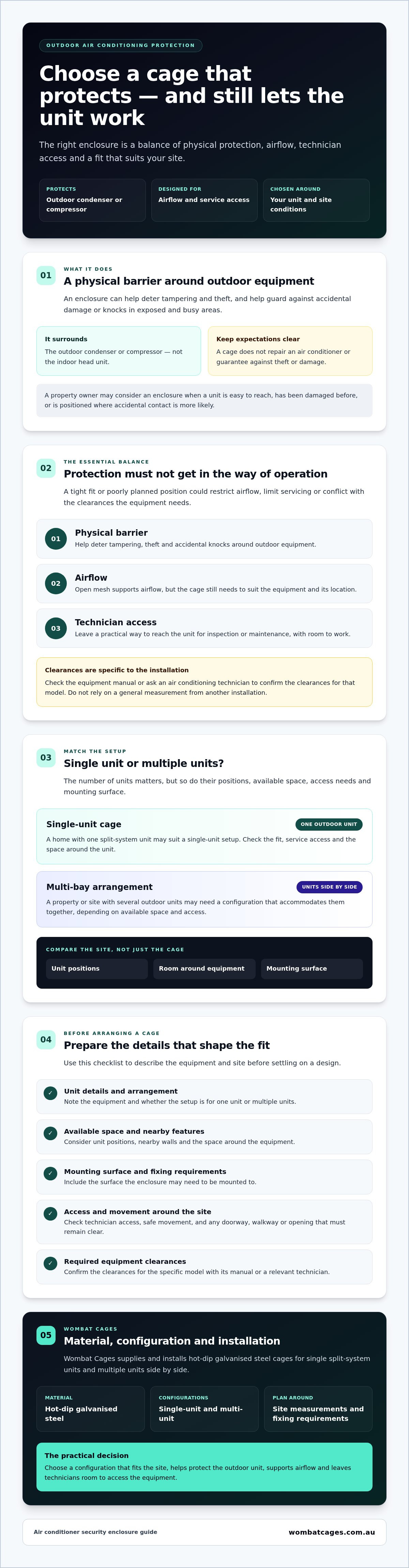
What should you check before arranging an air conditioner security enclosure?
Gathering a few details before requesting a quote can help the installer assess the unit, access and fixing surface. Use this checklist to prepare. You don’t need to choose the mounting method yourself. Share what you can see and ask the installation team to assess the site.
Measurements and site details to gather
- Identify the equipment. Note the outdoor unit’s make and model, and record its dimensions using manufacturer information where available. If there are several units, list each one.
- Describe the surrounding area. Note nearby walls, paths, pipes, fences, garden edges or other obstructions, along with the space around the unit. These details can affect the configuration and access.
- Check access needs. Ask the relevant air conditioning technician to confirm the unit’s clearance and servicing requirements. Record any areas that need to remain reachable during inspection or maintenance.
- Show the mounting surface. Note whether the unit is beside a wall or positioned on the ground, and describe the visible surface. Take photos from a few angles to make site conditions easier to explain.
Keep the photos and notes together. They provide useful context when discussing an air conditioner security enclosure, but they don’t replace an on-site assessment where one is needed.
Questions to ask about supply and installation
Before confirming a configuration, ask the supplier or installer how the proposed cage will fit the equipment while allowing technician access. Check that clearances have been considered against the manufacturer’s guidance, rather than relying on a general measurement or another installation as a template.
Ask which fixing surfaces and site conditions need to be assessed. The mounting approach can depend on whether the enclosure is fixed near a wall, installed on a ground surface or positioned in a more complex area. The substrate and available fixing points matter, so have the installation team confirm what’s suitable for your site.
- Does the proposed setup suit the unit count and available footprint?
- How will a technician access each outdoor unit for servicing?
- What information or site inspection is needed to confirm the fixing approach?
Wombat Cages supplies and professionally installs hot-dip galvanised steel cages for single split-system units and multiple units side by side. Share your unit details, photos and questions with Wombat Cages to discuss your site requirements.
How Wombat Cages helps protect outdoor air conditioning equipment
Wombat Cages specialises in physical protection for outdoor air conditioning condensers and compressors. Its cages are made from hot-dip galvanised steel and have an open mesh design intended to support airflow and give technicians access to the equipment. The aim is a practical barrier that works around the unit without getting in the way of its operation or servicing.
What Wombat Cages supplies and installs
The available configurations cover a single split-system outdoor unit or multiple units positioned side by side. The right setup depends on the equipment, available footprint, access requirements and mounting conditions. These details help determine what needs to be assessed before choosing a configuration.
Professional on-site cage installation is available. The service covers the security enclosure and its installation. Air conditioning mechanical repairs aren’t part of the offering. If your system needs repair or maintenance, speak with an appropriate air conditioning technician.
Open mesh is designed to address two practical considerations: airflow around the outdoor unit and technician access. The equipment’s clearance and service requirements still need to be checked for the specific model and site. A cage is a physical barrier, not a guarantee against theft, tampering or damage.
The next step: discuss your unit and installation site
Before asking about an air conditioner security enclosure, gather details that will help explain the equipment and what the site allows. Useful information includes:
- The outdoor unit’s make, model and dimensions, using manufacturer information where available.
- The number of units and how they’re positioned in relation to each other.
- Nearby walls, paths, pipes or other obstructions, plus the space around the equipment.
- Photos of the installation area and details of the visible mounting surface.
- Any access or clearance requirements confirmed by the relevant technician.
The right arrangement depends on both the equipment and the site. Measurements and photos help start the conversation, while mounting surfaces and fixing requirements should be assessed for the actual installation. Share what you know and ask which details need checking before settling on a configuration.
Request an air conditioner security enclosure quote or discuss your equipment and installation site with Wombat Cages.
Choose a cage that fits your site and equipment
A sound choice balances physical protection with the unit’s operating clearances and the access a technician needs. Confirm those requirements for your model, then consider the available space, mounting surface and whether you need a single-unit or multi-unit configuration.
Wombat Cages supplies hot-dip galvanised steel security cages for outdoor condensers and compressors. The open mesh design is intended to support airflow and technician access, with professional installation available. The right air conditioner security enclosure depends on your equipment and site, so have measurements and photos ready when you discuss options.
Request an air conditioner security enclosure quote and share your unit and site details with Wombat Cages. A little preparation can help you take the next step towards a practical fit for your property.
Frequently Asked Questions
What is an air conditioner security enclosure?
An air conditioner security enclosure is a physical cage fitted around an outdoor condenser or compressor to help protect it from tampering, theft and accidental damage. Wombat Cages supplies hot-dip galvanised steel cages with an open mesh design intended to support airflow and technician access. Options include cages for a single split-system unit and configurations for multiple outdoor units positioned side by side. An enclosure doesn’t protect indoor units or repair the air conditioner.
Can an air conditioner security enclosure prevent copper theft?
No cage can guarantee that theft won’t occur. A physical barrier can make an outdoor unit harder to access and may help deter opportunistic interference, including attempts to steal copper components. Its deterrent effect depends on the enclosure, installation and site. Consider how accessible the unit is and discuss suitable fixing requirements with a professional installer before choosing a configuration.
Will an enclosure affect my air conditioner’s airflow?
An enclosure should be selected and positioned so it doesn’t interfere with the unit’s intended operation. Open mesh is designed to allow airflow while forming a physical barrier, but the right fit depends on your air conditioner model and installation site. Check the manufacturer’s clearance instructions and ask an air conditioning technician to confirm the requirements before arranging a cage. Don’t assume a design suits every unit.
Can a technician service an air conditioner without removing its security enclosure?
That depends on the cage design, its position and the work the technician needs to carry out. Open mesh construction is intended to support technician access, but it doesn’t mean every inspection or service task can be completed with the cage in place. Before choosing a configuration, ask your air conditioning technician what access they need and discuss those requirements with the enclosure installer.
How do I know what size security enclosure my outdoor unit needs?
Start with the unit’s make, model and dimensions, using manufacturer information where available. Then note nearby walls, pipes, paths and other obstructions, along with the space around the equipment. The air conditioner’s required clearances and service access also affect the fit. Share these details and site photos with the installer, and confirm clearances with the relevant technician. Avoid choosing based on unit dimensions alone.
Can one security enclosure protect multiple air conditioner units?
Yes. A multi-bay configuration can be arranged for several outdoor units positioned side by side. Whether it suits your site depends on the unit count, spacing, available footprint, technician access and mounting conditions. Record how the units are arranged and what access each one needs, then discuss the layout with the installer. Wombat Cages supplies multi-bay security cages as well as cages for single split-system units.
Should an air conditioner security enclosure be professionally installed?
Professional installation can help ensure the proposed cage and fixing approach are assessed against the equipment and site. Wall, ground and other mounting surfaces may have different requirements, so have the installer confirm what’s suitable rather than assuming a fixing method. Wombat Cages offers cage installation services. Before arranging installation, provide unit details and photos, and confirm operating clearances with the air conditioner manufacturer or a relevant technician.


